Quick Facts
- Location: Upper Swat District, Khyber Pakhtunkhwa, Pakistan — about 100 km north of Mingora
- Altitude: Kalam town sits at around 2,000 metres above sea level
- Famous For: Alpine lakes (Mahodand, Kundol, Spin Khwar), pine forests, trout fishing, and the meeting of the Ushu and Utrot rivers that form the Swat River
- Nearest City: Mingora (approx. 100 km); Bahrain is 29 km down the valley
- Accessibility: Metalled road to Kalam town from Mingora; jeep tracks beyond to the lakes. The valley is snowbound in deep winter
- Known Landmarks: Mahodand Lake, Ushu Forest, Matiltan, Falaksir peak (5,918 m) views
- Best For: Families, nature lovers, photographers, anglers, and first-time northern-area travellers
Why Visit Kalam Valley
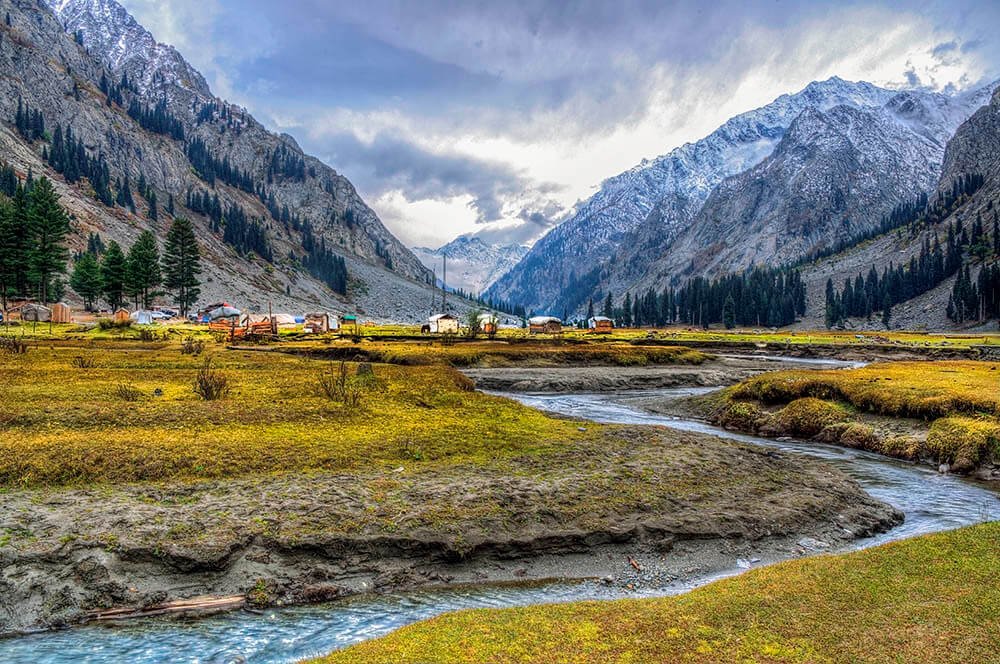
There is a reason Kalam has been the first love of generations of Pakistani travellers. Long before Instagram, before the Karakoram Highway crowds, families from Lahore and Karachi were loading up cars and pointing them at Swat — and Kalam, the valley at the top of it all, was the prize. It is the Switzerland-of-Pakistan cliché made real: pine forests marching up impossible slopes, rivers the colour of glacier milk, and meadows so green they look edited.
What makes Kalam special is how much it packs into one valley. From the town itself — a lively bazaar settlement where the Ushu and Utrot rivers crash together to form the Swat River — jeep tracks fan out to a string of alpine lakes that each feel like a separate world. Mahodand, the famous one, sits at 2,865 metres ringed by pines and snow peaks, with trout in its water and wooden boats on its surface. Beyond it lie Saifullah Lake, Kundol, and Spin Khwar, each a little wilder and quieter than the last.
Kalam is also the friendliest possible introduction to the mountains. Unlike the stark high valleys of Gilgit-Baltistan, Kalam is lush, gentle, and well-served: hotels line the main road, the bazaar has everything from dry fruits to woollens, and the famous trout restaurants mean you eat extremely well. It is perfect for families with children, for older travellers, for anyone who wants the northern areas without the hard edges.
And there is history in the air. This valley was once the centre of its own small state, then part of the princely state of Swat under the Walis; the Buddhist stupas and rock carvings further down the valley remind you that Alexander’s armies, Buddhist pilgrims, and Ghaznavid horsemen all passed through long before the first tourist jeep. Kalam is not just scenery — it is a valley with a past, and it wears it lightly.
History of Kalam Valley
Kalam’s recorded history is really the history of Swat Kohistan — the mountain country of upper Swat. In the 19th century, Kalam was the centre of an independent little state of its own. It was later taken by Chitral and then, after Partition, given to Swat — a reminder that these mountain valleys changed hands between princes as routinely as the rivers changed course.
The wider Swat story stretches back much further. In 327 BC, Alexander the Great’s armies pushed through this region; the Greeks knew the Swat River as the Soastus. By the 2nd century BC the valley was Buddhist — the Chinese pilgrims Faxian and Xuanzang both wrote about Swat’s monasteries, and the stupas and rock carvings of lower Swat (at Butkara, Amluk Dara, and Manglawar) are the surviving witnesses. Islamic influence arrived from the west from the 8th century onward, and in 1001 Mahmud of Ghazni’s invasions swept through Swat. In 1519 the Yousafzai Pashtuns conquered the valley, giving Swat the Pashtun character it keeps today.
The modern era began with a saint. In the late 19th century, the Akhund of Swat — Saidu Baba (Abdul Ghaffur) — founded what became the princely state of Swat; his grandson Miangul Abdul Wadud was recognised as Wali by the British in 1926. Under the Walis, especially Miangul Jehanzeb (who ruled from 1949), Swat became famous for its schools, its swift justice, and its orderly administration. The state acceded to Pakistan in November 1947 and continued as an autonomous princely state until 28 July 1969, when President Yahya Khan merged Swat, Chitral, and Dir into Pakistan.
Kalam’s tourism story is more recent. The valley’s cool summers made it a beloved hill retreat for Pakistani families through the late 20th century. That idyll was shattered when militants seized Swat in late 2007; the Pakistan Army’s 2009 operation re-established control, and tourism slowly returned. Today Kalam is firmly back on the map — busier than ever, and a symbol of the valley’s resilience.
Top Things to Do in Kalam Valley
Mahodand Lake
The crown jewel. About 35–40 km from Kalam town, up a rough jeep track through Ushu and Matiltan, Mahodand sits at 2,865 metres — a sheet of blue ringed by pines and peaks, famous for its trout (the name means “lake of fishes” in the local tongue). Hire a 4×4 in Kalam Bazaar (about two hours each way), then spend the day boating in wooden boats, fishing for trout (permits required), riding horses along the shore, or simply picnicking in the meadows. Go early in the morning for mirror-still reflections. The reliable season is late May to early October.
Saifullah Lake
A short walk beyond Mahodand lies the smaller, quieter Saifullah Lake — worth the extra steps for travellers who want the alpine-lake experience without the Mahodand crowds. The trail between the two lakes is one of the prettiest short walks in Swat.
Kundol and Spin Khwar Lakes
For the more adventurous, Kundol Lake (toward Utror) and Spin Khwar (“White Stream”) Lake offer wilder, less-visited alternatives. Both require jeep-and-trek combinations and are best done with a local guide; the reward is pristine water and near-solitude in July and August.
Ushu Forest
Just 8 km from Kalam, the Ushu Valley’s dense deodar and pine forests are made for unhurried walks. The forest road is jeep-only, but the shade, the birdsong, and the mountain views make it one of the valley’s great soft adventures — ideal for families who don’t want a full lake expedition.
Matiltan and the Falaksir View
From Matiltan, on the road to Mahodand, you get the classic Kalam postcard: the snow pyramid of Mount Falaksir (5,918 m) rising over the valley. Stop, photograph, breathe. On clear mornings the view is genuinely world-class.
Trout Fishing
Kalam’s cold rivers are famous for trout, and angling here is a serious pursuit. Licensed fishing is possible in season — arrange permits and a local guide through your hotel or the fisheries department’s local office. Even if you don’t fish, eating Kalam trout (fresh from the river to the restaurant grill) is non-negotiable.
Famous Places In and Around Kalam Valley
- Bahrain (29 km): The riverside town where two rivers meet, famous for its handicraft shops and trout restaurants — see our Bahrain, Swat travel guide.
- Malam Jabba: Swat’s ski resort and chairlift, an easy side trip — see our Malam Jabba guide.
- Utror Valley (15–16 km): A quieter side valley with its own meadows and the Kundol Lake trailhead.
- Gabral Valley: Remote and beautiful, for travellers with time and a good jeep.
- Mingora & Saidu Sharif: The valley’s cities, with the Swat Museum’s Gandharan treasures.
How to Reach Kalam Valley
Kalam is one of the most accessible mountain valleys in Pakistan. From Islamabad, take the Swat Motorway (M-16) to Mingora — approximately 230–280 km, about 4–5 hours — then continue north on the N-95 through Bahrain to Kalam, roughly 100 km more (3–4 hours on the mountain road). From Lahore, the drive to Mingora via the motorway network is roughly 450–480 km (7–9 hours); most Lahoris break the journey or start very early. From Karachi, fly to Islamabad and drive — the full road journey exceeds 1,500 km.
The nearest airport with regular commercial flights is Islamabad International; Saidu Sharif airport near Mingora has had only intermittent service, so don’t plan around it. The nearest functional railhead is far to the south — this is a road trip, full stop.
Road conditions: the Swat Motorway and the Mingora–Bahrain road are excellent. Bahrain to Kalam is narrower and winding but metalled and fine for any car in the visiting season. Beyond Kalam town, the tracks to Ushu, Matiltan, and Mahodand are unmetalled jeep roads — hire a local 4×4; do not take a sedan. In winter (roughly December–March), snow can close the upper valley entirely.
Transport options: drive yourself, hire a car with driver from Islamabad or Mingora, take a Daewoo or NATCO-style coach to Mingora and then a van or jeep to Kalam, or join an organised tour — Kalam is the single most tour-packaged destination in the northern areas, so group tours are plentiful and cheap.
Route Details
- Islamabad → Mingora: M-1 to the Swat Motorway interchange, then M-16 north to Chakdara and on to Mingora. Approx. 230–280 km, 4–5 hours. Fuel and food stops are frequent.
- Mingora → Bahrain → Kalam: N-95 north along the Swat River through Madyan to Bahrain (about 60 km), then 29 km further to Kalam. Approx. 100 km total, 3–4 hours with photo stops.
- Kalam → Mahodand: Hire a 4×4 jeep at Kalam Bazaar. The route runs Kalam → Ushu → Matiltan → Mahodand, about 35–40 km, roughly 2 hours each way. Agree the fare before departing.
- Return: Most visitors spend 2–4 nights in Kalam, doing Mahodand as a full-day trip and Ushu as a half-day, before driving back down the valley.
Where to Stay in Kalam Valley
Kalam town has the densest hotel strip in upper Swat — dozens of hotels, guesthouses, and restaurants line the main road and the riverbanks. You will not struggle to find a room outside peak weekends, but in July–August and on Eid holidays, book ahead.
Mid-range hotels: The backbone of Kalam’s accommodation — comfortable rooms with attached baths, hot water (usually), and in-house restaurants serving trout and BBQ. Most cluster along the main Kalam road within walking distance of the bazaar. Ask for a river-facing room; the sound of the Swat River is Kalam’s signature lullaby.
Budget guesthouses: Plenty of simpler guesthouses and family-run lodges offer clean, basic rooms at very reasonable rates — ideal for backpackers and large family groups. Standards vary, so look at the room before committing.
Upper-tier options: A handful of better-appointed hotels offer larger rooms, lawns, and more reliable heating — worth it if you’re travelling with elderly parents or small children, or visiting in the chilly shoulder months.
Camping: Formal campsites exist near Mahodand Lake in summer, run by locals with tents, bonfires, and basic meals — a magical night under some of the clearest skies in Pakistan. Bring warm layers; even August nights at 2,865 m are cold.
Where to Eat: Local Foods of Kalam Valley
Kalam runs on trout. The valley’s cold, fast rivers produce some of Pakistan’s finest freshwater fish, and the restaurants along the main road grill, fry, and steam it to order — usually served with chips, naan, and a squeeze of lemon. A whole grilled trout by the riverside, eaten with your feet almost in the water, is the definitive Kalam meal.
Beyond trout, expect the hearty food of the mountains: chapli kebabs, chicken karahi, daal and sabzi with fresh tandoori naan, and endless cups of qehwa (green tea) — the social fuel of the northern areas. Kalam’s honey, sold in the bazaar in reused bottles, is genuinely excellent; so are the dried apricots and walnuts from valley orchards. Roadside dhabas serve simple, filling meals at budget-friendly prices, while hotel restaurants cater to family tastes with BBQ platters and continental-ish options.
A generous dinner for one — trout, naan, salad, and qehwa — is moderately priced by tourist standards; dhaba meals are cheaper still. Prices rise in peak season, so confirm before ordering the biggest fish in the tank.
Weather in Kalam Valley
Kalam’s weather is the whole point: cool when the plains are baking, snowy when the plains are pleasant. At 2,000 metres, the valley gets proper seasons. Approximate conditions:
| Season | Temperature Range (approx.) | Conditions |
|---|---|---|
| Winter (Dec–Feb) | -5 to 8°C | Heavy snowfall; the upper valley can be cut off. Beautiful but only for the well-prepared. |
| Spring (Mar–May) | 8 to 20°C | Blossom season in the lower valley; Kalam opens up from late April. Fresh and crowd-free. |
| Summer (Jun–Aug) | 15 to 28°C | Perfect mountain summer — warm days, cool nights, all roads and lakes open. Peak crowds. |
| Autumn (Sep–Nov) | 5 to 20°C | Golden foliage, crisp air, thinning crowds. October is superb; November turns wintry. |
Language and Culture of Kalam Valley
Kalam sits in Swat Kohistan, and its oldest language is Gawri (also called Kalami) — a Dardic language spoken in these upper valleys for centuries. Pashto is widely spoken too, the legacy of the Yousafzai settlement of Swat, and Urdu works everywhere in the bazaar and hotels. Many hotel staff also manage basic English.
The culture blends Kohistani mountain traditions with Pashtun hospitality. Guests are honoured — expect offers of qehwa and genuine curiosity about where you’ve come from. Dress modestly (loose clothing; women should carry a scarf for village visits), ask before photographing people (especially women), and respect prayer times. Bargaining in the bazaar is normal and good-natured; bargaining with a jeep driver is essential.
Kalam is accustomed to tourists and relaxed by mountain standards, but it remains a conservative area — public displays of affection are frowned upon, and alcohol is not available or appropriate.
Shopping in Kalam Valley
Kalam Bazaar is a proper mountain market — not a mall, and all the better for it. The main street is lined with shops selling dry fruits (walnuts, almonds, dried apricots and mulberries from valley orchards), pure honey, woollen shawls, sweaters, and caps, and traditional embroidered waistcoats. Gemstones — Swat emeralds are famous — are sold in a few shops, but buy only from established dealers and treat bargain prices with suspicion.
Bahrain, down the valley, is even better known for handicrafts, with rows of shops selling carved wooden items and woollens. There are no shopping malls in Kalam — the bazaar, with its smell of pine smoke and fresh walnuts, is the whole experience. Prices are tourist prices; bargain politely and you’ll usually land somewhere fair.
Travel Tips for Kalam Valley
Packing Essentials
Layers are everything: a warm jacket even in July (Mahodand evenings are cold), comfortable walking shoes, rain protection, sunscreen and sunglasses (mountain UV is strong), a reusable water bottle, basic medicines, and a power bank. If you’re camping at Mahodand, add a warm sleeping layer — tour tents provide bedding but nights are near freezing.
Safety Tips
Kalam is a well-established tourist destination and generally safe. The real risks are mountain-standard: don’t drive the Bahrain–Kalam road at night, check weather before lake trips, and hire experienced local jeep drivers for the Mahodand track. Keep children close to riverbanks — the Swat River is fast and cold. Carry ID; there are security checkpoints on the route.
Money & Connectivity
Carry cash — ATMs exist in Kalam town but can run dry on peak weekends, and most small shops, dhabas, and jeep drivers are cash-only. Jazz, Telenor, and Zong signals work in Kalam town and along the main valley; expect dead zones on the lake tracks. Hotels usually have Wi-Fi, though speeds vary.
Best Time to Visit Kalam Valley
Summer (June to August) — Peak Season
Everything is open: all the lakes, all the jeep tracks, the bazaar in full swing. Warm days (around 25°C), cool nights, and the valley at its greenest. Book hotels in advance and expect crowds at Mahodand on weekends.
Spring (Late April to May) — Lovely and Quiet
Blossom in the orchards, snow still on the high peaks, and a fraction of the summer crowds. Mahodand may still be snowbound in April — confirm locally — but Kalam town itself is delightful.
Autumn (September to October) — The Connoisseur’s Choice
Golden poplars, crystal air, thinning crowds, and usually still-open lake roads. Many experienced travellers call October the best month in the valley.
Winter (November to March) — For Snow Lovers Only
Heavy snow transforms Kalam into a winter postcard, but the upper valley and lake roads close. Only go if you’re prepared for real winter mountain conditions — and check road status before you leave Mingora.
Final Thoughts
Kalam Valley is popular for the oldest reason in travel: it is genuinely, overwhelmingly beautiful, and it makes that beauty easy to reach. You don’t need to be a trekker or a mountaineer. You need a car, a few days, and a willingness to sit by a glacial lake with trout on a plate and snow on the horizon — and to understand, suddenly, why your parents’ generation talked about Swat the way they did.
Go in summer for the full experience, in autumn for the colours, in spring for the quiet. Eat the trout, walk the Ushu forest, watch Falaksir catch the morning sun from Matiltan, and give Mahodand a full unhurried day. Kalam rewards the traveller who slows down. For more northern journeys, explore our Malam Jabba guide and the full Explore Pakistan series.
FAQs
Where is Kalam Valley?
Kalam is in upper Swat District, Khyber Pakhtunkhwa — about 100 km north of Mingora and 29 km beyond Bahrain, at around 2,000 metres above sea level, where the Ushu and Utrot rivers join to form the Swat River.
What is the best time to visit Kalam Valley?
June to August for the full experience (all lakes open); September–October for golden autumn colours and fewer crowds; late April–May for blossom season and quiet. Winter brings heavy snow and closed upper roads.
How do I reach Kalam Valley?
Drive from Islamabad via the Swat Motorway to Mingora (4–5 hours), then 100 km up the mountain road through Bahrain to Kalam (3–4 hours). From Lahore it’s a 7–9 hour drive to Mingora. Beyond Kalam town, hire a 4×4 jeep for the lake tracks.
How far is Mahodand Lake from Kalam?
About 35–40 km, roughly 2 hours each way by 4×4 jeep via Ushu and Matiltan. The lake sits at 2,865 m and is open roughly late May to early October.
Is Kalam Valley safe for tourists?
Yes — Kalam is one of Pakistan’s most established tourist destinations. Take normal mountain precautions: avoid night driving on the valley road, check weather before lake trips, and use experienced local jeep drivers.
Is Kalam Valley good for families?
Excellent. It’s the most family-friendly of the northern valleys — gentle scenery, plenty of hotels and restaurants, short walks as well as big lake days, and the famous trout restaurants that children love.
Where should I stay in Kalam Valley?
Kalam town has dozens of hotels and guesthouses along the main road, from budget lodges to comfortable mid-range hotels — book ahead in July–August. Summer camping is available near Mahodand Lake.
What food is Kalam famous for?
Trout fish — grilled or fried fresh from the valley’s rivers — is the signature dish. Also try chapli kebabs, mountain honey, dried apricots and walnuts from the bazaar, and endless cups of qehwa.