Quick Facts
- Location: Nagarparkar, Tharparkar District, south-eastern Sindh, on the northern edge of the Rann of Kutch near the Indian border
- Altitude: around 305 metres (1,001 ft) at the highest point; the range runs about 19 km long
- Famous For: ancient pink and grey granite hills, perennial springs (Sardharo, Achleshwar), monsoon waterfalls, Jain temples, and sacred status among the people of Thar
- Nearest City: Mithi (about 120–150 km); Hyderabad is the nearest large city
- Accessibility: good by metalled road to Nagarparkar; the hills themselves are explored on foot or by local 4×4 (Kaikra truck)
- Known Landmarks: Sardharo holy site, Gori Jain Temple, Bodesar mosque, Churrio Jabal Durga Mata Temple
- Best For: geology lovers, photographers, spiritual travelers, monsoon chasers, and anyone seeking Pakistan’s most unexpected landscape
Why Visit Karoonjhar Mountains
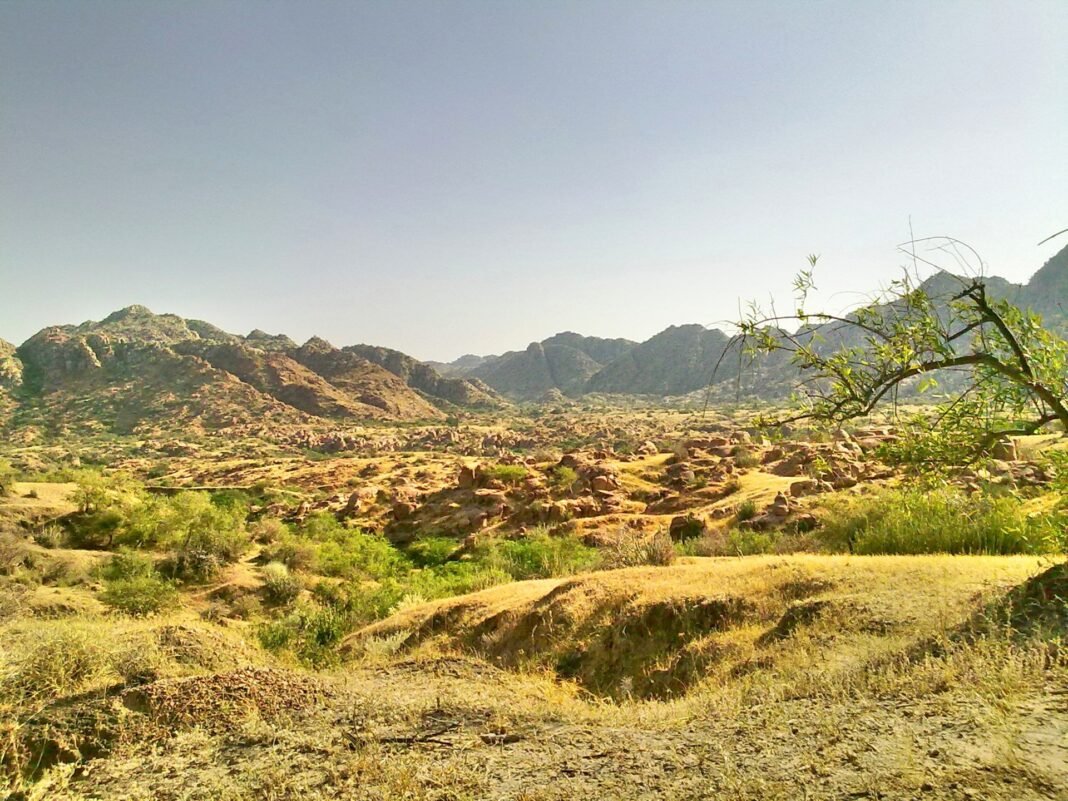
Pakistan’s mountains are supposed to be in the north. That is what makes the Karoonjhar range so startling: a 19-kilometre spine of ancient granite rising out of the flat Thar Desert in the far south-east of Sindh, pink and grey rock glowing against an enormous desert sky. Geologists consider these among the oldest rocks on earth — likely an extension of India’s Aravalli range, dating to the Archean period — and standing among them, with peacocks calling from the boulders and the Rann of Kutch shimmering to the south, feels like visiting another planet that happens to be in Sindh.
Sacred Hills of Thari Folklore
For the people of Thar, Karoonjhar is far more than geology. Locals revere the range as sacred — the “gold of Sindh” in affection, if not in fact — and the hills are woven into Sindhi folklore, Sufi poetry. Also, the region’s Hindu and Jain heritage. The 109 hills of the range are said to hold as many holy sites: the perennial springs of Sardharo and Achleshwar, where devotees bathe in holy water. Centuries-old Jain temples in white marble. And the legends of Marvi, the heroine of Shah Abdul Latif Bhittai’s poetry, whose story belongs to this land.
Then there is the monsoon transformation, the reason a growing number of travelers now make the long journey. For most of the year Karoonjhar is stark desert rock — beautiful, but austere. When the rains come, usually in August and September, water pours off the granite in dozens of temporary streams, small waterfalls appear. The entire range turns an impossible emerald green. Locals call it Thar’s Switzerland, and photographs from monsoon season barely look real.
Karoonjhar is perfect for travelers who have seen the northern postcard and want the other Pakistan: desert, deep time, living tradition. A landscape under genuine threat from granite quarrying — which makes visiting now, respectfully and with local guides, a small act of witness as well as a great trip. It is a long journey from Karachi, but it is one of the most distinctive landscapes in the country.
History of Karoonjhar Mountains
The human history of Karoonjhar is inseparable from the history of Thar itself. Centuries ago, this region was a very different place: researchers note that the desert of Thar was once connected to the sea. Nagarparkar — then called Parinagar — served as a port and business hub. The Jain merchant community, which formed the business class of the region, built places of worship at Karoonjhar, Parinagar, and Nagarparkar. The great Gori Temple, completed around 1375–1376 in Gujarati style with its 52 domes and 24 shrines to the Tirthankaras, belongs to this era of Jain prosperity.
As trade routes shifted and the sea receded from the Rann of Kutch, the Jain community gradually migrated — many to Kutch and Bhuj in what is now India — though their temples remained, maintained by the area’s Hindu community. The last Jain family left the area in 1971. The 16th century brought another layer of history: the Ottoman admiral Seydi Ali Reis stayed in Nagarparkar during a campaign against the Portuguese. The Bodesar mosque at the foot of the hills — an innovative blend of Jain and Islamic architecture — speaks to centuries of cultural mixing.
The modern history of Karoonjhar is a conservation story. Also, the range’s granite became a prized commodity, and quarrying — legal and illegal — began eating into the hills, sparking the #SaveKaroonjhar campaign led by local youth and civil society from 2019 onward. In fact, for the people of Thar, who call the mountain their heritage and their livelihood — gathering medicinal herbs from its slopes — the fight continues. A Karoonjhar Dam is under construction to supply water to the Nagarparkar area. There are long-standing demands to declare the range a national park.
Top Things to Do in Karoonjhar Mountains
Climb to the Sardharo viewpoint
Sardharo is the most visited point in the range. Also, a holy site with a perennial spring, reached by a climb of roughly 200–300 steps from the road. In fact, the spring water is considered sacred, and Hindu devotees bathe here. From the top, the view runs across the granite hills to the Indian border and the farmlands beyond. Go early in the morning for the best light and fewest crowds.
Visit the Gori Jain Temple
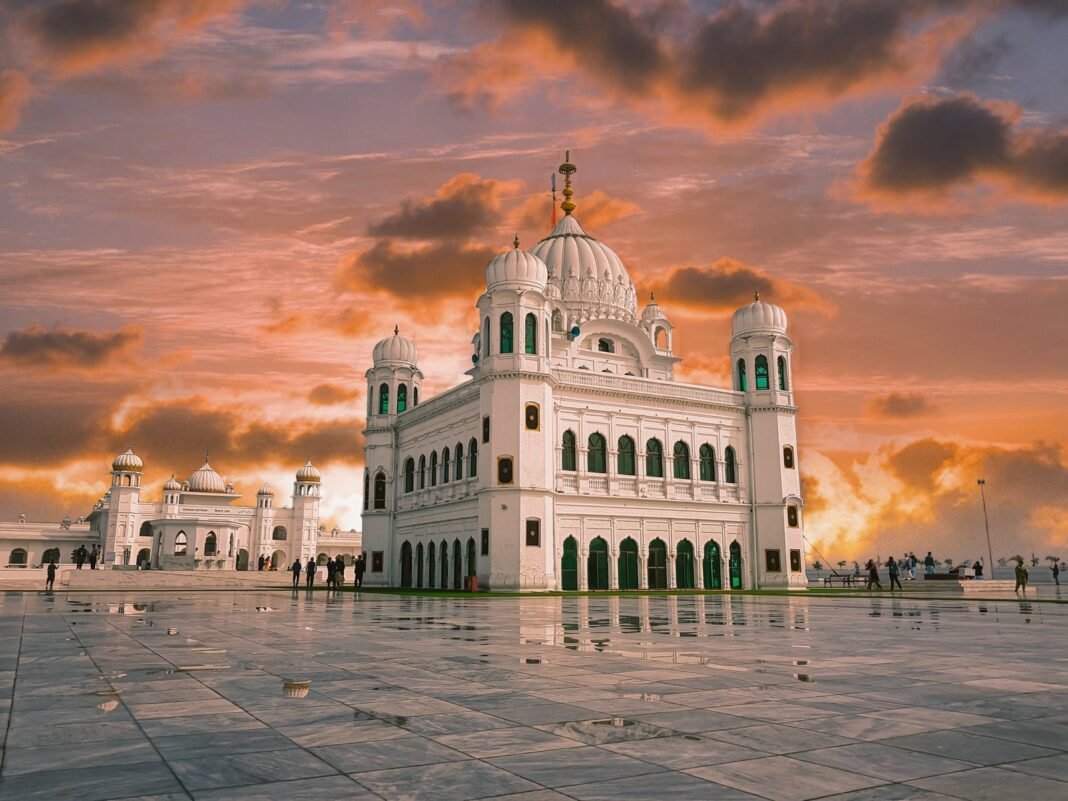
About 14 km from Nagarparkar town, the Gori Temple is the largest and finest of the Jain temples. Also, a 125-by-60-foot white marble structure on a high platform, completed around 1375–1376, with three mandaps, 52 Islamic-style domes, finely carved pillars, and 24 small shrines representing the Tirthankaras. Its frescoes are considered among the oldest Jain frescoes in the northern subcontinent. Remove your shoes before entering, as visitors do out of respect.
See the Bodesar mosque
At the foot of the Karoonjhar hills stands the ancient Bodesar mosque, its reddish stone walls catching the morning sun — a remarkable fusion of Jain and Islamic architectural traditions. Also, it is one of the most photographed heritage structures in the area and a reminder of how cultures layered themselves in Thar.
Chase the monsoon waterfalls
In August and September, rainwater pours off the granite in more than twenty streams — Bhatiani, Gordaro, Ranaser, and others — flowing toward the Rann of Kutch. Also, temporary waterfalls appear on the rock faces, and the hills turn green. This is the famous “mini Switzerland” season. Travel with a local driver who knows which tracks are passable after rain.
Ride a Kaikra and meet the desert
The local transport of the Thar is the Kaikra — refurbished World War II-era trucks that bounce along desert tracks. Also, hiring one with a driver is half the adventure. In fact, between the hills, watch for peacocks, partridges, and desert foxes, and stop at villages where women sell embroidered handicrafts and herbal products gathered from the mountainside.
Famous Places In and Around Karoonjhar Mountains
- Nagarparkar town — the gateway town at the foot of the hills, with its own Jain temple and bazaar
- Churrio Jabal Durga Mata Temple — the prominent Hindu temple drawing thousands of pilgrims
- Bhalwa village — the legendary abode of Marvi, heroine of Shah Latif’s poetry
- Veerawah Jain Temple — one of the two best-preserved Jain temples of the area
- Mithi — the district capital, a good overnight stop with the friendliest town in Thar
How to Reach Karoonjhar Mountains
Karoonjhar is remote but reachable. From Karachi, the popular route runs Karachi → Hyderabad → Mirpurkhas → Mithi → Nagarparkar — approximately 400–450 km, a drive of 7–9 hours on mostly metalled roads. An alternative runs via Thatta and Badin. From Hyderabad, Nagarparkar is roughly 300 km. Public transport (buses and vans) connects Karachi and Hyderabad to Mithi and Nagarparkar, but for the hills themselves you need private transport — hire a car or a local Kaikra truck in Nagarparkar town.
From Lahore, the journey is long (over 1,000 km) — most travelers fly to Karachi and drive from there. From Islamabad, fly to Karachi first. The nearest railway stations are on the Hyderabad–Mirpurkhas line. There is no nearby airport, so road is the only practical option. A cemented road leads from Nagarparkar town up toward the Karoonjhar range and the Sardharo site. In monsoon season, check track conditions locally before setting out, as desert tracks can flood.
Route Details
- Karachi → Mithi: via Hyderabad and Mirpurkhas on the N-5 and connecting roads (approximately 300–330 km, 5–6 hours).
- Mithi → Nagarparkar: south-east on the metalled road toward the Indian border (approximately 120–150 km, 2–3 hours).
- Nagarparkar → Karoonjhar: a cemented road leads from the town bazaar area up to the range and the Sardharo site; hire a local 4×4 or Kaikra for the hill tracks.
Where to Stay in Karoonjhar Mountains
Be realistic: this is remote desert, not a resort zone. Nagarparkar town has basic guesthouses and small hotels — simple rooms, often with fans rather than air conditioning, at very modest rates. Also, Mithi, the district capital, has slightly better options and is a sensible overnight stop on the way in or out. Some travelers arrange stays with local families or in rest houses through contacts in the area. Camping near the hills is possible in the cool season with your own gear and a local guide — the desert night sky is spectacular — but carry all water and supplies, and camp only where your guide advises.
Book nothing fancy; come for the landscape, not the lodging. In monsoon season, confirm your accommodation is on high ground.
Where to Eat: Local Foods of Karoonjhar Mountains
Thari cuisine is simple, hearty desert food. Also, expect bajra (millet) and wheat rotis, daal, and seasonal vegetables cooked in local ghee, served at dhabas in Nagarparkar and Mithi. In fact, the region is known for its dairy — fresh milk, butter, and buttermilk are staples — and for wild desert produce in season. In Mithi, small restaurants serve standard Pakistani fare: karahi, daal, kebabs, and biryani. Carry plenty of water and snacks for the hills themselves. There are only small local shacks near the main sites offering tea and water. If you are offered food in a Thari village home, accept graciously; hospitality here is a point of honour.
Weather in Karoonjhar Mountains
The climate is extreme desert: scorching summers, mild winters, and a short, transformative monsoon. Also, the rocky terrain amplifies the heat — summer temperatures on the granite can be brutal. In fact, August and September, the monsoon months, are paradoxically the coolest and greenest. Winter (October to March) offers the most comfortable travel weather.
| Season | Temperature Range | Conditions |
|---|---|---|
| Winter (Dec–Feb) | approximately 8°C to 28°C | mild days, cool nights; the most comfortable season for travel |
| Spring (Mar–May) | approximately 25°C to 42°C | hot and dry; carry ample water; desert in full starkness |
| Summer/Monsoon (Jun–Sep) | approximately 28°C to 40°C | monsoon rain transforms the hills; waterfalls and greenery; August–September are the “cool” months |
| Autumn (Oct–Nov) | approximately 15°C to 35°C | cooling down; clear skies; excellent for photography |
Language and Culture of Karoonjhar Mountains
The people of Tharparkar speak Sindhi and Dhatki (a Rajasthani-related language), with Urdu understood in towns. The district is notable for its religious harmony: Hindu and Muslim communities — including Rajput, Bheel, Menghwar. Also, Kohli communities — have lived side by side for centuries, sharing the desert’s hardships and its festivals. Dress modestly and conservatively; rural Thar is traditional, and women travelers should cover shoulders and legs. Always ask before photographing people. The hills themselves are sacred to many locals — treat shrines, springs, and temples with the reverence they are given, remove shoes at religious sites, and never chip or remove stone.
Your guide can explain the customs at Sardharo and the temples.
Shopping in Karoonjhar Mountains
The shopping here is authentic and inexpensive. Also, Thari women produce beautiful embroidered textiles, mirror-work, and patchwork — buy directly from village sellers or in the Nagarparkar and Mithi bazaars, where your money goes straight to the makers. Look for local herbal and medicinal products gathered from the Karoonjhar slopes (satawari, wild onion, and other traditional remedies), sold by knowledgeable vendors. Ajrak and Sindhi topis are available in Mithi. In fact, dried desert fruits and local sweets make good edible souvenirs. There are no shopping malls anywhere near. The bazaars and village sellers are the entire retail experience, and bargaining is gentle and expected.
Travel Tips for Karoonjhar Mountains
Packing Essentials
Water is the single most important item — carry far more than you think you need, especially outside winter. Meanwhile, sun protection (hat, sunglasses, high-SPF sunscreen), sturdy closed shoes for granite scrambling, and a basic first-aid kit are essential. In winter, nights are cool enough for a jacket. A power bank matters: charging points are scarce outside towns.
Safety Tips
Travel with a local guide or driver who knows the desert tracks. It is easy to get lost among the hills, and monsoon streams can appear suddenly. Do not climb wet granite; it is lethally slippery. The area is near the Indian border, so carry identification, cooperate at check posts, and do not photograph border installations. The region is generally peaceful and welcoming, but its remoteness demands self-sufficiency.
Money & Connectivity
Carry all the cash you will need from Karachi or Hyderabad. ATMs are unreliable beyond Mithi, and card payments are essentially nonexistent in Nagarparkar. Mobile coverage is patchy in the hills (all major networks have some presence in towns, but signals fade fast on the tracks). Download offline maps before leaving Mithi, and let your hotel know your plans.
Best Time to Visit Karoonjhar Mountains
Monsoon (August–September) — the famous green season
The bucket-list window: rain turns the granite hills emerald, waterfalls flow, and the desert blooms. It is also the trickiest for logistics — tracks can flood and some routes close. Also, travel with an experienced local driver and build in flexible days.
Winter (October–March) — the comfortable season
Mild days, cool nights, clear skies, and easy travel. The hills are stark rather than green, but the geology, temples, and desert culture shine. This is the best time for most travelers, especially families.
Spring (April–May) — hot but starkly beautiful
Temperatures climb fast, but early spring still offers manageable heat and the desert at its most dramatic — pink granite against blue sky, with peacocks displaying. Start activities at dawn.
Summer (June–July) — only for the hardy
Extreme heat makes daytime exploration punishing. If you must travel then, restrict hill visits to early morning, carry abundant water, and rest through midday.
Final Thoughts
The Karoonjhar Mountains are a reminder that Pakistan’s wonders are not all in the north. Here is a range older than the Himalayas by billions of years, sacred to the people who live in its shadow, studded with temples from a vanished Jain golden age, and capable of turning green overnight when the monsoon comes. It asks more of the traveler than a northern valley — longer drives, simpler lodging, harder sun — and it gives back something rarer: a landscape almost no one you know has seen.
Combine it with the Gori Temple and Churrio Jabal for a full Nagarparkar circuit, and find more journeys like this in our Explore Pakistan collection. Go in monsoon if you can, in winter if you are sensible — but go. Also, the desert is waiting, and the hills are worth every kilometre.
FAQs
Where are the Karoonjhar Mountains located?
In Nagarparkar, Tharparkar District, south-eastern Sindh, on the northern edge of the Rann of Kutch near the Indian border — about 120–150 km south-east of Mithi.
How old are the Karoonjhar Mountains?
The granite is Precambrian — likely an extension of India’s ancient Aravalli range, dating to the Archean period, making it among the oldest rock systems in the world. Also, the range is about 19 km long and rises to 305 metres (1,001 ft).
How do I reach Karoonjhar from Karachi?
Drive Karachi → Hyderabad → Mirpurkhas → Mithi → Nagarparkar, roughly 400–450 km and 7–9 hours, then hire a local 4×4 or Kaikra truck for the hill tracks.
What is the best time to visit Karoonjhar?
August–September for the famous monsoon greenery and waterfalls (with flexible plans), or October–March for comfortable, reliable travel weather.
Is Karoonjhar safe to visit?
Yes, with desert precautions: travel with a local guide, carry ample water and ID, cooperate at check posts near the border, and avoid wet granite and flooded tracks in monsoon.
Is Karoonjhar suitable for families?
In winter, yes — the main sites (Sardharo, Gori Temple) involve manageable walks. Also, the 200–300 steps at Sardharo may challenge small children and elderly visitors; monsoon trips suit adventurous families only.
Where can I stay near Karoonjhar?
Basic guesthouses in Nagarparkar town, slightly better options in Mithi, or camping in the cool season with your own gear and a local guide.
What are the Jain temples of Nagarparkar?
Remnants of a once-thriving Jain merchant community: the great Gori Temple (circa 1375–1376, 52 domes, 24 Tirthankara shrines), the Nagarparkar city temple. Also, the Veerawah temple — two of the four surviving temples are in good condition.
Why is Karoonjhar called sacred?
The people of Thar revere the range as their heritage and spiritual home. Also, its springs, temples, and shrines are holy sites, its herbs sustain livelihoods. In fact, its stones feature in Sindhi folklore and Sufi poetry.
What should I buy in Nagarparkar?
Thari embroidered textiles and mirror-work bought directly from village sellers, local herbal products from the hillside, ajrak. Also, Sindhi caps in the Mithi bazaar.