Quick Facts
- Location: Karjai village, near Khuiratta town, Kotli District, Azad Jammu and Kashmir, overlooking the Bannah Valley
- Altitude: around 1,460 metres
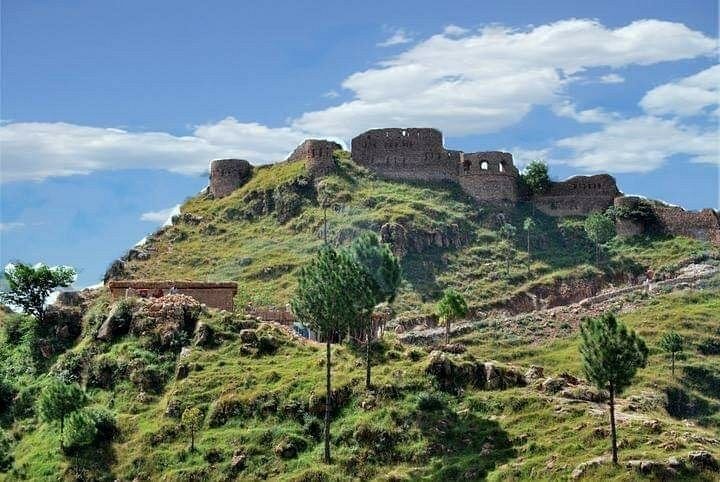
- Famous For: a ruined hill fort also known as Karjai na Qila and Devigarh, with sweeping views over the Bannah Valley toward the Line of Control
- Nearest City: Kotli (about 29 km north-west); Mirpur about 80 km away
- Accessibility: moderate — reachable by road from Khuiratta, then a walk up to the fort; near the Line of Control, so check access locally before going
- Known Landmarks: the fort’s ruined walls and bastions, the Bannah Valley viewpoint, nearby shrine of Mai Toti Sahiba
- Best For: offbeat explorers, history enthusiasts, photographers, and travelers touring Azad Kashmir’s lesser-known heritage
Why Visit Karjai Fort
Some places earn your visit through grandeur; Karjai Fort earns it through mystery. Also, high above the Bannah Valley near Khuiratta, in Kotli District of Azad Kashmir, stand the weathered walls of a hill fort that few Pakistanis have even heard of — let alone visited. In fact, there is no ticket booth, no restored museum, no crowd. There is a ruined fortress on a ridge, a panorama that stretches to the Line of Control. The particular thrill of standing somewhere genuinely undiscovered.
What draws the adventurous here is exactly what the history books leave out. Unlike the documented forts of the Mughal heartland, Karjai Fort — also called Karjai na Qila and Devigarh — comes with almost no published history. This means every visit feels like small-scale exploration. You pick your way through fallen walls, find the old gate, trace the line of bastions along the ridge, and try to imagine the garrison that once watched these passes. For travelers tired of the same Instagram circuit, that is a rare gift.
Views Across the Terraced Bannah Valley
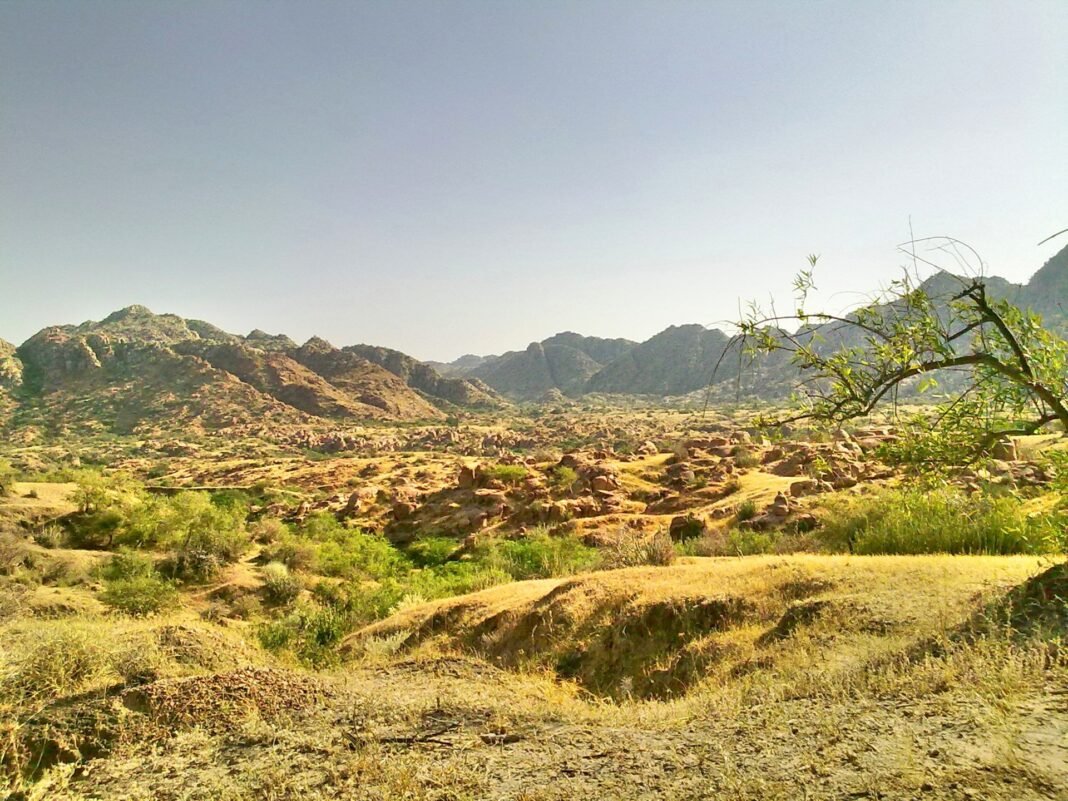
The setting does half the work. Also, the fort overlooks the beautiful Bannah Valley, a green, terraced landscape of villages and orchards that most tourists to Azad Kashmir never see — they head for the famous spots around Muzaffarabad and Neelum and miss Kotli entirely. In fact, from the fort’s heights you look across layered ridges toward the Line of Control, and on clear days the views are genuinely spectacular. Photographers will find ruined stone, dramatic skies, and valley light that changes by the hour.
Karjai Fort is perfect for the traveler who has already done the north’s greatest hits and wants something rawer: a heritage site where you are the archaeologist, the photographer. The audience all at once. Also, come with a local guide from Khuiratta, bring sturdy shoes and a sense of curiosity. You will leave with a story nobody else at dinner has heard.
History of Karjai Fort
Honesty first: very little has been published about the history of Karjai Fort, and any travel guide that gives you a confident founding date is guessing. Also, the fort stands near Khuiratta in Kotli District, a region that has sat on contested frontiers for centuries — between Kashmir’s rulers, Mughal governors, Sikh and Dogra administrations, and in modern times near the Line of Control. For example, hill forts like this one were the standard military architecture of such frontier zones: positions from which a small garrison could watch valleys, passes, and trade routes.
Local tradition links the fort to the Mughal era — some local accounts attribute its building to the reign of the Mughal emperor Akbar — and the fort’s alternative name, Devigarh, suggests older associations that predate the current village memory. Also, the Kotli district administration lists Karjai Fort among the heritage sites of the Khuiratta area, alongside Nidi Sohana and Sora Peer. This confirms its recognized historical standing even where documentation is thin.
A YouTube documentary on Khuiratta describes the fort as roughly two centuries old in its present form, which would place major construction in the Sikh or Dogra period — plausible for a frontier fortification, but not confirmed by archaeological publication.
What is certain is the fort’s more recent story: neglect. Also, visitors and local writers report that most of the walls have fallen, stonework has been looted, and wild growth has taken over the site. The government of Azad Kashmir has no active restoration programme for the fort that is publicly documented. This is why heritage-minded travelers are urged to treat the site with care and to support local voices calling for its protection. Visiting respectfully — and writing about it — is currently the best preservation the fort has.
Top Things to Do in Karjai Fort
Explore the ruined walls and bastions
The fort’s remains sprawl along the ridge above Karjai village. Also, walk the line of the walls, find the gate (largely ruined), and climb to the highest bastion for the full panorama. In fact, the masonry — rough stone set without the fine finishing of imperial Mughal work — tells its own story of a practical frontier fortress. Watch your footing: this is an unrestored ruin, and loose stones and hidden drops are part of the deal.
Take in the Bannah Valley panorama
The view from the fort is the reason many visitors come. Also, the Bannah Valley spreads below in terraces of wheat, maize, and orchards, with villages tucked into folds of green. Toward the east, the ridges run to the Line of Control. Come in the late afternoon when the light turns golden and the valley layers separate into bands of green and blue.
Visit with a local guide from Khuiratta
Because so little is published about the fort, a local guide transforms the visit. Guides from Khuiratta know the paths, the viewpoints, the safe routes up. The stories the village tells about the fort — including the Devigarh name and the legends attached to it. Arrange one through your hotel or by asking in the Khuiratta bazaar.
Combine with Mai Toti Sahiba shrine
About 4 km from Khuiratta stands the shrine of Mai Toti Sahiba, visited by hundreds of devotees daily. Also, it makes a natural cultural pairing with the fort: military heritage in the morning, living spiritual tradition in the afternoon. In fact, dress modestly and observe shrine etiquette.
Famous Places In and Around Karjai Fort
- Khuiratta town — the tehsil headquarters, bazaar, and base for the fort visit
- Nidi Sohana and Sora Peer — heritage and scenic sites listed alongside the fort by the district administration
- Bannah Valley — the terraced valley the fort overlooks, worth a slow drive
- Kotli city — the district capital, 29 km away, with the Poonch River and riverside spots
How to Reach Karjai Fort
Khuiratta lies about 154 km from Islamabad to the east — roughly a 4–5 hour drive depending on traffic and road conditions. The usual route runs from Islamabad toward Gujar Khan and then south-east through the Potohar plateau toward Kotli, continuing 29 km south-east from Kotli to Khuiratta. Also, From Lahore, the journey is approximately 400–450 km via Gujranwala, Dina. Mirpur, best done as a full day’s drive. From Karachi, fly to Islamabad and continue by road.
From Khuiratta town, the fort is about 4 km away at Karjai village. Also, a short drive followed by a walk up to the ridge. The final approach is on foot over rough ground, so wear proper shoes. Public transport reaches Khuiratta (vans and buses from Kotli and Mirpur). You will want a hired car or a local guide’s vehicle for the fort itself. Important: Khuiratta sits approximately 7 km from the Line of Control. Access conditions can change with the security situation, so check with the district administration or your hotel before traveling, and carry identification.
Route Details
- Islamabad → Kotli: head east via the Grand Trunk Road toward Gujar Khan, then south-east through the Potohar region to Kotli (approximately 120–130 km, 3–4 hours).
- Kotli → Khuiratta: 29 km south-east on the metalled road (about 45 minutes).
- Khuiratta → Karjai Fort: about 4 km to Karjai village, then walk up the ridge to the fort (allow 30–45 minutes on foot). Go with a local guide.
Where to Stay in Karjai Fort
There is no accommodation at the fort — stay in Khuiratta or Kotli. Khuiratta has simple guesthouses and small hotels catering to local travelers; they are basic but adequate for a night. Kotli, 29 km away, offers a better range: mid-range hotels on the main road with attached bathrooms, hot water (confirm in winter), and restaurants. For more comfort, Mirpur — about 80 km away — has the best hotels in the region, including well-known chains, and works as a base if you are touring southern Azad Kashmir. Book ahead on weekends and public holidays, when domestic tourism to the area peaks.
Camping near the fort is not advisable given its proximity to the Line of Control and the lack of facilities.
Where to Eat: Local Foods of Karjai Fort
The food of southern Azad Kashmir is hearty Pahari and Kashmiri-influenced fare. Also, In Khuiratta and Kotli, dhabas serve rajma (red kidney beans), daal, and seasonal vegetables with makki di roti (maize flatbread) or tandoori roti — simple, filling, and inexpensive. In fact, Kashmiri chai (pink tea) and doodh patti are the standard drinks. Also, in addition, meat dishes — chicken and mutton karahi, seekh kebabs — are widely available in Kotli’s restaurants. In season, the area’s orchards produce excellent guavas, citrus, and loquats. Hotel restaurants in Kotli serve Pakistani-Chinese and barbecue alongside local dishes.
Carry snacks and water for the fort visit itself, as there are no food stalls at the site.
Weather in Karjai Fort
At around 1,460 metres, the fort’s ridge is cooler than the plains of Punjab but warmer than the high north. Winters are cold with occasional frost. Summers are warm but moderated by altitude; the monsoon (July–September) brings rain that can make the footpath slippery. October to April is the recommended visiting window.
| Season | Temperature Range | Conditions |
|---|---|---|
| Winter (Dec–Feb) | approximately 0°C to 15°C | cold mornings, clear days; carry warm layers |
| Spring (Mar–May) | approximately 12°C to 30°C | pleasant; green valley; excellent for the fort walk |
| Summer (Jun–Aug) | approximately 22°C to 36°C | warm; monsoon rain possible — check the footpath |
| Autumn (Sep–Nov) | approximately 10°C to 28°C | clear and comfortable; ideal for photography |
Language and Culture of Karjai Fort
The people of the Khuiratta area speak Pahari (closely related to the Potohari of northern Punjab) alongside Urdu. Also, this is universally understood. The population is predominantly Muslim, and the culture is conservative and hospitable in the Pahari tradition. Dress modestly — this matters more here than in the tourist north — and greet elders with respect. If you are invited for tea in Karjai village, accept; village hospitality is genuine and refusing can offend. Ask permission before photographing people, especially women. Given the area’s proximity to the Line of Control, avoid photographing military installations, checkpoints, or personnel. This is both a legal requirement and basic courtesy.
Shopping in Karjai Fort
Shopping here means the bazaars of Khuiratta and Kotli, not souvenir shops. Also, look for local honey, desi ghee, and seasonal fruit from the valley’s orchards. In fact, woolen shawls and sweaters are sold in Kotli’s markets at reasonable prices. Pahari-style embroidered items and traditional caps appear in the bazaar. There are no shopping malls near the fort — and that is part of the area’s unspoiled character. For a wider selection, Mirpur’s markets, 80 km away, offer everything from electronics to branded clothing.
Travel Tips for Karjai Fort
Packing Essentials
Sturdy hiking shoes with grip are essential — the fort approach is rough and the stonework is loose. Meanwhile, carry water, sun protection, a hat, and a basic first-aid kit. In fact, in winter, pack warm layers; the ridge is exposed and windy. A fully charged phone and a power bank are wise, as there are no facilities at the site.
Safety Tips
Check access with the district administration or your hotel before going, given the proximity to the Line of Control. Also, go with a local guide, stay on known paths, and do not wander toward restricted areas. The ruin itself demands care: do not climb unstable walls, watch for snakes in the overgrowth (local guides warn of them), and keep children close. Carry identification at all times.
Money & Connectivity
Withdraw cash in Kotli or Mirpur — ATMs in Khuiratta are limited and the fort area has no facilities. Mobile signals (all major networks operate in the area) are generally available in Khuiratta but weaken on the ridge. Inform your hotel of your plans before heading up.
Best Time to Visit Karjai Fort
Autumn (October–November) — the best window
Clear skies, comfortable temperatures, and golden light on the valley make autumn ideal. Also, the footpath is dry, the views are at their sharpest, and the harvest colors the Bannah Valley.
Winter (December–February) — crisp and quiet
Cold but usually clear; you will likely have the fort to yourself. Mornings are frosty, so start after the sun is up. Check road conditions after any rain.
Spring (March–May) — green and pleasant
The valley is at its greenest, wildflowers appear on the ridge, and temperatures are comfortable for the climb. Also, a lovely time for photography.
Summer and monsoon (June–September) — possible but careful
Warm weather makes the walk sweaty, and monsoon rain can make the stone paths treacherous. If you go, choose a dry spell and wear shoes with good grip.
Final Thoughts
Karjai Fort will not give you a polished heritage experience — and that is precisely its appeal. It offers something increasingly rare in Pakistani tourism: a genuine discovery, a ridge-top ruin with a valley spread below it and almost no one else around. The lack of documentation is frustrating for historians, but for the traveler it means the fort still belongs to the imagination.
Pair it with a wider tour of southern Azad Kashmir — Baghsar Fort near Bhimber makes a natural companion piece — and explore more offbeat ideas in our Explore Pakistan collection. Also, go with a guide, tread lightly on the old stones, and leave the fort as you found it: waiting for the recognition it deserves.
FAQs
Where is Karjai Fort located?
Karjai Fort stands on a ridge at Karjai village, about 4 km from Khuiratta town in Kotli District, Azad Jammu and Kashmir, overlooking the Bannah Valley.
Who built Karjai Fort?
Its documented history is scarce. Also, local tradition links it to the Mughal era (some accounts name Emperor Akbar). Its present form may date to the Sikh or Dogra period. It is also known as Karjai na Qila and Devigarh.
How do I reach Karjai Fort?
Drive from Islamabad to Kotli (about 120–130 km), continue 29 km south-east to Khuiratta, then 4 km to Karjai village and walk up the ridge — preferably with a local guide.
What is the best time to visit Karjai Fort?
October to April is the recommended window, with autumn offering the clearest skies and most comfortable walking weather.
Is Karjai Fort safe to visit?
Yes, with precautions: it lies near the Line of Control, so check access with local authorities before going, carry ID, go with a local guide, and avoid photographing military installations.
Is Karjai Fort suitable for families?
Older children who enjoy adventure will love it. Also, the rough, unrestored ruin is not ideal for small children or elderly visitors — the climb involves loose stones and uneven ground.
Where can I stay near Karjai Fort?
In Khuiratta (basic guesthouses) or Kotli, 29 km away, which has mid-range hotels. Also, Mirpur, 80 km away, offers the most comfortable options.
What food is available around Khuiratta?
Hearty Pahari fare: rajma, daal, makki di roti, Kashmiri pink tea, and in Kotli, karahi, kebabs, and barbecue at local restaurants.
How much time do I need at Karjai Fort?
Allow one to two hours at the site itself, plus travel time — it works well as a half-day trip from Kotli or a stop on a southern Azad Kashmir tour.
What else can I see near Karjai Fort?
The shrine of Mai Toti Sahiba (4 km from Khuiratta), Nidi Sohana and Sora Peer, the Bannah Valley drive. Also, Kotli city on the Poonch River.