Quick Facts
- Location: Dharmakhel village, about 3 km from Bannu bus stand on the Kohat Road, across the river; the site sits in a narrow street on the right just after the village entrance
- Altitude: Around 379 metres (Bannu city level)
- Famous For: Once the centre of Bannu’s Sikh sangat; today known locally as the “Dharamsala wala school”
- Nearest City: Bannu (3 km); Kohat and Dera Ismail Khan are the nearest larger cities
- Accessibility: Easy by road; Dharmakhel is minutes from Bannu city on the Kohat Road
- Known Landmarks: The rebuilt primary-school building on the old dharamsala site; Bannu’s old bazaar and the Kurram River nearby
- Best For: Sikh heritage pilgrims, Partition-history travellers, food lovers chasing Bannu’s famous beef pulao
Why Visit Dharamsala Uttam Singh Ji, Dharmakhel
Let us be honest with you from the very first line, because this dharamsala travel guide to Dharmakhel is written for travellers, not tourists. The old Dharamsala Uttam Singh Ji no longer stands. The historic building was demolished and replaced with a new one that now serves as a village primary school, locally called the “Dharamsala wala school.” If you come expecting carved arches and a domed prayer hall, you will be disappointed. If you come to stand where Bannu’s Sikh sangat once gathered, to feel the weight of a community’s memory, and to see how history lives on in a place’s name long after its bricks are gone, then Dharmakhel is worth every kilometre.
This is heritage travel in its most contemplative form. Before 1947, this shrine was the beating heart of Sikh religious life in Bannu, the dharamsala where the city’s Sikhs gathered for prayer, song and community. The building is gone, but the memory is stubbornly alive: the villagers still call the school by the dharamsala’s name, and that single fact tells you everything about how deeply the shrine was rooted here. For Sikh pilgrims tracing the lost sacred geography of Khyber Pakhtunkhwa, standing on this ground matters.
And here is the open secret that makes the journey genuinely rewarding: Dharmakhel is three kilometres from Bannu, and Bannu is one of the great food cities of Pakistan. The same trip that brings you to the old dharamsala site can bring you face to face with Bannu beef pulao, the slow-cooked, marrow-rich rice dish that has its own Wikipedia entry and a cult following across the country. Pair a quiet morning of heritage reflection with a loud, glorious afternoon of eating, and you have a day trip with real soul.
This destination is perfect for a particular kind of traveller: the Sikh pilgrim completing a circuit of Khyber Pakhtunkhwa’s shrines, the Partition-history enthusiast, the photographer of vanishing heritage, and the foodie who plans journeys around a single dish. It is not a family picnic spot and it is not a selfie destination. It is a place to stand quietly, listen to what the ground remembers, and then go eat the best pulao of your life. Come between November and February, when Bannu’s weather is kind and the light is golden.
History of Dharamsala Uttam Singh Ji, Dharmakhel
Dharmakhel is a village on the edge of Bannu city, just three kilometres from the bus stand, sitting on the Kohat Road across the river. In the decades before Partition, when Bannu had a thriving Sikh and Hindu population, this village held the shrine that anchored the Sikh sangat of the whole city. The Dharamsala Uttam Singh Ji stood in a narrow street just inside the village entrance, and it was here that Bannu’s Sikhs gathered for worship and community life.
To understand the shrine, you have to understand Bannu’s place in Sikh history. The Bannu valley fell under Sikh rule in the early nineteenth century during the expansion of Maharaja Ranjit Singh’s kingdom, and a Sikh and Hindu trading community grew up in the city, part of the commercial fabric of the frontier. Dharamsalas like this one were the community’s religious and social centres: part prayer hall, part gathering place, part refuge for travellers. The one at Dharmakhel served that role for Bannu’s Sikhs for generations.
Partition in 1947 changed everything. The Sikh community of Bannu, like Sikh communities across what became Pakistan, largely migrated east, and the dharamsala passed out of community hands into state custodianship. In the years that followed, the old building was eventually demolished and a new building raised in its place. Today it functions as a primary school, and no longer looks like a place of worship at all. Only the name survives: ask any local for the “Dharamsala wala school” and they will point you down the narrow street to the site.
There is a melancholy honesty to this story that makes it worth telling straight. Across Pakistan, Sikh heritage sites have met very different fates: some preserved and celebrated, some repurposed, some lost entirely. Dharmakhel belongs to the middle category, a shrine that lives on as a school. For the heritage traveller, that is not a reason to skip it. It is the reason to come: to witness, respectfully, how history actually survives, not in monuments behind glass but in the names people still use.
Top Things to Do in Dharamsala Uttam Singh Ji, Dharmakhel
Visit the Dharamsala Site in Dharmakhel Village
The site itself is a short drive or rickshaw ride from Bannu’s bus stand: three kilometres out on the Kohat Road, across the river, into the village, then a narrow street on the right just past the entrance. Ask for the “Dharamsala wala school” and everyone will know it. Remember you are visiting a working primary school. Go after school hours or on a holiday, dress modestly, ask permission before entering the premises, and keep photography discreet and consensual. Stand for a moment where the sangat once gathered. For many Sikh visitors, that quiet act of remembrance is the entire pilgrimage.
Eat Bannu Beef Pulao at Its Source
This is the experience that turns a heritage stop into a legendary day trip. Bannu beef pulao, also called Banuse pulao, is the district’s gift to Pakistani cuisine: beef slow-cooked on the bone with marrow until it surrenders into the stock, long-grain rice cooked separately with ghee and whole spices, the two married in a long dum, and the whole thing crowned with browned onions, green chillies and lemon. It is traditionally a dish for special occasions, rich enough to be a meal and a memory at once. Eat it in Bannu, where the spices and rice come from the surrounding region and the recipe has been perfected over generations. Order the pulao, add a plate of chapli kebab, and thank us later.
Walk Bannu’s Old Bazaar
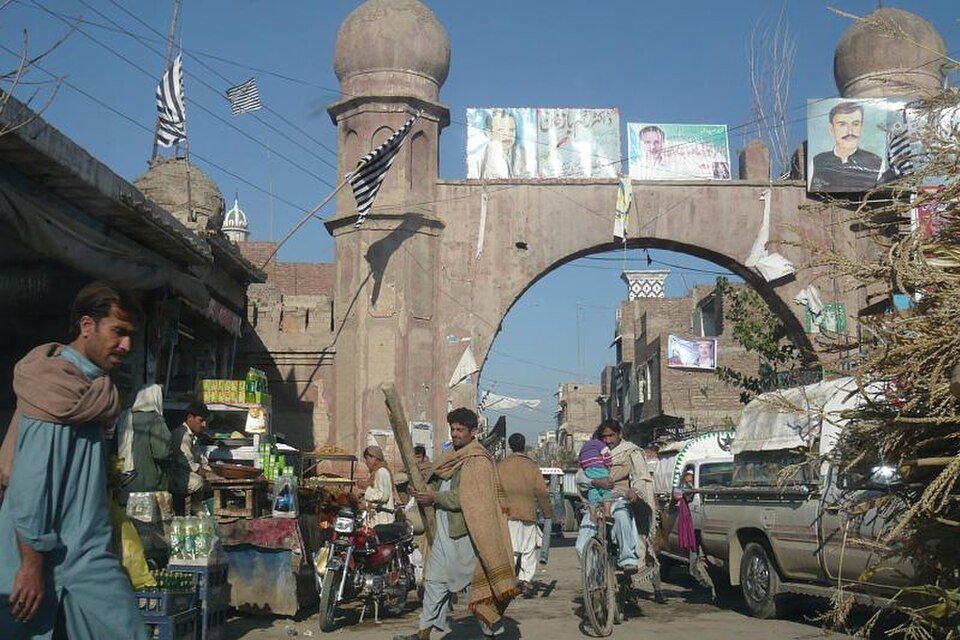
Bannu’s bazaar is a classic frontier market town at work: spice merchants, cloth sellers, sweet shops, and the constant theatre of a city that has traded for centuries. It is rougher and more real than the curated bazaars of the big cities. Walk it in the late afternoon, when the light softens and the food stalls fire up, and you will understand why travellers remember Bannu’s streets as vividly as its food.
Visit Jogiwara Sher Nath, Bannu
Bannu’s heritage is not only Sikh. The old Jogiwara quarter and its shrines speak to the city’s layered Hindu past, and pairing the dharamsala site with the surviving Hindu heritage of the city gives you the fuller story of pre-Partition Bannu. Our companion guide to Jogiwara Sher Nath in Bannu maps that trail.
An Evening by the Kurram River
The Kurram River runs by Bannu, and its banks are the city’s natural breathing space. An evening walk along the river as the heat of the day dissolves is the gentle way to close a day that began with history and peaked with pulao.
Famous Places In and Around Dharamsala Uttam Singh Ji, Dharmakhel
- Jogiwara Sher Nath, Bannu — the city’s historic Hindu quarter and shrine heritage.
- Bannu’s old bazaar — the frontier market at the heart of the city.
- The Kurram River — Bannu’s river and evening promenade.
- Dharamsala Bhai Gurdas, Shikarpur — another historic dharamsala of the region for pilgrims extending their circuit (see our companion guide).
How to Reach Dharamsala Uttam Singh Ji, Dharmakhel
Getting here means getting to Bannu, and Bannu is well connected by road to the rest of Khyber Pakhtunkhwa and Punjab. Dharmakhel village itself is practically a suburb: three kilometres from the Bannu bus stand on the Kohat Road.
From Islamabad: Approximately 300 km by road, taking around 4 to 5 hours. The faster routes run via the motorway network and then south through the Indus Highway corridor. It is an easy morning drive that puts you in Bannu in time for lunch, which, given the pulao situation, is exactly the schedule you want.
From Lahore: Route via Islamabad, making it a full day’s journey of roughly 8 to 10 hours. Most travellers break it in Islamabad or Peshawar. From Peshawar, Bannu lies about 210 km to the south via Kohat on the Indus Highway (N-55), through Karak.
From Karachi: Fly to Islamabad or Peshawar and continue by road. The overland journey from Karachi is well over 1,000 km and not practical for a short trip.
Nearest airport: Bannu Airport (BNP) exists but has very limited commercial service. Plan on Islamabad International Airport as the reliable gateway, then drive. Within Bannu, auto-rickshaws and Qingqis will get you to Dharmakhel village in minutes; the site is in a narrow lane, so the last stretch is on foot.
Road conditions on the main highways are generally good. Travel in daylight, and in the summer months start early to beat the heat that builds ferociously by midday on these plains.
Route Details
Step by step from Islamabad: (1) take the motorway network south and west toward the Indus Highway corridor; (2) follow the N-55 south through the Kohat and Karak region toward Bannu; (3) enter Bannu city and make for the main bus stand; (4) from the bus stand take the Kohat Road, cross the river, and after about 3 km enter Dharmakhel village; (5) just past the village entrance, turn into the narrow street on the right and ask for the “Dharamsala wala school.” Time your arrival for after school hours.
Where to Stay in Dharamsala Uttam Singh Ji, Dharmakhel
Bannu is a divisional city, so it has a reasonable spread of practical accommodation, though nothing in the luxury-resort category. Mid-range hotels in the city centre offer air-conditioned rooms with attached baths and are the sensible choice for most visitors. They are inexpensive, centrally located, and put you within easy reach of both Dharmakhel and the bazaar.
Budget guesthouses cluster around the bus stand and commercial areas. They are basic but functional, and for a single night they do the job. As with smaller cities across the province, it pays to look at the room before committing and to confirm that the air-conditioning works, because you will need it for much of the year.
There is no reason to stay in Dharmakhel village itself; base yourself in Bannu city, where the hotels, restaurants and transport all are. If you are combining Bannu with Dera Ismail Khan or Kohat, each city is a comfortable few hours apart, so a multi-stop southern Khyber Pakhtunkhwa circuit works well with a night in each.
Where to Eat: Local Foods of Dharamsala Uttam Singh Ji, Dharmakhel
Let us not pretend: for many travellers, the food is the main event, and Bannu does not disappoint. Bannu beef pulao is the dish the district is famous for nationwide. Beef cooked slowly on the bone with marrow, rice fragrant with ghee and whole spices, finished with fried onions, slit green chillies and lemon wedges, served hot with yogurt or raita on the side. It is traditionally made for special occasions and takes hours to cook properly, which is why eating it at a Bannu institution, where the craft is a point of civic pride, is a genuine culinary pilgrimage.
Around the pulao, Bannu’s tables hold the full Pashtun-frontier repertoire: chapli kebab, crisp-edged and fiery; seekh kebabs and tikka from the evening grills; namkeen gosht in its simplest, saltiest glory; and qeema plates with fresh tandoori roti. Breakfast at a local dhaba means anda paratha or halwa puri with doodh patti, eaten elbow to elbow with shopkeepers starting their day.
Meals here are famously budget-friendly. A plate of pulao at a beloved local spot costs a fraction of what a mediocre biryani costs in the big cities, and the memory lasts far longer. Eat where the locals queue; in Bannu, the queue is the review.
Weather in Dharamsala Uttam Singh Ji, Dharmakhel
Bannu sits in a low valley bowl, and its climate is extreme at both ends: blazing summers and surprisingly sharp winter nights. The rule is simple. Come in winter. June afternoons regularly push past 40°C, while January nights can fall to around 2°C. The November to February window gives you the Bannu worth visiting: clear skies, golden light, and air cool enough to walk the bazaar and the village lanes in comfort.
| Season | Temperature Range | Conditions |
|---|---|---|
| Winter (Nov-Feb) | 2-20°C | Cool nights, mild sunny days; the ideal season for heritage visits and bazaar walks |
| Spring (Mar-Apr) | 18-33°C | Pleasant mornings, warming afternoons; a good shoulder season |
| Summer (May-Aug) | 30-42°C+ | Intensely hot; June afternoons pass 40°C; plan outings for early morning or evening |
| Autumn (Sep-Oct) | 25-36°C | Heat eases; October evenings turn comfortable |
Language and Culture of Dharamsala Uttam Singh Ji, Dharmakhel
Pashto is the language of Bannu and Dharmakhel, spoken in the distinctive Bannuchi dialect, with Urdu widely understood for visitors. The population is predominantly Pashtun, including Bannuchi and Wazir communities, and the culture is that of the southern frontier: conservative, honour-bound, and extraordinarily hospitable to guests.
For visitors, the etiquette is straightforward. Dress modestly. Greet people warmly; a handshake and a smile open every door in Bannu. If you are visiting the school that now occupies the dharamsala site, remember you are a guest in a place of learning: seek permission, speak quietly, and do not disrupt classes. Photography of people, especially women and children, should only ever be with explicit consent.
Friday afternoons slow down for prayers, and during Ramadan the city’s rhythm shifts to the night. Travellers who show respect for local norms find Bannu’s people among the warmest hosts in the province; the frontier reputation for hospitality is entirely deserved.
Shopping in Dharamsala Uttam Singh Ji, Dharmakhel
Bannu’s bazaar is a working market, not a tourist strip, which makes it more interesting. You will find everyday frontier commerce at its most vivid: cloth merchants, spice pyramids, dried fruits and nuts, traditional caps and shawls, and kitchenware stacked to the ceiling. Prices are honest and bargaining is gentle.
The edible souvenirs are the ones to prioritise. Dried fruits, nuts and local spices travel well, and a parcel of the spice mix used in the local pulao, if a shopkeeper will part with it, is the gift that keeps your Bannu memories alive at home. There are no verifiable large shopping malls in this quarter of the city, and you will not miss them; the bazaar is the whole point.
Travel Tips for Dharamsala Uttam Singh Ji, Dharmakhel
Packing Essentials
For a winter trip: a warm jacket for the sharp nights, comfortable walking shoes for village lanes and bazaar streets, sun protection even in winter, and a reusable water bottle. In summer, which we do not recommend, you would need serious heat gear: a wide hat, light cotton clothing and constant hydration. A small daypack carries your camera, water and the inevitable bag of bazaar purchases.
Safety Tips
The dharamsala site is a school: visit after hours, ask permission, and be discreet. In the wider Bannu region, check current travel advisories before your trip, as the security situation in parts of southern Khyber Pakhtunkhwa can change. Travel in daylight, keep valuables out of sight in crowded bazaars, and consider travelling with a local contact. These are the standard, sensible precautions for the region, and they leave you free to enjoy it.
Money & Connectivity
ATMs are available in Bannu city; the village lanes and bazaar stalls run on cash, so carry enough rupees for the day. Mobile coverage from the major networks is generally reliable in the city and along the main roads. Download offline maps before heading into the village lanes.
Best Time to Visit Dharamsala Uttam Singh Ji, Dharmakhel
Winter (November to February) — The Only Season That Makes Sense
Cool nights, mild days, golden light on the bazaar and comfortable walking weather in Dharmakhel village. This is when Bannu shows its best self, and when a heritage visit feels contemplative rather than punishing.
Spring (March to April) — A Good Second Choice
Mornings are lovely and the countryside around Bannu greens up. Do your village and heritage visits early in the day before the afternoon heat builds.
Summer (May to August) — Avoid
With afternoons past 40°C, this is not heritage-walking weather. If you must come, restrict outings to dawn and dusk and spend midday indoors.
Autumn (September to October) — Warm but Improving
The worst of the heat breaks through October. Late October can be a pleasant, crowd-free time for the trip.
Final Thoughts
Dharamsala Uttam Singh Ji will never be the most photographed stop on your travels through Pakistan, and it was never trying to be. Its power is quieter: a village school that still carries a shrine’s name, a narrow lane where a community once gathered, a reminder that history does not only live in preserved monuments. It lives in names, in memory, and in the ground itself.
Go with honest expectations and you will be rewarded: a moment of genuine connection with the Sikh heritage of the frontier, a walk through one of Pakistan’s most characterful bazaars, and a plate of beef pulao that justifies the entire journey on its own. Winter light, a respectful manner, and an appetite: that is the whole packing list. For more journeys into Pakistan’s layered past, keep exploring our Explore Pakistan series, including our other dharamsala guides like Dharamsala Bhai Gurdas in Shikarpur.
FAQs
Where is Dharamsala Uttam Singh Ji located?
In Dharmakhel village, about 3 km from Bannu bus stand on the Kohat Road, across the river, in a narrow street on the right just after the village entrance.
Does the original dharamsala building still exist?
No. The old building was demolished and replaced with a new building that now houses a primary school, locally known as the “Dharamsala wala school.”
What is the best time to visit Dharmakhel and Bannu?
November to February. Summers are extremely hot (past 40°C) and winter nights can be cold (around 2°C), but winter days are ideal for visiting.
How do I reach Bannu from Islamabad?
By road, approximately 300 km, taking 4 to 5 hours via the motorway and Indus Highway corridor.
Can I enter the school building?
Only with permission, and best attempted after school hours or on a holiday. Be respectful: it is a working school, not a tourist site.
Is the trip suitable for families?
As a heritage stop it suits older children and adults interested in history; pair it with Bannu’s bazaar and food for a fuller family day out.
What should I eat in Bannu?
Bannu beef pulao, the district’s famous slow-cooked marrow-rich rice dish, plus chapli kebab and seekh kebab from the evening grills.
Why visit if the building is gone?
Because the site was the centre of Bannu’s Sikh sangat before 1947, and for heritage pilgrims and history lovers, standing where that community gathered, in a village that still speaks the shrine’s name, is a meaningful encounter with a vanished world.