Karachi Double-Decker Electric Buses Get New Routes
Karachi double-decker electric buses arriving this month will get routes and operational arrangements finalised before they are deployed, after the Sindh government moved to prepare for a fresh fleet for the metropolis. The city’s public transport network is set for another expansion, with the new buses expected to serve major thoroughfares, commercial hubs, educational institutions and residential neighbourhoods, particularly areas where commuters face an acute shortage of public transport.
The directives were issued by Sindh Senior Minister Sharjeel Inam Memon while he chaired a meeting of the Transport and Mass Transit Department. The meeting reviewed preparations for the incoming fleet and progress on ongoing Bus Rapid Transit projects. Memon said another batch of double-decker and electric buses was expected to reach Karachi this month, and he directed officials to finalise routes, charging stations, depots, bus stops and other technical and administrative arrangements ahead of their deployment.
Double-decker electric buses: what officials must settle
The list of preparations shows how much work sits behind a bus launch. Routes must be chosen, charging stations must be ready for the electric vehicles, depots must be arranged, and bus stops must be in place. Technical and administrative arrangements, from scheduling to staffing, must also be settled before the buses carry passengers.
The emphasis on areas with an acute shortage of public transport is the most important part of the plan. A new fleet adds little if it only duplicates routes that are already served, while neighbourhoods with few options stay unserved. By directing officials to cover commercial hubs, educational institutions and residential neighbourhoods, the government has set a test for the rollout: whether the new buses reach the commuters who need them most.
How the new fleet fits Karachi’s bus network
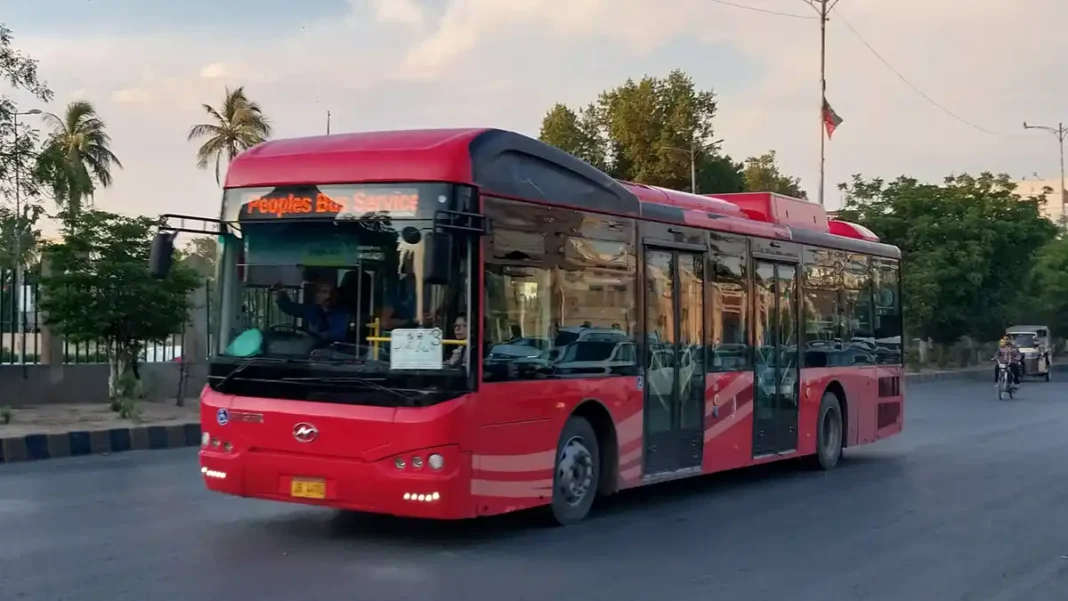
Karachi’s existing Peoples Bus Service began in June 2022, when around 240 air-conditioned buses were planned for seven routes across the city, starting with a route from Model Colony to Tower. That service gave Karachi a modern intra-city fleet after years of complaints about ageing and overcrowded buses. The double-decker and electric batch now arriving adds two features the earlier fleet did not offer at scale: double-decker capacity on busy corridors, and electric operation, which cuts tailpipe emissions on the routes the buses serve.
Electric buses also need different support from diesel or hybrid buses. Charging stations, depot power supply and maintenance skills for electric drivetrains must be ready, which is why the meeting’s instruction to finalise charging stations before deployment matters. A bus that cannot charge reliably cannot keep a timetable, however new it looks.
The expansion also connects with Karachi’s wider transport and air quality picture. Feature Pakistan reported that air pollution costs Pakistan 6.5 per cent of GDP, with vehicles among the main sources of pollution in Lahore, and on electric vehicle deliveries in Pakistan. Electric buses will not solve that problem alone, but each diesel trip they replace removes one more polluting vehicle from a crowded road.
What to watch next
Three things will show whether the plan works. First, whether the buses actually arrive this month as stated. Second, whether the routes announced cover the underserved areas named in the meeting, rather than only the busiest corridors. Third, whether charging stations, depots and bus stops are ready on day one, so the fleet runs as a service and not as a launch event. The Tribune report gives the full account of the meeting and the directives issued.
Frequently asked questions
When will the new buses arrive in Karachi?
Sindh Senior Minister Sharjeel Inam Memon said another batch of double-decker and electric buses was expected to reach Karachi this month.
Which areas will the new buses serve?
The government aims to serve major thoroughfares, commercial hubs, educational institutions and residential neighbourhoods, particularly areas where commuters face an acute shortage of public transport.
What must officials finalise before deployment?
Officials must finalise routes, charging stations, depots, bus stops and other technical and administrative arrangements.
Who issued the directives?
Sharjeel Inam Memon issued the directives while chairing a meeting of the Transport and Mass Transit Department.
Is the photo the new fleet?
No. The photo shows a Peoples Bus Service bus in Karachi and is used as a file photo; it is not a picture of the incoming double-decker and electric batch.