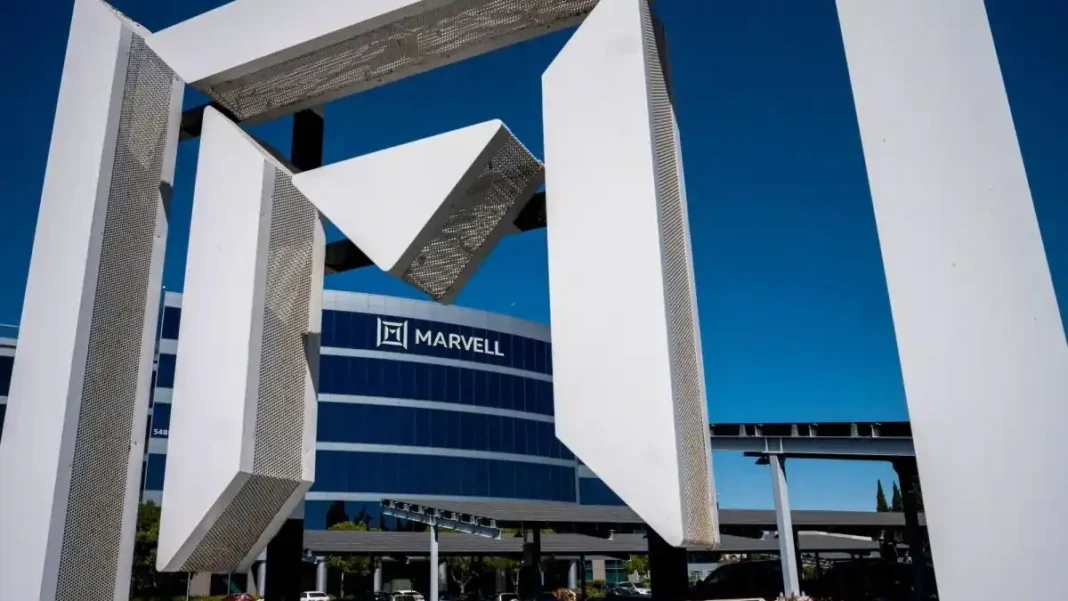
Marvell Buys Lumentum in $115 Billion AI Deal
Marvell Lumentum deal terms were announced on November 2, 2026, in an all-stock takeover that values the laser and optics specialist at an implied enterprise value of about $115 billion. The agreement joins Marvell’s custom AI chips and networking gear with Lumentum’s lasers and optical parts, in the largest technology deal of 2026 so far.
Under the definitive agreement, Lumentum shareholders will receive 4.5 Marvell shares for each Lumentum share they hold. That fixed ratio values Lumentum at roughly $1,132 per share, a 23.9 per cent premium to its unaffected closing price on October 28, the last trading day before market speculation about a deal surfaced.
Marvell shareholders will own about 67 per cent of the combined company, while Lumentum holders will own about 33 per cent. Both boards approved the deal unanimously. The companies expect it to close in the first half of 2028, subject to shareholder votes and regulatory clearance.
Marvell Lumentum deal: what each side brings
Marvell designs custom accelerated-compute silicon, network switching gear, electrical and optical interconnects, and advanced packaging. Lumentum makes high-performance lasers, optical transceivers, optical circuit switches, and specialised compound semiconductor parts, including indium phosphide capability.
Put together, the two firms cover the full signal chain inside an AI data centre, from the chip to the light that carries data between racks. Marvell says the combined company will target a $550 billion addressable market. It also expects more than $1 billion in annual run-rate cost savings, and higher non-GAAP earnings per share in the first year after closing.
Marvell chairman and chief executive Matt Murphy will stay in both roles. Three Lumentum directors, including chief executive Michael Hurlston, will join a slimmed seven-member Marvell board.
Why optics now sit at the centre of AI spending
The deal rests on a simple technical shift. As AI clusters grow faster, copper links have reached their useful limits for moving data at speed. Lasers and transceivers inside optical links have therefore become one of the fastest-growing items in AI hardware budgets.
Owning both sides of that link lets Marvell sell one pre-tested connectivity package to large cloud customers, instead of asking them to stitch parts from separate suppliers together. It also puts the combined firm more squarely against Broadcom, which has been advancing on the same ground.
Nvidia, the dominant AI chipmaker, sits on both sides of the table. It holds roughly a $2 billion position in each company, after investing in Lumentum in March as part of a multi-year laser supply agreement and separately in Marvell’s optical portfolio. A combined supplier reduces fragmentation in the optics chain that Nvidia itself depends on.
Why both stocks fell on the news
The market reaction cut against the logic of the deal. Marvell shares slid about 9 per cent in Monday trading after rising 3.4 per cent before the market opened. Lumentum shares, up briefly after the announcement, slumped 15 per cent by the close.
The all-stock structure explains much of that reaction. Lumentum holders receive a fixed number of Marvell shares, not a fixed cash sum, so the value they get moves with Marvell’s share price. When Marvell fell, the value of the offer fell with it. Investors also weighed dilution for existing Marvell holders and the long wait until a 2028 closing, during a week when chip stocks were already sliding on AI spending concerns.
In other words, the premium was calculated against October 28 prices, before speculation lifted both stocks. By Monday, that headline premium no longer matched what Lumentum holders would actually receive.
What it means for Pakistan
For readers in Pakistan, the deal is a signal about where telecom and data-centre spending is heading, rather than a change that arrives overnight. Cheaper and faster optical links shape the cost of cloud services, video streaming and AI tools that Pakistani firms and users rely on every day.
Pakistan’s own connectivity build-out is still under way. Feature Pakistan reported that the country now has about 1.8 million 5G users across 24 cities, and that Pakistan tops the world in YouTube viewing, with 560 million videos watched each day. Both trends depend on the same data-centre and optical infrastructure this deal targets. If fewer, larger optics suppliers mean longer design cycles and higher minimum orders, smaller regional assemblers and telecom builders could feel the squeeze first.
The deal still has three hurdles to clear: shareholder votes, regulatory review, and integration before 2028. Until then, it remains an agreement, not a completed merger.
The deal comes as Samsung launched new Galaxy phones, and as the New York Times sued Brave over AI scraping.
Frequently asked questions
How much is the Marvell Lumentum deal worth?
The deal carries an implied enterprise value of about $115 billion, paid entirely in Marvell stock rather than cash.
What will Lumentum shareholders receive?
Lumentum shareholders will receive 4.5 Marvell shares for each Lumentum share, valuing Lumentum at roughly $1,132 per share based on October 28 prices.
When will the deal close?
The companies expect closing in the first half of 2028, subject to shareholder approvals from both firms and regulatory clearance.
Why did both companies’ shares fall after the announcement?
Both stocks fell because the deal is paid in shares, so Lumentum holders saw the value of their offer drop as Marvell shares slid, while Marvell holders faced dilution and a long wait until closing.
Who will lead the combined company?
Marvell chairman and chief executive Matt Murphy will stay in both roles, and three Lumentum directors, including chief executive Michael Hurlston, will join the board.