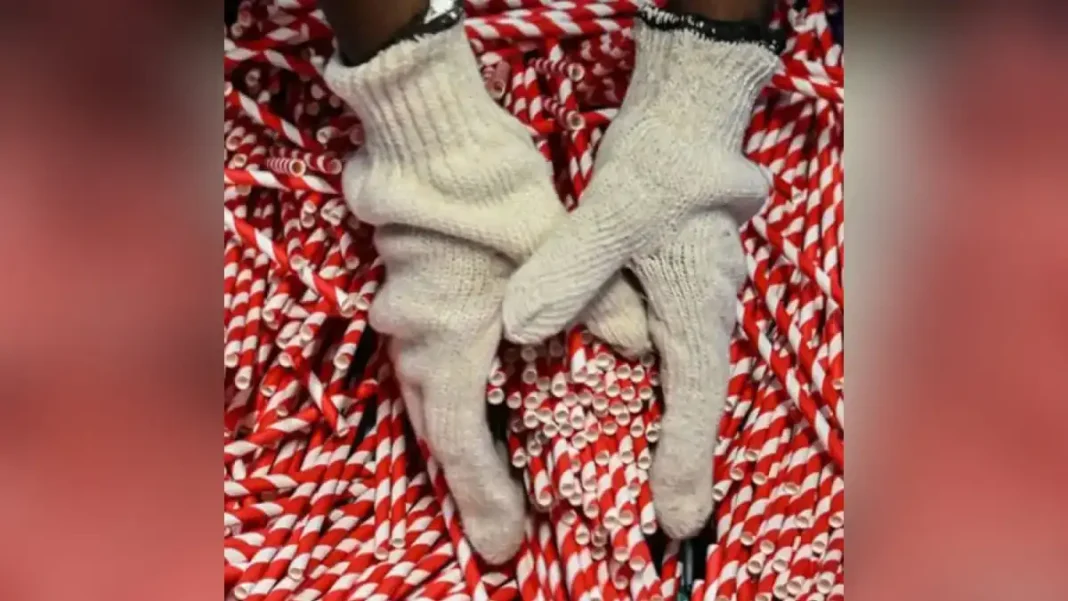
A South Korean study has found paper straws worse than plastic across a key environmental measure, challenging the idea that paper is always the greener choice. Paper straws scored 6.33 times higher than conventional plastic straws for human carcinogenic impact through manufacture, use and disposal.
The report was commissioned by the Ministry of Climate, Energy and Environment and disclosed by Rep. Kim Wi-sang of the People Power Party. It assessed four types of straws: conventional plastic, paper, biodegradable plastic and bio-based polyethylene, known as bio-PE. Researchers measured impacts from raw material production through disposal across 16 categories.
The study numbers behind paper straws worse than plastic
The table below sets out the headline multiples against conventional plastic straws, as reported from the study.
| Straw type | Carcinogenic impact | Acidification impact | Particulate matter impact |
|---|---|---|---|
| Paper | 6.33 times | 2.04 times | 1.62 times |
| Bio-PE | 16.18 times | 5.90 times | 12.02 times |
| Biodegradable plastic | 3.34 times | 1.98 times | 1.97 times |
Conventional plastic straws had the smallest impact in 10 of the 16 categories, including climate change, acidification, particulate matter and human toxicity. Bio-PE straws had the largest impact in 10 categories, including ozone depletion, acidification and smog. Paper straws had the largest impact in three categories, while biodegradable plastic straws led in two.
Bio-PE is made from renewable plant-based sources such as sugarcane, but it is chemically identical to conventional polyethylene and does not biodegrade. It is distinct from biodegradable plastic, which breaks down through biological processes.
Why paper straws worse than plastic is not the full story
The carcinogenic figure needs careful reading. It is a modelled life-cycle measure, not a direct measure of cancer risk to people using the straws. It reflects emissions and exposures counted across production, transport, use and disposal, rather than the risk from sipping through one straw. The assessment assumed 73.6 per cent of discarded straws were incinerated and 26.4 per cent sent to landfill, so a different waste mix would change the results.
A second finding cuts across all four materials. Paper straws are often promoted as recyclable, but the study found that straws of all materials are difficult to recycle in practice. Their small size makes them hard for sorting facilities to separate, and coatings and adhesives can also hinder recycling.
The policy that led to the study
South Korea introduced restrictions on plastic straws at cafes and restaurants in November 2022. The government then indefinitely extended the enforcement grace period in November 2023 amid public complaints and questions about the policy’s effectiveness. Kim said the government must acknowledge the failure of its greenwashing policy and focus on reducing the overall use of disposable products.
A survey of 1,001 people included in the report found that 87.5 per cent said they preferred plastic straws. Some 54.4 per cent supported providing straws only when customers requested them, while 18.4 per cent opposed that policy. Researchers recommended that stores not provide any type of disposable straw by default and offer one only upon request.
What this means for readers
The lesson of the study is about use, not about picking a winning material. Swapping plastic for paper, bio-PE or biodegradable plastic did not lower the measured burden in this assessment. Cutting the number of disposable straws used at all is the step the researchers back.
That point travels well beyond South Korea. Pakistan has wrestled with its own single-use plastic rules, and Feature Pakistan has reported on the deadlock over a PET bottle ban, where producers and officials have failed to agree on a way forward. The South Korean evidence suggests that a ban which simply swaps one disposable material for another may not deliver the environmental gain it promises.
For households, the practical advice in the report is simple. Refuse a straw when one is not needed. Ask for one only when it helps. Those steps cut waste whatever material a cafe stocks.
Source reporting: Dawn, corroborated by the Korea Herald and SBS.
Does using a paper straw give you cancer?
No, not on the evidence of this study. The 6.33 figure is a modelled life-cycle measure, not a direct measure of cancer risk to people using straws.
Which straw scored worst overall?
Bio-PE scored worst, with 16.18 times the carcinogenic impact of conventional plastic and the largest impact in 10 of the 16 categories measured.
What do the researchers recommend instead?
They recommend that stores stop providing any disposable straw by default and offer one only when a customer asks for it.