The Bulgaria election runoff is set for November 1 after no candidate won the first round of the presidential election outright on Sunday, with low turnout and the war in Ukraine shaping the contest.
President Iliana Iotova narrowly led the first round, exit polls showed, in a vote held amid security concerns following a series of drone attacks on ships in the Black Sea. She will face Andrey Gyurov, a banker and former caretaker prime minister backed by the pro-Western opposition, in the runoff.
The first-round numbers in the Bulgaria election runoff race
Exit polls put Iotova on between 35 and 36.5 per cent of the vote, with Gyurov second on between 32.2 and 32.5 per cent. The result was closer than expected, with surveys ahead of the vote predicting a comfortable win for Iotova.
The Central Election Commission count, with 95.29 per cent of precinct protocols received, gave a similar picture: Iotova and her running mate Kiril Valchev on 506,628 votes, or 34.598 per cent, and Gyurov and Georgi Kandev on 469,143 votes, or 32.038 per cent. Kostadin Kostadinov and Petar Volgin followed on 184,850 votes, or 12.64 per cent. A total of 4.4 per cent of voters, or 64,668 people, chose the “I do not support any candidate” option.
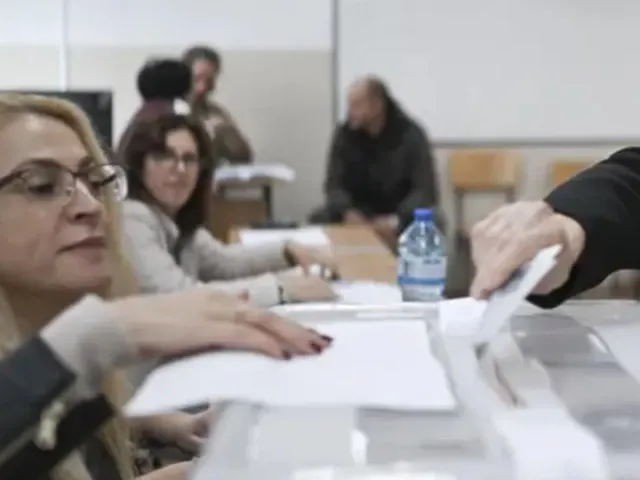
Turnout was only around 20 per cent according to the polls, and 22 per cent according to the election commission count. To win outright in the first round, a candidate needs more than half the votes with more than half of registered voters taking part. Neither condition was met, so the top two tickets advance to the runoff on November 1.
Two very different candidates
Iotova, 62, favours dialogue with Moscow and opposes military aid to Ukraine. She has made the war in Ukraine a central theme of her campaign, promising to be a “president of peace”. After casting her vote, she said she wanted to address “the dire issue of poverty” in the European Union’s poorest member state, “alongside inequalities and regional disparities”.
Gyurov offers the opposite pitch. He said he wanted “a Bulgaria that looks forward, a country that is European, free, and proud… and where the state works as it should”.
The contrast captures a wider divide in Bulgarian politics. Iotova’s camp leans toward dialogue with Russia and restraint on Ukraine aid. Gyurov’s camp leans toward the European Union and NATO mainstream, with a pro-Western opposition behind him.
The Black Sea shadow over the vote
Four vessels were struck off Bulgaria’s coast this month, leaving 21 people missing, in suspected spillover from the Russia-Ukraine war. Prime Minister Rumen Radev said the attacks appeared to serve Russian interests and summoned the Russian ambassador, while his government insists there is so far no evidence directly linking Moscow to them.
Iotova took over as president this year when Radev stepped down to run in parliamentary elections, so the runoff decides whether she wins a full term in her own right.
That backdrop helps explain why security dominated the campaign. Bulgaria is a member of both the European Union and NATO, and its Black Sea coast sits close to the war. Attacks on shipping bring the conflict home in a direct way, even for voters far from the front lines.
Feature Pakistan has covered the Black Sea shipping attacks before, including drone attacks on two ships that left sailors missing. The October strikes off Bulgaria’s coast form part of that same pattern of risk to commercial shipping.
What happens next
The two leading tickets now have one week to win over voters, including the large majority who stayed home on Sunday. Iotova has expressed concern over the low turnout, saying: “Thinking that we can change anything in the country without voting is an illusion.” Gyurov has called for an open debate ahead of the runoff. Official results are expected by Tuesday evening.
Source reporting: The Express Tribune (AFP), with count figures from Radio Bulgaria.
Who is leading the Bulgarian presidential election?
President Iliana Iotova leads with about 35 per cent of the first-round vote, ahead of Andrey Gyurov on about 32 per cent, with the runoff set for November 1.
Why is there a runoff?
No candidate won more than half the votes, and turnout stayed near 22 per cent, so the top two tickets advance to a second round under Bulgaria’s election rules.