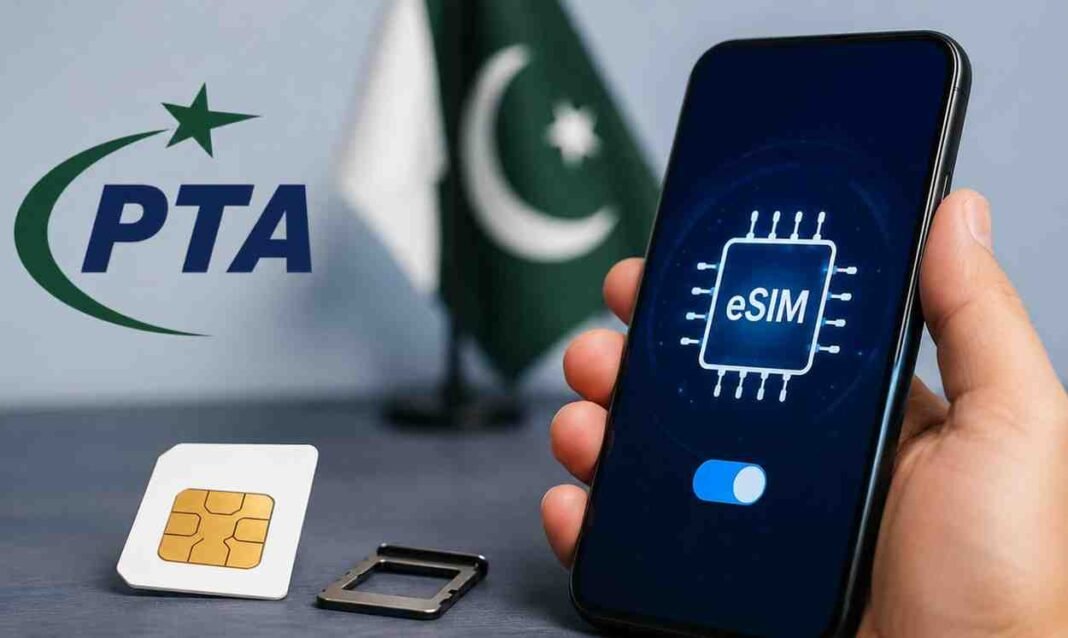
The Pakistan Telecommunication Authority has announced major changes to eSIM charges in Pakistan. Under the new policy, the regulator has reduced the maximum PTA eSIM Fee to Rs 1,500 for initial activation.
The authority has also introduced another benefit for mobile users. Subscribers will now get up to 10 free eSIM transfers between compatible smartphones.
PTA will implement the revised policy from August 17, 2026. Therefore, customers who use eSIM-supported devices can benefit from the new charging structure after the policy takes effect.
The decision aims to make eSIM services easier and more affordable for mobile subscribers across Pakistan. Moreover, it could reduce unnecessary visits to customer service centers for routine eSIM-related matters.
A parliamentary committee had earlier directed PTA to improve the overall eSIM experience. Consequently, the authority reviewed the existing system and held discussions with cellular operators.
The committee specifically wanted the regulator to make digital SIM services more user-friendly. At the same time, it encouraged PTA to reduce the need for customers to visit service centers physically.
The revised PTA eSIM Fee directly addresses one of the main concerns about the cost of adopting eSIM technology. Customers will now know the maximum amount operators can charge for initial eSIM activation.
An eSIM works differently from a traditional physical SIM card. Instead of inserting a plastic SIM into a phone, users activate the mobile connection digitally on a compatible device.
This technology can make switching between supported devices more convenient. Furthermore, it removes the need to handle or replace a physical SIM card during many common situations.
PTA says the current system already supports multiple transfers between devices. Users can complete these transfers through the QR code they receive during the original purchase and activation process.
Therefore, customers can use the same activation mechanism when moving their eSIM to another supported smartphone. PTA says this process can help users avoid additional charges during eligible transfers.
However, the regulator has now formalized the charging structure after consulting cellular operators. The revised rules clearly set the maximum initial PTA eSIM Fee at Rs 1,500.
The policy also gives subscribers up to 10 free transfers between compatible devices. As a result, customers who regularly change smartphones could save money under the revised arrangement.
The changes could also encourage more smartphone users to explore eSIM technology. However, customers will still need a device that supports eSIM functionality and meets the operator’s requirements.
Many newer smartphones offer eSIM support alongside traditional SIM slots. Consequently, the technology gives users more flexibility when managing mobile numbers and connections on supported devices.
PTA’s latest move also forms part of broader efforts to modernize Pakistan’s telecommunications services. Meanwhile, the regulator continues to work on improving security around SIM issuance and ownership verification.
PTA is coordinating with the National Database and Registration Authority and cellular operators on these security measures. Together, the organizations aim to strengthen subscriber verification and reduce risks linked to unauthorized SIM use.
The regulator also plans to introduce a multi-factor subscriber verification system. This system could add more checks when operators issue SIMs or verify subscriber identities.
Such measures can become increasingly important as more telecom services move toward digital platforms. Therefore, stronger identity checks can help authorities protect customers while expanding convenient digital services.
The revised PTA eSIM Fee could particularly benefit customers who want to switch between compatible phones. Instead of facing repeated transfer charges, eligible subscribers will receive up to 10 free transfers.
For customers, the policy offers both financial and practical benefits. The Rs 1,500 maximum initial charge creates a clearer price limit, while free transfers provide greater flexibility after activation.
The move may also reduce pressure on physical customer service centers. If subscribers can complete more eSIM-related processes digitally, operators can offer a smoother experience without requiring frequent branch visits.
Furthermore, digital processes can save customers valuable time. Users may no longer need to travel to a service center for every compatible device change when the existing QR-based process supports the transfer.
Still, subscribers should follow the instructions provided by their respective cellular operators. Different devices may also have different steps for adding, removing, or transferring an eSIM profile.
The updated PTA eSIM Fee policy signals a stronger push toward accessible digital telecom services in Pakistan. It also shows that regulators want technology adoption to remain convenient for ordinary mobile users.
Customers considering an eSIM should first check whether their smartphones support the technology. They should also confirm activation and transfer requirements with their mobile network before switching devices.
Meanwhile, PTA’s cooperation with NADRA and telecom operators could strengthen the system’s security. Improved verification can help balance convenience with stronger protection for mobile subscribers.
The new rules will officially take effect on August 17, 2026. Therefore, subscribers should look for updated guidance from their cellular operators as the implementation date approaches.
Overall, the lower PTA eSIM Fee and 10 free transfers mark an important change for eSIM users in Pakistan. The policy promises lower costs, easier device switching, and a more convenient digital experience for mobile subscribers.