Climate Disasters Displace 1,000 GB Families Every Year
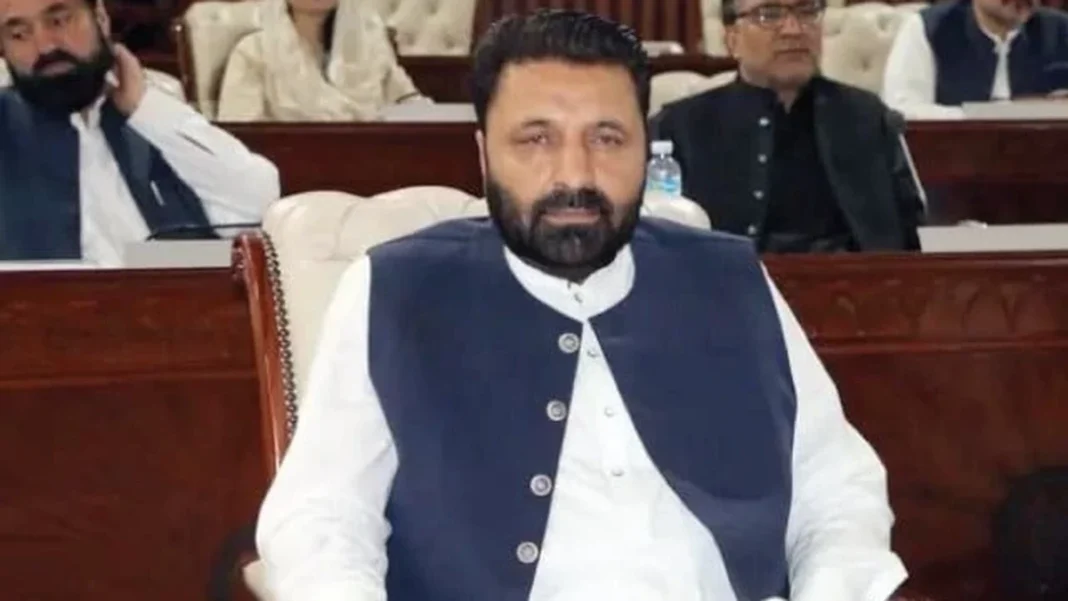
Gilgit-Baltistan climate disasters displace nearly 1,000 households every year, Chief Minister Amjad Hussain said on Tuesday, as glacial floods and flash floods keep hitting the mountain region.
He was speaking at the Mountain Women Climate Award 2026 ceremony in Gilgit, where he said climate change was no longer a distant warning for the region but a harsh reality. Glacial lake outburst floods, known as GLOFs, and flash floods repeatedly threaten settlements, farmland and infrastructure.
Why Gilgit-Baltistan climate disasters keep coming
Gilgit-Baltistan sits at the meeting point of three of the world’s great mountain ranges, and it is home to nearly 8,000 glaciers. Many settlements stand downstream of glaciers, where a glacial lake outburst or a sudden flood can damage a whole village.
The chief minister said the pattern has run for decades. “Every year, around a thousand households are affected, houses and crops are destroyed, and the government faces the difficult phase of rehabilitating and resettling the affected families,” he said.
The damage goes beyond homes. Climate disasters have also hit roads, power houses, schools and colleges. The chief minister said billions of rupees are spent every year on restoring them, which strains the region’s limited development resources.
A glacial lake outburst flood happens when water held back by ice or rock breaks free and rushes down a valley. The floods can arrive with little warning, and they can wash away homes, roads and fields in their path. The chief minister said the situation has continued for the past several decades and remains a major challenge for the coming years as well.
Warming in the Swat basin is also raising the risk from glaciers, according to recent coverage of the threat.
A new authority for glacier protection
Until recently, the region had no dedicated institution to protect glaciers and study the risks they carry. The government has now set up a Glacier Protection Authority (GPA) to fill that gap.
The chief minister stressed the need to assess the effects of climate change on glaciers at different altitudes and to build protective measures on that science. He called for joint work at national and international levels to protect the glaciers and to strengthen research into the growing risks.
“The glaciers of Gilgit-Baltistan are a vital water reservoir for the whole of Pakistan, and joint and practical steps at national and international levels are indispensable for their protection,” he said.
The wider climate case Pakistan is making
The chief minister’s warning comes as Pakistan presses its climate case at COP31 in Turkiye, where Prime Minister Shehbaz Sharif has set out the country’s climate priorities.
The Asian Development Bank has approved a $500 million loan to help Pakistan prepare for future disasters, while Canada has provided $35 million for climate resilience in Pakistan.
What happens next
The Glacier Protection Authority will now have to turn the chief minister’s call into surveys, warnings and protection work on the ground. For the families living below the glaciers, the next flood season will test whether that work comes in time.
Frequently asked questions
How many families do climate disasters displace in Gilgit-Baltistan each year?
About 1,000 households are affected every year, according to Chief Minister Amjad Hussain. They lose their homes, crops and livelihoods to glacial floods and other climate-related disasters.
What causes the disasters?
Glacial lake outburst floods, known as GLOFs, and flash floods are the main causes. Many settlements stand downstream of glaciers, so a sudden outburst or flood can damage a whole village.
How many glaciers does Gilgit-Baltistan have?
The region is home to nearly 8,000 glaciers. It sits at the meeting point of three of the world’s great mountain ranges.
What is the Glacier Protection Authority?
It is a new body set up to protect Gilgit-Baltistan’s glaciers and study the risks they carry. Until recently, the region had no dedicated institution for that work.
What is Pakistan seeking at COP31?
Prime Minister Shehbaz Sharif has set out Pakistan’s climate priorities at COP31 in Turkiye, as the country seeks support for disaster preparation and climate resilience.