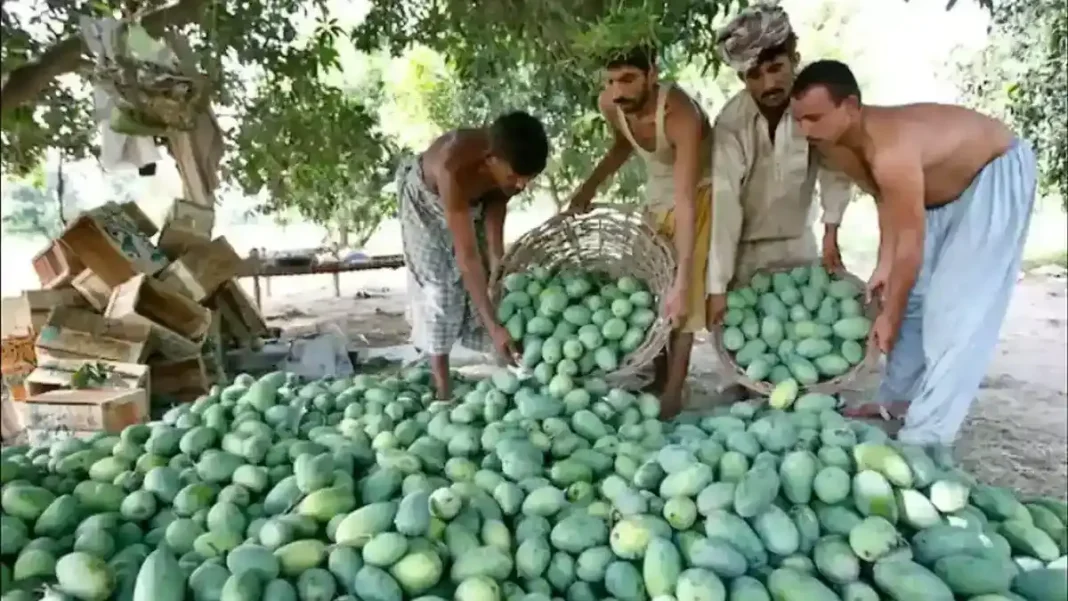
Punjab heatwaves have cut fruit yields by as much as 50 per cent in the province’s high-rainfall zones, according to a joint assessment by two United Nations agencies. The report warns that rising temperatures now rank among the most serious threats to food production in Pakistan.
The assessment, titled Extreme Heat and Agriculture, was published jointly by the Food and Agriculture Organisation (FAO) and the World Meteorological Organization (WMO). Dawn reported its findings for Punjab on November 9.
In Punjab’s rain-fed rural areas, heatwaves have grown more frequent and more severe, disrupting farm production, cutting household incomes and deepening food insecurity, above all for women and vulnerable communities.
“The effects of extreme heat on production are stark, as heat waves have led to significant declines in crop yields,” the report said.
Fruit and livestock hit hard
Fruit growers have taken the heaviest blow. In the high-rainfall zones of Punjab, fruit productivity has fallen by as much as 50 per cent, the agencies found.
Livestock has suffered too. Large animals give less milk under heat stress, while small animals face more foot-and-mouth disease, the report said.
For rural families who depend on farming, smaller harvests mean smaller incomes, less food grown for their own use and less money to buy staples.
Spoilage adds to the strain. Vegetables, dairy and other perishable goods spoil faster in extreme heat, cutting local supplies and pushing market prices up.
The result is a double burden. Families grow less varied food for themselves, and they lose the farm income they need to buy food from shops. “This double burden severely limits their access to healthy diets,” the report said.
Women carry the heaviest burden
Women bear a larger share of the harm, the agencies found. Women in Punjab play a central part in farm work, from harvesting to collecting water, along with heavy household tasks. That keeps them outdoors in high temperatures for long hours.
The risks are sharpest for pregnant and breastfeeding women, whose nutritional needs are greater yet often the first to go unmet when food runs short at home.
Research cited in the report links each 1°C rise to a 4 per cent rise in the likelihood of preterm birth. During heatwaves, that risk jumps by 26 per cent.
Other inequalities add to the danger. Women often own no land or assets, so they cannot get credit that could help them adapt. They also have less access to climate information and early warning, so they are less ready when a heat event strikes.
Some cope by eating less so other family members can eat more. That choice weakens their health further, the report said.
A global warning with local stakes
The FAO and WMO warned that extreme heat now acts as a risk multiplier across agriculture. Rising temperatures deepen droughts, raise the risk of wildfires and create combined threats beyond the farm.
The report, released on Earth Day in April, drew on evidence from around the world. Under high-emission scenarios, nearly half the world’s cattle could face dangerous heat by 2100, with annual losses nearing $40 billion. A low-emission path would cut those losses by nearly two-thirds.
Those losses feed a dangerous loop, the report concluded. When heat cuts output, farmers clear more land to make up the shortfall, and that raises emissions and drives further warming.
What Punjab heatwaves mean for food prices
For Punjab, the findings land at a sensitive time. The province grows much of Pakistan’s food, and its farmers already face rising input costs and stubborn food inflation. A smaller fruit harvest means less income for growers and higher prices for shoppers.
Smog has already made Lahore’s air among the worst in the region, and pollution levels across Punjab remain alarming. Heat now adds a second strain on the same farming families.
The report points to practical steps: early warning systems that reach rural women, heat-tolerant crop varieties, shade and water for livestock, and credit that women farmers can actually use. Tharparkar’s drought shows what happens when support arrives late, with up to 90 per cent of crops lost there this season.
What happens next
The assessment gives policymakers a clear picture, but it sets no deadlines. Its value lies in the choices it forces: whether farm support reaches the women who do much of the work, and whether adaptation keeps pace with hotter summers.
For Punjab’s farming families, the next heat season will test those choices.
Frequently asked questions
What did the UN report find in Punjab?
Heatwaves have cut fruit productivity by as much as 50 per cent in Punjab’s high-rainfall zones, reduced milk output and worsened food insecurity for farming families.
Which agencies wrote the report?
The Food and Agriculture Organisation (FAO) and the World Meteorological Organization (WMO) published Extreme Heat and Agriculture jointly.
How does heat affect women farmers?
Women do much of Punjab’s outdoor farm work, so they face longer exposure to heat. The report links each 1°C rise to a 4 per cent higher likelihood of preterm birth, rising to 26 per cent during heatwaves.
What are the report’s global figures?
Under high-emission scenarios, nearly half the world’s cattle could face dangerous heat by 2100, with annual losses nearing $40 billion. A low-emission path would cut those losses by nearly two-thirds.
When was the report published?
It was released on Earth Day in April 2026. Dawn reported its findings for Punjab on November 9, 2026.