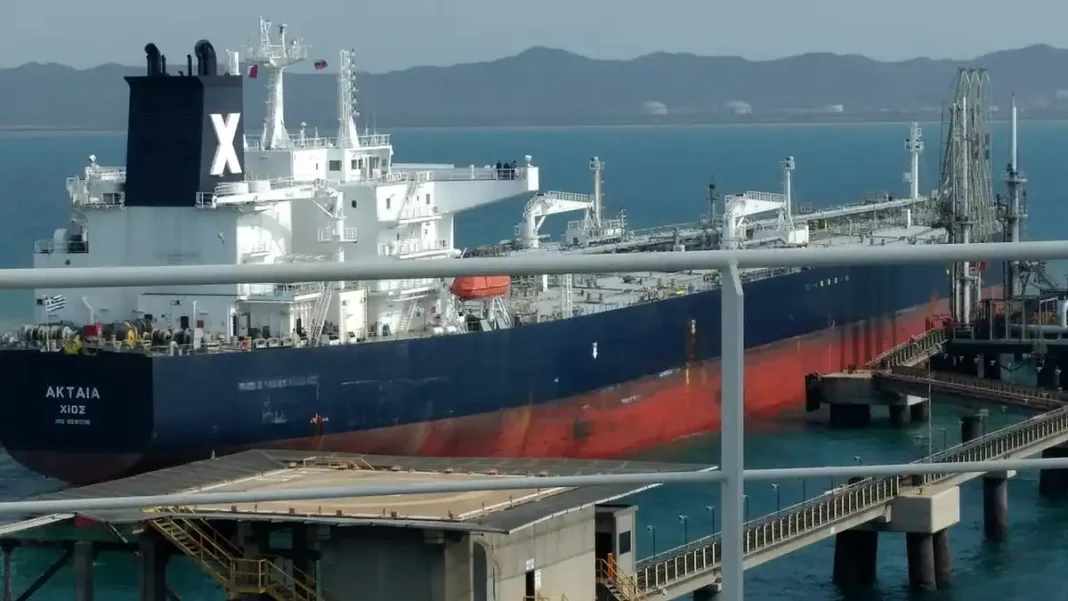
Three tankers caught fire in the Strait of Hormuz on Sunday, Iran’s Revolutionary Guards said, in the latest attack on shipping through the waterway that carries about a fifth of the world’s oil.
The Guards said the three vessels were “non-compliant” tankers sailing in what Tehran calls an illegal channel. “Since the early hours of this morning, three non-compliant tankers have exploded and caught fire while they were sailing in the illegal channel in the Strait of Hormuz,” the force said in a statement. It did not name the tankers or give their nationalities, and it gave no casualty figures.
Three tankers caught fire: what the Guards said
The navy arm of the Guards said the tankers had switched off their navigation and identification systems. It said the tankers were burning because of that and because of “the aggression of the American invading military”.
The claim could not be independently verified. No photographs of the three vessels had been released by the time of reporting, and the Guards gave no details of the crews or the cargoes.
The statement is the latest in a series of announcements from Tehran about ships catching fire in the strait. Iran has said repeatedly in recent weeks that vessels using routes it has not authorised have been hit.
Conflicting reports at sea
Separate reports from maritime agencies painted a confused picture, and it was not clear whether they described the same vessels. Britain’s maritime agency, UKMTO, said a tanker caught fire off Khasab, on Oman’s Musandam coast, a day earlier, and that the crew had been evacuated. It also reported another tanker struck by an “unknown projectile” on Saturday.
Emirati state media said 22 people had been rescued from a burning vessel in the Gulf of Oman and were in stable condition. The United Arab Emirates National Guard said it had rescued 22 Arab nationals after fire broke out on a cargo ship in the Gulf of Oman.
AFP said it was unable to confirm whether the various reports referred to the same incidents. Iran’s state news agency IRNA reported separately that sounds resembling explosions were heard late on Saturday in Qeshm, Sirik, Jask and Bandar Abbas, and that officials had confirmed an “impact” in the port city of Jask. The cause of the sounds remains unknown.
A waterway under pressure
Since the war began in late February, Iran has restricted traffic through the strait, insisting that vessels use routes authorised by Tehran. The United States has answered with a naval blockade on Iranian ports and has helped tankers travel through the waterway.
US Central Command said last month that it had helped Gulf countries export 1.5 billion barrels of oil through Hormuz since the summer, and has said recently that all mines have been cleared from the waterway. The Guards dismissed the new American plan to extend the blockade to Iran’s land borders, saying it “will remain only on paper”. Washington set up Task Force Iron Gate on Saturday to target the movement of weapons and sanctioned goods overland and through the Caspian Sea.
The confrontation has kept Gulf shipping on edge for months. US President Donald Trump had talked up the possibility of fresh heavy strikes on Iran but has since stepped back from the idea, while the American military has carried out occasional limited strikes. Gulf stock markets fell on Sunday as investors waited for signs of what Washington would do next.
The pattern so far
Sunday’s fires follow a run of similar incidents that Feature Pakistan has tracked. On Wednesday, two tankers and a tugboat caught fire in the strait, with the Guards saying one tanker had struck a mine south of the waterway.
On Saturday, a tanker hit a sea mine east of Hormuz, caught fire and was left unable to move. A week earlier, the Pakistan-bound LNG tanker Al Mayeda was attacked in the same waterway, a reminder that the shipping war reaches vessels bound for Pakistani ports as well as Gulf exporters.
Wider region on the same day
The fires came on a day of widening attacks across the region. In Riyadh, an Aramco administrative building was damaged by falling debris after an attempted attack, with no casualties reported.
Yemen’s Houthis later claimed responsibility for the Riyadh attack, saying they had carried out “four qualitative military operations, using a number of ballistic and cruise missiles and drones”, against targets including the financial centre, Riyadh airport, Aramco oil storage tanks and Abqaiq. The Saudi-led coalition said it had intercepted missiles fired towards Riyadh.
Frequently asked questions
What happened in the Strait of Hormuz on Sunday?
Three oil tankers caught fire in the strait, according to Iran’s Revolutionary Guards. The force said the vessels were sailing in a channel Tehran has not authorised and had switched off their navigation systems.
Were the tankers named, and was anyone hurt?
No. The Guards did not name the tankers or give their nationalities, and gave no casualty figures. UKMTO said the crew of a tanker that caught fire off Khasab on Saturday had been evacuated, and 22 people rescued from a burning vessel in the Gulf of Oman were in stable condition.
Why does Iran say the tankers caught fire?
The Guards said the vessels were using an unauthorised route and blamed the fires on the American military. The claim has not been independently verified, and it is not clear whether separate reports of tanker fires describe the same vessels.
Why does the Strait of Hormuz matter?
The strait carries about a fifth of global oil consumption. Since the war began in late February, Iran has restricted traffic to routes it authorises, while the United States has imposed a naval blockade on Iranian ports and helped tankers through the waterway.
What happens next?
That remains unclear. The United States has set up a land task force to extend its blockade, Iran has dismissed the plan, and Gulf markets fell on Sunday as investors waited for signs of whether Washington would order fresh strikes.