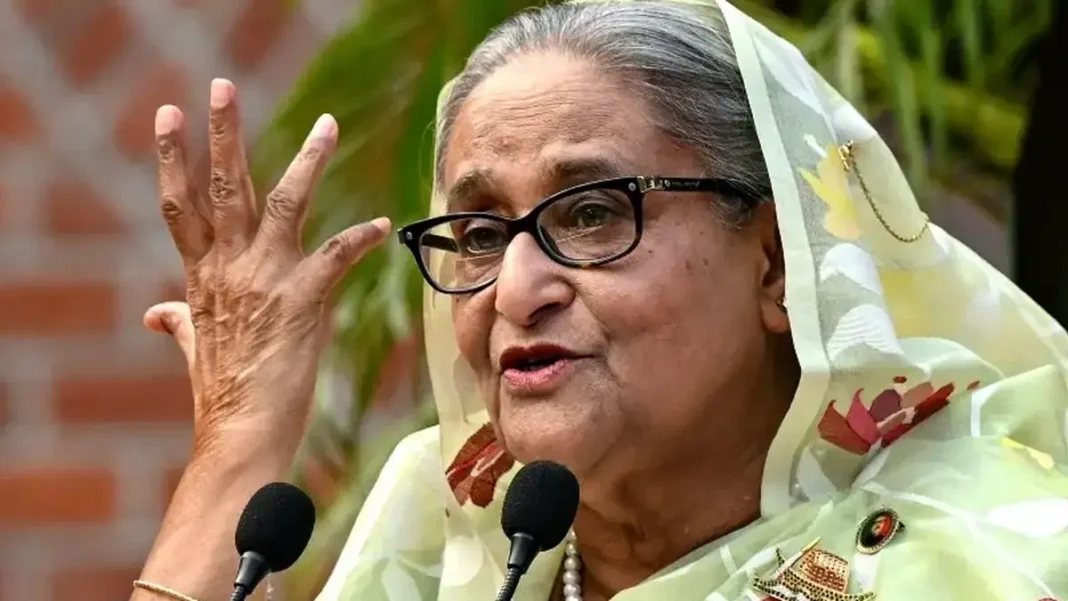
Ousted Bangladeshi Prime Minister Sheikh Hasina has asked for a new passport and identity card so she can return from self-imposed exile in India, according to a letter seen by Reuters. The Sheikh Hasina passport request is her first formal communication since she fled in 2024, and the clearest step yet in her plan to return in December, more than two years after a deadly uprising ended her long rule.
She has told Reuters she plans to return to surrender before a court. The move raises the prospect of fresh political and legal tensions in a country where her party is now banned.
Bangladesh’s war-crimes court sentenced her to death in November last year, in her absence, for ordering a deadly crackdown on the student-led uprising. She has denied the charges from exile.
What the letter asks for
“In view of the reported revocation of her existing Bangladeshi passport and National Identity Card (NID) by the interim government and other authorities, I respectfully request that you take the necessary steps to issue a new Bangladeshi passport and National Identity Card for our client,” Hasina’s lawyers at London-based Matrix Chambers wrote to Preeti Rahman, acting high commissioner at Bangladesh’s embassy in Delhi.
The letter asked for the applications to be processed “expeditiously”, on the basis of her Bangladeshi nationality and in accordance with “obligations arising under international human rights instruments”.
Rahman in Delhi and spokespeople for Bangladesh Prime Minister Tarique Rahman in Dhaka did not immediately respond to requests for comment.
The case against her
Hasina ruled Bangladesh for 20 years as prime minister across multiple terms, before the student-led uprising of 2024 forced her from office. She fled to India, where she has lived in self-imposed exile since.
The war-crimes court in Dhaka sentenced her to death in November 2025 in her absence, holding her responsible for ordering the crackdown in which protesters were killed. She has denied the charges and has said she will return to face the court.
Her Awami League, once the country’s largest party, was banned after her fall, and many of her colleagues have been jailed or gone into self-imposed exile in India or elsewhere.
The interim government also revoked her passport and national identity card, which is why her lawyers have now written to the high commission in Delhi. Without valid documents, she cannot travel back to Dhaka, even though she has said she is ready to surrender.
What the Sheikh Hasina passport request means
Hasina still enjoys support among sections of the population, and a return could sharpen political divisions as the government in Dhaka tries to restore stability after more than two years of upheaval. Her party’s supporters see her as a leader wrongly driven out; her opponents hold her responsible for the deaths of protesters.
A return could also ease Bangladesh’s strained ties with India, which deteriorated sharply after New Delhi gave her refuge. Delhi has so far resisted Dhaka’s demands for her extradition, and her presence in India has remained a sore point between the two neighbours.
The country she would return to is under severe strain. Bangladesh’s external debt has nearly tripled to $113 billion in a decade, according to the World Bank, and the government is trying to steady an economy battered by political turmoil. The debt burden now takes 16 per cent of the country’s export earnings in servicing costs.
At the same time, Bangladesh cricket has given the country rare good news. Mushfiqur Rahim became the first Bangladeshi to score 7,000 Test runs, and Towhid Hridoy struck a record double century against the West Indies. Those are small comforts against a political crisis that has not yet run its course.
What happens next
The first question is whether the high commission in Delhi will process the applications. The letter asks for the passport and identity card to be issued quickly, but neither the mission nor the government in Dhaka has responded so far.
If the documents are issued, Hasina’s aides say a date for her return will be announced. She has said she will surrender before a court on arrival, which would set up a direct confrontation with the war-crimes verdict against her. Regional diplomacy will also be watching: foreign ministers from the region are due in Islamabad next week for the ECO meeting, and Bangladesh’s crisis is part of the wider strain across South Asia.
For now, the letter itself is the news. After more than two years of silence from exile, Hasina has put her return in writing.
Frequently asked questions
Why does Hasina need a new passport?
Her existing Bangladeshi passport and national identity card were revoked by the interim government after she fled in 2024. Without valid documents she cannot travel back to Dhaka, so her lawyers have asked the Bangladesh high commission in Delhi to issue new ones.
When does she plan to return?
She has told Reuters she plans to return in December, to surrender before a court. Her aides said on Monday that the exact date would be announced once the formalities were completed.
What was she convicted of?
Bangladesh’s war-crimes court sentenced her to death in November 2025 in her absence, for ordering a deadly crackdown on the student-led uprising that ended her rule. She has denied the charges from exile.
What is the Awami League’s status?
The Awami League, once Bangladesh’s largest party, was banned after Hasina’s fall. Many of its leaders have been jailed or have gone into exile in India or elsewhere.
How have India-Bangladesh ties been affected?
Ties deteriorated sharply after New Delhi gave Hasina refuge. Dhaka has sought her extradition, which Delhi has resisted. Her return could ease that tension, but it could also sharpen political divisions inside Bangladesh.