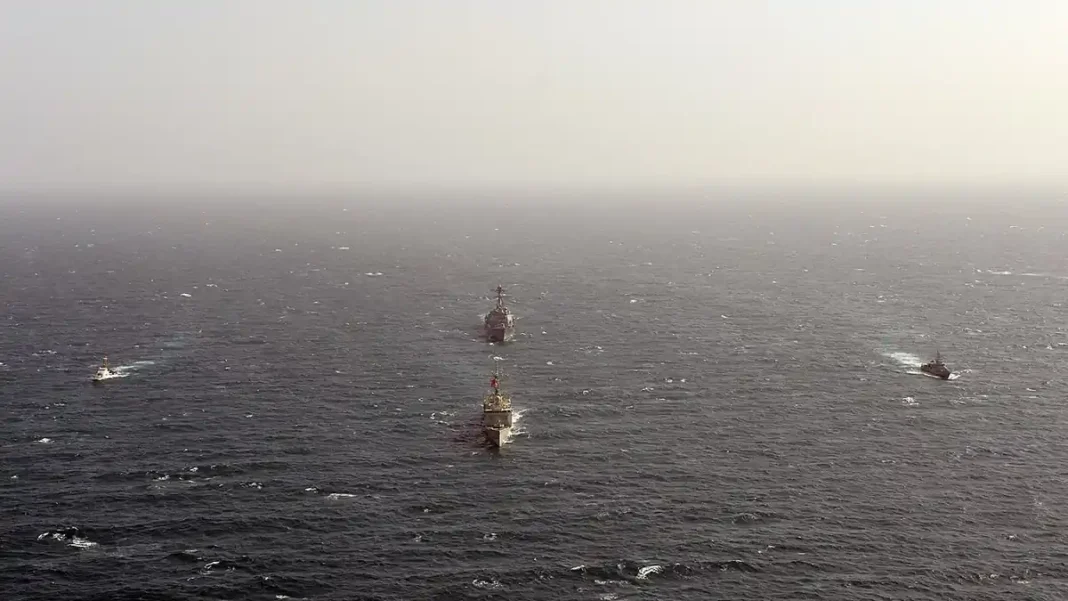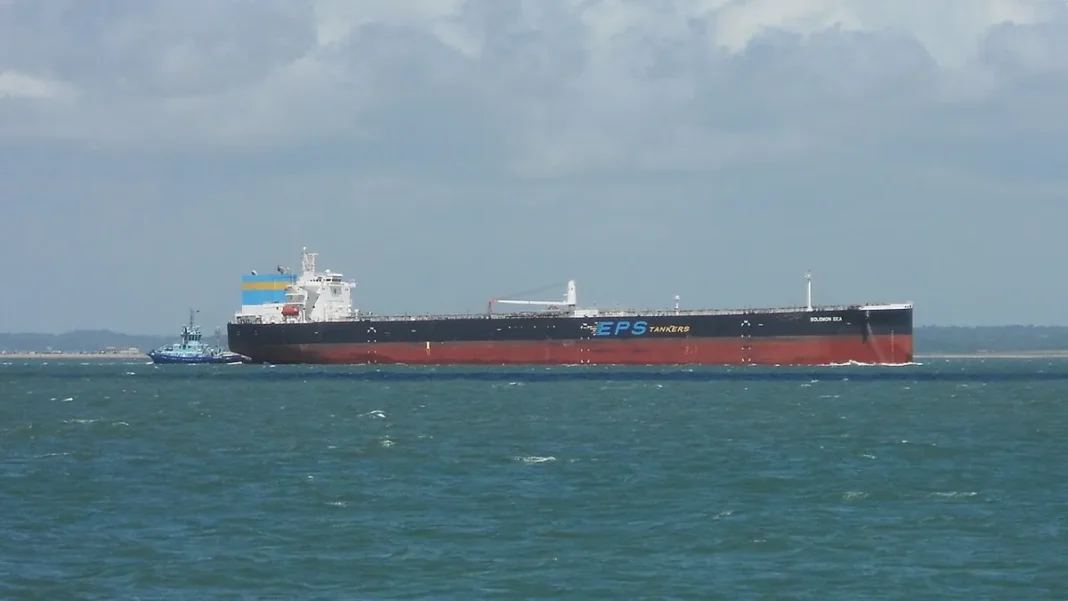
A tanker hits mine east of the Strait of Hormuz early on Saturday and catches fire, Iran’s navy said, in the latest threat to shipping through the world’s most important oil waterway.
The vessel was sailing through a prohibited and unsafe zone despite repeated warnings, the navy said in a statement carried by Iranian state media. It had switched off its navigation systems when it struck the mine, caught fire and was left unable to move.
“This is the fate of all ships and vessels that ignore warnings and travel in prohibited areas,” the navy warned, in a message aimed at other vessels using the waterway.
Tanker hits mine east of Hormuz
Iran’s navy said the tanker hit the mine early on Saturday morning while crossing the eastern part of the strait. Iranian media reported the incident on Saturday, and Reuters also reported that an oil tanker had caught fire after hitting a naval mine in the eastern Strait of Hormuz.
The navy did not name the vessel or give details of its crew. No independent maritime authority had confirmed the navy’s account by Saturday evening.
The incident comes as Iran has tightened control over the waterway, warning commercial vessels against routes it has declared unauthorised and unsafe.
Two tankers caught fire on Thursday
The mine strike followed a similar incident two days earlier. On Thursday, the Islamic Revolution Guards Corps said two oil tankers and a tugboat had caught fire in the Strait of Hormuz after the vessels tried to use unauthorised routes, in a story Feature Pakistan reported at the time.
The strait carries about 30 per cent of the world’s seaborne oil, and any disruption there pushes up fuel prices far beyond the Gulf. The war, which began on February 28 with American and Israeli air strikes on Iran, has already kept the waterway on edge for months.
A waterway under strain
Iran’s armed forces have said the Strait of Hormuz will stay closed until the United States accepts Tehran’s conditions, a position covered in our report on Iran’s warning that the strait stays shut. At the same time, maritime monitors have reported at least some vessels still moving through the waterway, which shows the closure is not total.
Tasnim news agency also reported on Saturday that initial reports pointed to two missiles striking Qeshm Island in the strait, with no official word on damage. The United States has not announced any attack on targets inside Iran.
Washington, for its part, has moved to tighten the screws further. The US military is setting up a new task force to restrict Iran’s overland trade in weapons and sanctioned goods, alongside a naval blockade that Central Command says has already stopped more than $25 billion in Iranian crude exports.
What it means for Pakistan
The danger in the strait reaches Pakistan directly, because the country brings in much of its oil and gas by sea. Any attack on a tanker, or any closure of the waterway, can push up fuel prices and delay supplies at home.
Pakistani interests have already been hit. The Foreign Office confirmed this week that a Pakistani-linked liquefied natural gas carrier, the Al Maida, was struck by projectiles while crossing the Gulf near the Strait of Hormuz last Friday night. No crew members were hurt. The vessel, registered in the Marshall Islands and operated by QatarEnergy, was carrying LNG for Karachi, as the Foreign Office said in its weekly briefing.
Pakistan’s refineries are already feeling the pressure. They recorded negative petrol margins in early November, which leaves little room if crude prices jump or cargoes are delayed. Fuel prices have been cut in recent weeks, with petrol down by Rs6.59 a litre, but that relief depends on supplies reaching the country on time.
Islamabad has also stayed active in the diplomacy around the crisis. US Vice President JD Vance has held near-daily contact with Pakistan’s army chief over Iran, and Pakistan has pressed for a settlement that avoids a new round of fighting, as explained in our report on how a strike on Iran could affect Pakistan.
What happens next
Shipping companies will watch for two things: whether Iran names the tanker and gives details of its crew, and whether any independent maritime body confirms the account.
Vessels using the strait face a hard choice: follow Iran’s rules and risk delays, or ignore them and risk mines, missiles and fire. That will keep freight and insurance costs high for every cargo passing through the Gulf, including those bound for Pakistan.
Diplomacy continues in the background. Qatar has said its mediation between the United States and Iran goes on, and Iran’s foreign minister said he had spoken to 12 foreign ministers in the past 48 hours.
Frequently asked questions
What happened in the Strait of Hormuz on Saturday?
Iran’s navy said an oil tanker caught fire after hitting a sea mine east of the strait early on Saturday morning, while sailing through a zone Tehran had declared prohibited.
Was the tanker named?
No. Iranian media did not name the vessel, give its flag or provide details of its crew, and no independent maritime authority had confirmed the account by Saturday evening.
Why did Iran warn other ships?
Iran’s navy said the tanker had ignored repeated warnings and switched off its navigation systems. It warned that other vessels entering restricted waters would meet the same fate.
How does this affect Pakistan?
Pakistan imports much of its oil and gas by sea, so attacks or closures in the strait can push up fuel prices and delay supplies. A Pakistani-linked LNG carrier was already struck near the strait last week.