Pakistan warns India against attempt to alter strategic balance, says NCA adviser
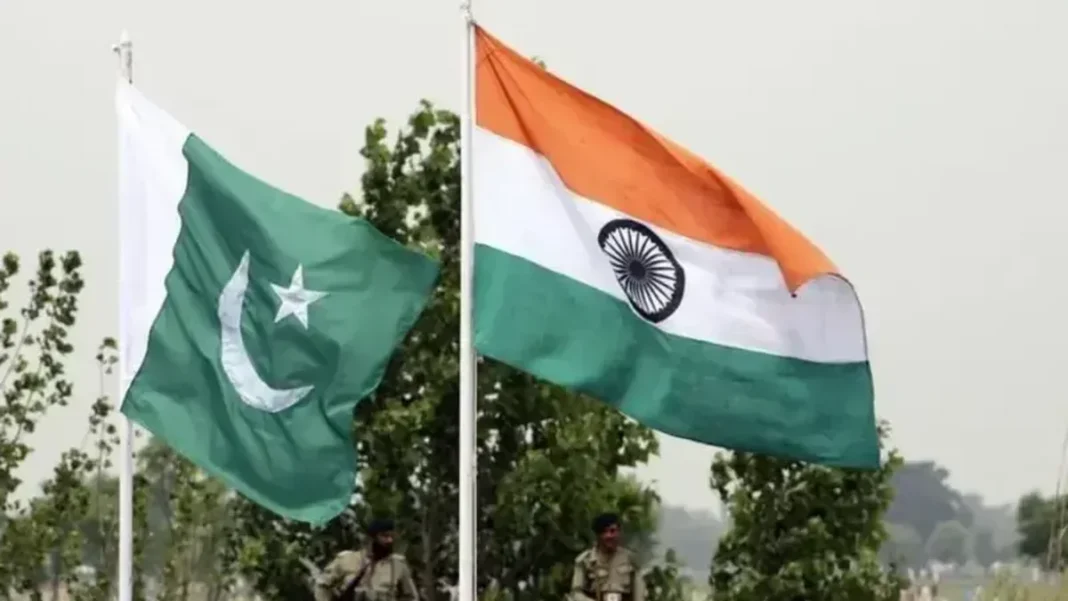
ISLAMABAD: Adviser to the National Command Authority, retired Lt Gen Khalid Kidwai, warned on Tuesday that Pakistan could review its deployment options to restore the strategic balance in South Asia, saying India was moving towards a more prepared and potentially first-use capable nuclear posture.
“Pakistan never has and never will accept strategic imbalances to be induced in South Asia,” Mr Kidwai said at the second Islamabad Non-Proliferation Conference, hosted by the Strategic Vision Institute, an Islamabad-based think tank that focuses on strategic issues.
“Pakistan will review and reconsider all options for appropriate deployments in order to restore the strategic balance and strategic stability while retaining the policy of strategic ambiguity,” he added.
Mr Kidwai and retired Lt Gen Sarfraz Sattar, both former heads of the Strategic Plans Division and advisers to the NCA, said India’s reported deployment of nuclear weapons aboard a submarine, alongside missile modernisation and recent military confrontations, raised the risk of escalation between the two neighbours.
Nuclear warheads on submarines
Citing the Stockholm International Peace Research Institute’s SIPRI Yearbook 2026 and other publicly available information, the two advisers pointed to reports that India had deployed around 12 nuclear warheads on a submarine for deterrence patrols.
They also cited missile canisterisation and wider nuclear and conventional modernisation as developments that cast doubt on India’s declared No-First-Use policy.
Mr Kidwai said the reported deployment suggested India had mated nuclear warheads with submarine-launched ballistic missiles and begun sea-based deterrence patrols.
“I do not see any reason as to why an SIPRI report might be inaccurate or speculative,” he said.
“This irresponsible escalatory transition towards creating asymmetry in nuclear posture will have profound destabilising effects on South Asian strategic stability,” he added.
He said India’s ability to maintain a continuous at-sea deterrent further weakened the credibility of its No-First-Use policy and pointed to a more offensive nuclear posture.
“The operational reality that emerges is that India can undertake a first strike against Pakistan at zero notice,” he said.
Advance notification questioned
Mr Kidwai also questioned the absence of advance notification for Indian submarine-launched ballistic missile tests. He warned that such developments could heighten the risk of miscalculation during a crisis.
Referring to the February 2019 confrontation, he said India had reportedly deployed its Arihant nuclear submarine in the Indian Ocean after carrying out air strikes near Balakot in Pakistan, presumably with nuclear weapons aboard. He described the latest reported deployment as part of India’s wider effort to operationalise mated nuclear weapons on submarines.
“Pakistan reserves the right to undertake all appropriate measures to safeguard its national security and preserve strategic balance in the region under all circumstances,” Mr Kidwai said.
He urged India to understand the implications of Pakistan’s Full Spectrum Deterrence policy.
“India in fact will be well advised to read and re-read Pakistan’s policy of Full Spectrum Deterrence and seriously absorb its wide ranging implications for strategic deterrence, strategic stability, and for India’s security,” he said.
What Full Spectrum Deterrence means
Full Spectrum Deterrence is Pakistan’s stated nuclear doctrine. It means maintaining the ability to respond to aggression at every level, from tactical battlefield threats to strategic strikes, so that no gap exists for an adversary to exploit.
The policy is deliberately ambiguous about exact thresholds. That ambiguity is meant to deter, by keeping an adversary unsure about where Pakistan would draw the line. Mr Kidwai’s remarks reaffirmed that Pakistan intends to keep it that way while adjusting deployments if it sees the balance shifting.
May 2025 conflict cited
Mr Sattar said the May 2025 conflict between the nuclear-armed neighbours showed how quickly conventional hostilities could escalate. The ceasefire came after both sides used cruise and ballistic missiles and India deployed strategic naval assets, he said.
He drew parallels with the 2019 confrontation, when Indian Prime Minister Narendra Modi referred to the deployment of nuclear submarines for deterrence patrols and the positioning of BrahMos missiles along Pakistan’s border.
The May 2025 fighting was more intense, involving kamikaze drones, supersonic BrahMos missiles capable of carrying conventional or nuclear warheads, and cyber and electronic warfare, he said.
“It is now clear that the 2025 conflict was much more lethal in comparison to the 2019 conflict,” Mr Sattar said, warning that the fighting risked spiralling towards nuclear escalation through accident or miscalculation.
He cited India’s canisterisation of land and sea-based missiles, pursuit of multiple independently targetable reentry vehicle (MIRV) capabilities, short-range tactical missiles, ballistic missile defences, hypersonic weapons and autonomous platforms as further sources of concern.
Combined with India’s Cold Start doctrine, wider military modernisation and the absence of a bilateral arms control mechanism, these developments raised doubts about its No-First-Use declaration, he said.
“Rather, as I said, it signals a shift towards more first use capable posture,” Mr Sattar said.
“The future strategic stability in South Asia is placed on a perilous and worrisome course with heightened risk of misunderstanding and miscalculation, potentially leading to unintended or accidental escalation to the nuclear level,” he added.
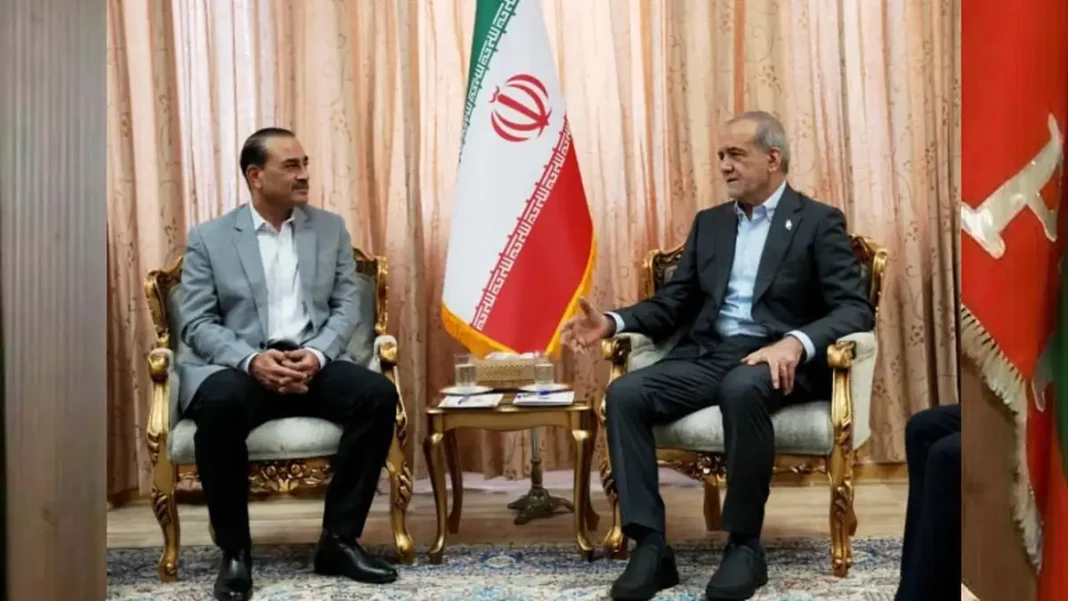
The remarks come at a time of active regional diplomacy. Pakistan’s military leadership has been engaged with Tehran, with Field Marshal Asim Munir meeting Iran’s president in Tehran and the Pak-Iran border reopening after the visit. The DG ISPR has also noted that Pakistani troops have served in Saudi Arabia for decades, underlining how defence ties shape the region’s politics.
Frequently asked questions
Who warned India about the strategic balance?
Retired Lt Gen Khalid Kidwai, an adviser to Pakistan’s National Command Authority and a former head of the Strategic Plans Division, speaking at the second Islamabad Non-Proliferation Conference on Tuesday.
What did he say Pakistan would do?
He said Pakistan would review and reconsider all options for appropriate deployments to restore the strategic balance and strategic stability, while retaining its policy of strategic ambiguity.
What is the SIPRI claim about Indian submarines?
Citing the SIPRI Yearbook 2026, the advisers said India had deployed around 12 nuclear warheads on a submarine for deterrence patrols, suggesting mated nuclear warheads on submarine-launched ballistic missiles.
What is Full Spectrum Deterrence?
It is Pakistan’s stated nuclear doctrine of maintaining the ability to respond to aggression at every level, from tactical to strategic, with deliberate ambiguity about exact thresholds.