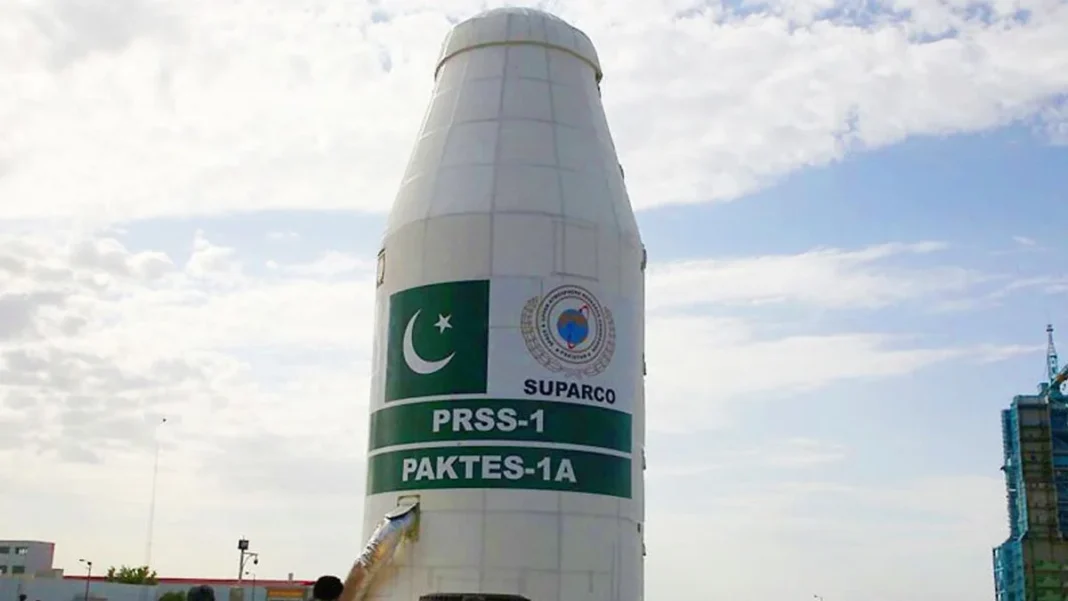
ISLAMABAD: Pakistan will host a five-day UN space conference in Islamabad from October 27 to 31 on using space technology to strengthen early warning systems, improve disaster risk assessment and support climate action.
The Pakistan Space and Upper Atmosphere Research Commission (Suparco) announced the event on Thursday. The United Nations-Pakistan International Conference on Leveraging Space Technology for Early Warning for All (EW4All), Climate Action and Disaster Risk Assessment will be held at the Serena Hotel.
UN space conference: who is coming to Islamabad
The conference is expected to bring together 200 to 250 participants, including 60 to 70 international delegates and around 150 national participants.
It is co-sponsored by the United Nations Office for Outer Space Affairs (UNOOSA) through its UN-SPIDER programme, the Asia-Pacific Space Cooperation Organisation (APSCO) and the Inter-Islamic Network on Space Sciences and Technology (ISNET).
Experts, policymakers, diplomats, educators, researchers, UN agencies, development organisations and space industry representatives will take part in technical sessions and policy discussions over the five days.
What the conference will cover
According to Suparco, the conference aims to advance the use of space-based technologies, satellite observations and geospatial data to strengthen early warning systems and improve disaster risk assessment.
A central theme is the UN’s Early Warnings for All initiative, which seeks to protect communities and critical infrastructure from climate-driven disasters through effective warning systems.
Sessions will also examine how satellite data can support climate-resilient development and the monitoring of water resources, agriculture, forests and environmental change.
The conference will be followed by a five-day international training course from November 2 to 6 on space-based disaster management, covering satellite remote sensing, flood and drought risk assessment and heatwave hazard evaluation.
Why it matters for Pakistan
Pakistan is among the countries most exposed to climate disasters, and its space agency has been building the evidence base for years. Suparco’s satellite imagery has documented the rapid loss of Karachi’s mangroves, raising the city’s flood and erosion risk, while Pakistan’s space programme reached a new milestone with its astronaut mission to China.
The conference gives Pakistan a platform to share this experience and to build technical partnerships at a time when early warning systems are becoming central to disaster planning. The stakes are visible on the ground: Karachi’s uncovered storm drains already pose an urban flooding risk, and global agencies have warned that extreme weather patterns are intensifying.
For a country where floods, heatwaves and glacial melt threaten lives and crops each year, better satellite-driven forecasting is a practical need, not an abstract one. Suparco is hosting the event on behalf of the government of Pakistan, and the moot will also feed into global frameworks including the Sendai Framework for Disaster Risk Reduction, the Paris Agreement and the Sustainable Development Goals.
Frequently asked questions
When is the UN space conference in Pakistan?
October 27 to 31, 2026, at the Serena Hotel in Islamabad, hosted by Suparco.
What is the EW4All initiative?
The UN’s Early Warnings for All initiative aims to ensure every person on earth is protected by early warning systems against climate-driven disasters.
Who is organising the conference?
Suparco, on behalf of the government of Pakistan, co-sponsored by UNOOSA through its UN-SPIDER programme, APSCO and ISNET.
Is there a training course after the conference?
Yes, a five-day international training course on space-based disaster management runs from November 2 to 6 in Islamabad.