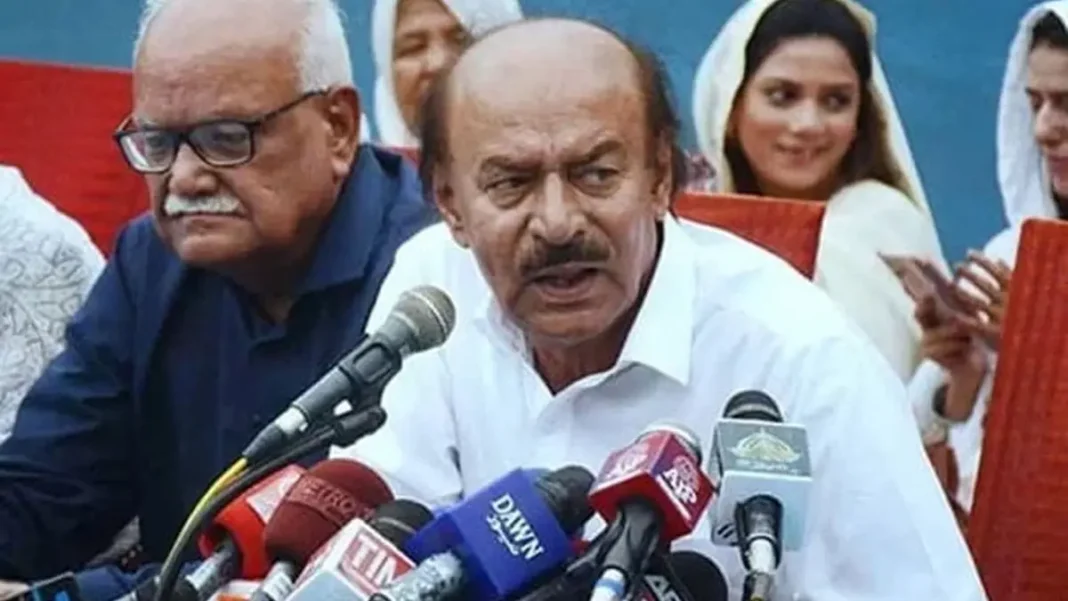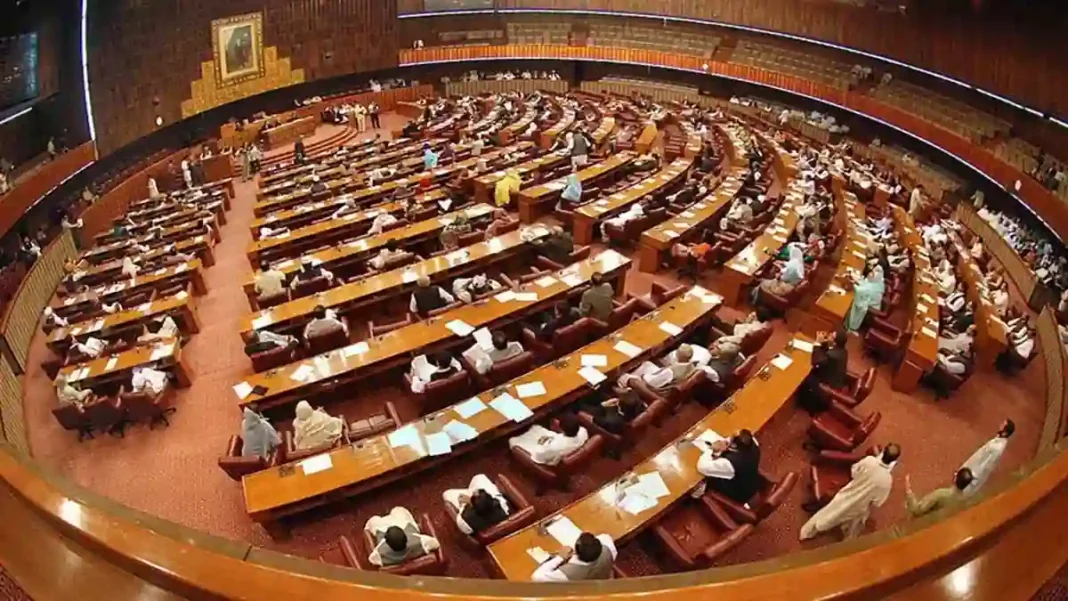
The privatisation commission bill introduced in the National Assembly will merge the existing Public-Private Partnership Authority (P3A) and the Privatisation Commission into a single institution. The proposed Privatisation and Public-Private Partnership Commission (PPPPC) would end the duplication the government says comes from running two separate bodies with overlapping work.
The bill seeks amendments to two laws: the Privatisation Commission Ordinance 2000 and the Public Private Partnership Authority Act 2017. It would reconstitute the Privatisation Commission as the new commission, repeal the P3A Act 2017 and dissolve the P3A altogether.
One of the bill’s most debated clauses provides legal and investigation immunity to current and former chairmen, secretaries, board members, officials and consultants. The immunity covers any act of omission or commission done in good faith and in a personal capacity. The bill also commits public funds to contest any such cases against them.
What the privatisation commission bill changes
The new commission will be led by the incumbent chairman Muhammad Ali. Its board will have a majority of members from the private sector, including two women directors. It will collectively administer four public funds: the privatisation fund, the public contributory fund, the viability gap fund and the PPP project development fund. These funds will draw on allocations in the federal budget, receipts from international lenders, income from investments and other sources, and they will be non-lapsable.
The government says the old framework split the work in two. The PC Ordinance dealt with privatisation of state-owned enterprises under government policy, while the P3A Act governed a separate body. Both frameworks were concerned with mobilising private sector capital and expertise for public assets, infrastructure and services, and running them through two institutions meant duplication of functions and processes.
The bill reconstitutes the board with a majority of independent members, including members with PPP experience and at least two women. It sets fixed terms of office and clear grounds for disqualification and removal.
The commission’s powers over PPP projects
The bill empowers the proposed commission to advise on, appraise, structure, facilitate and monitor PPP projects, and sets up the viability gap fund, the PPP project development facility and the public contribution fund.
The draft claims to provide a comprehensive legal framework for public private partnerships. That framework covers the contractual framework for PPP agreements, a federal PPP pipeline, the approval process, the risk management unit and PPP transaction execution committees. It also lets the commission set up PPP nodes in agencies, settle disputes and run an alternative process for below-threshold projects.
The public contribution fund can be used to meet government obligations on PPP projects, including land acquisition, site handover and right of way, along with other enabling actions linked to a project. A PPP agreement between the public and private parties will be a public document, and any interested person will be entitled to obtain a copy, subject to applicable laws. The government, the commission or the government agency will not be held liable for any claim by a private party for a risk that is not specified in the PPP agreement.
All existing contracts signed by the P3A will stand transferred to the new commission without any disadvantage to the private parties. All officers, consultants, advisers, auditors, employees and other staff of the P3A will be retained by the commission for six months, or until their contracts expire, whichever comes first, on terms no less favourable than those they hold now.
Why this bill matters for privatisation
The bill gives the commission a strong tool for gathering information. It can require any government agency, in writing, to submit a complete list of its existing, proposed and planned projects within fifteen days, whether or not they are identified as PPP projects. Agencies will be obligated to comply with full accuracy and completeness. Where an agency fails to comply, the commission chairman may refer the matter to the ministry or division concerned.
A committee will review potential PPP projects proposed for inclusion in the federal PPP pipeline and place its recommendations before the board for a decision.
Feature Pakistan has tracked the privatisation drive through the year, including our report on 10 investors prequalified for Iesco privatisation and our report on Muhammad Ali and the energy sector trust framework, covering the chairman who will now lead the merged body.