Sindh working on master plans for 31 cities, including Karachi
Sindh Chief Minister Syed Murad Ali Shah said on Saturday that the provincial government is working on master plans for 31 cities, including Karachi and Hyderabad, to support planned, sustainable and inclusive urban development. He was speaking at the Sindh Cities Forum 2026, an event organised by the Sindh Master Plan Authority with NED University and UN-Habitat at the Golf Club Convention Centre to mark World Cities Day. The Express Tribune reported his remarks.
He said master planning is essential because cities face unplanned construction, traffic congestion, water shortages, inadequate drainage and the effects of climate change. Without a plan, each of these problems grows harder to fix as cities expand and new building fills whatever open space remains.
Where the work stands
According to the minister for local government, housing and town planning, master plans for 17 cities have been completed, while work on the remaining 14 is in its final stages. Notifications have been issued for the master plans of nine cities: Sukkur, Larkana, Mirpurkhas, Umerkot, Mithi, Islamkot, Dadu, Nawabshah and Naushahro Feroze.
| Stage | Position |
|---|---|
| Plans completed | 17 cities |
| Work in final stages | 14 cities |
| Plans notified | Nine cities, including Sukkur, Larkana and Mirpurkhas |
The figures show a programme well past drafting in many smaller cities, even as the two largest cities remain works in progress. For residents of the nine notified cities, notification matters because it gives the plan formal standing. Land use, road lines, drainage routes and public spaces are set down in a document that builders, utilities and civic agencies are expected to follow, rather than left to case-by-case decisions.
Karachi and Hyderabad present the harder test
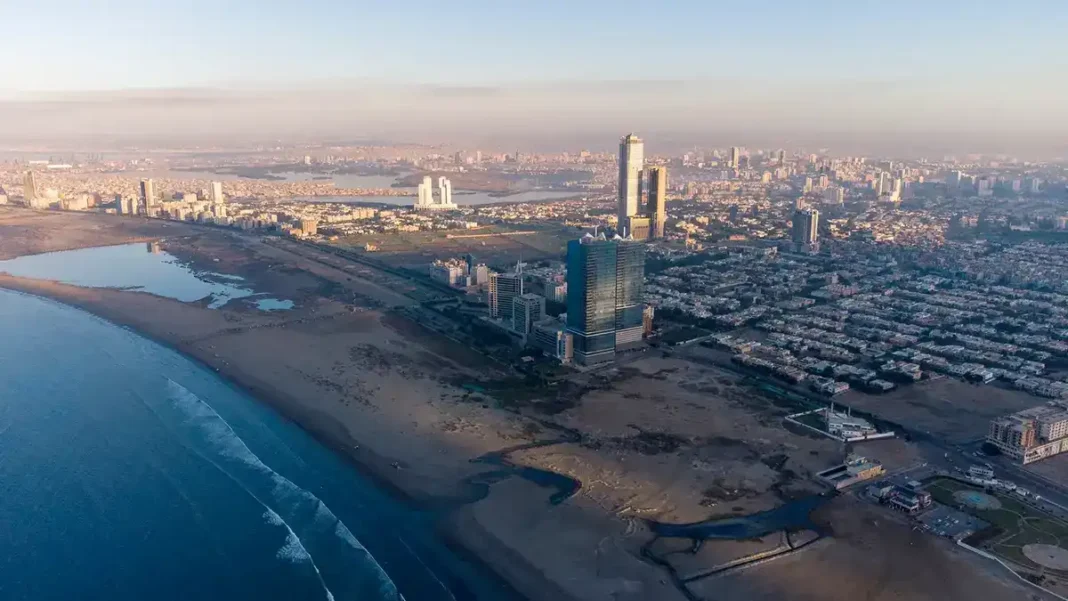
Work on the master plans for Karachi and Hyderabad is progressing rapidly, the chief minister said, and international consultants have been engaged for the Karachi plan. He acknowledged that the Karachi plan would be particularly challenging given existing urban conditions. Preparing a plan for a new city from scratch is relatively easy, he said, while correcting the situation in a city that is already built up is a major challenge. He urged the consultants to propose measures that improve conditions on the ground and to ensure that the plan is put into effect in practice, not only written.
Recalling his own association with Karachi, he said he had watched the city expand rapidly, but that growth exposed serious planning failures which made it increasingly difficult to improve infrastructure. The point was plain: once roads, drains and public spaces are built over, restoring them costs far more than protecting them at the start.
The Yousuf Goth warning
He pointed to the 2020 monsoon floods in Yousuf Goth, in District West, as an example. Roads there were originally designed with adequate carriageways, central medians and storm-water drains, he said. Over time, those roads were encroached upon, with shops established on service roads, on medians and across drainage channels, damaging the original infrastructure. When heavy rain came, the system that should have carried water away could no longer do its job.
He acknowledged that successive governments, including his own, made mistakes that contributed to the present condition of the city. Once structural problems develop, he said, correcting them becomes extremely difficult. The government, he added, cannot address urban challenges without the cooperation of citizens, planners, builders, utility companies and other stakeholders.
What this means for residents
For people living in the nine notified cities, the practical change is a fixed reference point. A resident who sees a drain covered by construction or a service road taken over by shops can point to an approved plan that says what that space is for. That alone does not clear an encroachment, since enforcement still depends on civic agencies and courts, but it shifts the argument from opinion to a written record.
Frequently asked questions
What is a master plan?
A master plan sets out how land in a city is used, where roads, drains, parks and public services go, and how growth is managed over time.
Which Sindh cities have notified master plans?
Notifications have been issued for Sukkur, Larkana, Mirpurkhas, Umerkot, Mithi, Islamkot, Dadu, Nawabshah and Naushahro Feroze.
Why is the Karachi master plan difficult?
Karachi is already built up, so the plan must correct existing problems such as encroachment and damaged drainage, rather than lay out a new city from scratch.
What happened in Yousuf Goth in 2020?
Monsoon floods exposed damage in Yousuf Goth, District West, where shops had been built on service roads, medians and drainage channels, weakening roads designed with proper carriageways and storm-water drains.