Plan to Curb Undocumented LPG Imports in Pakistan
The federal government has outlined a plan to curb undocumented LPG imports, tighten quality testing and improve safety across Pakistan’s liquefied petroleum gas supply chain. The measures form part of a proposed overhaul of the LPG sector that has gone to the federal cabinet for approval.
The plan targets imports that enter through land crossings without proper records or tests. It also targets unsafe handling, unlicensed tankers and weak cylinder standards. All of the measures are proposals in a cabinet summary at this stage. They are not yet approved law.
Undocumented LPG imports: what the plan targets
The cabinet summary raises concerns about undocumented LPG imports, inadequate quality testing and unsafe handling practices. It estimates that more than half of the country’s LPG supply enters through land crossings, where testing facilities are currently unavailable.
Inspections by the Oil and Gas Regulatory Authority (OGRA) and the Hydrocarbon Development Institute of Pakistan (HDIP) at Taftan have reportedly found substandard product. As a result, the summary says the government cannot accurately capture the volumes entering through informal channels.
Undocumented inflows also evade sales tax, petroleum levy and customs duty. That gap costs the exchequer revenue and leaves the true size of the market unclear. OGRA and Federal Board of Revenue Customs would jointly work to measure and control these inflows under the plan.
A safety record that drives the plan
The safety case is stark. The summary refers to repeated explosions caused by decanting at border crossings without adequate safety infrastructure. Decanting means transferring LPG from one container to another outside a licensed plant. The summary links such incidents to more than 60 deaths since 2020.
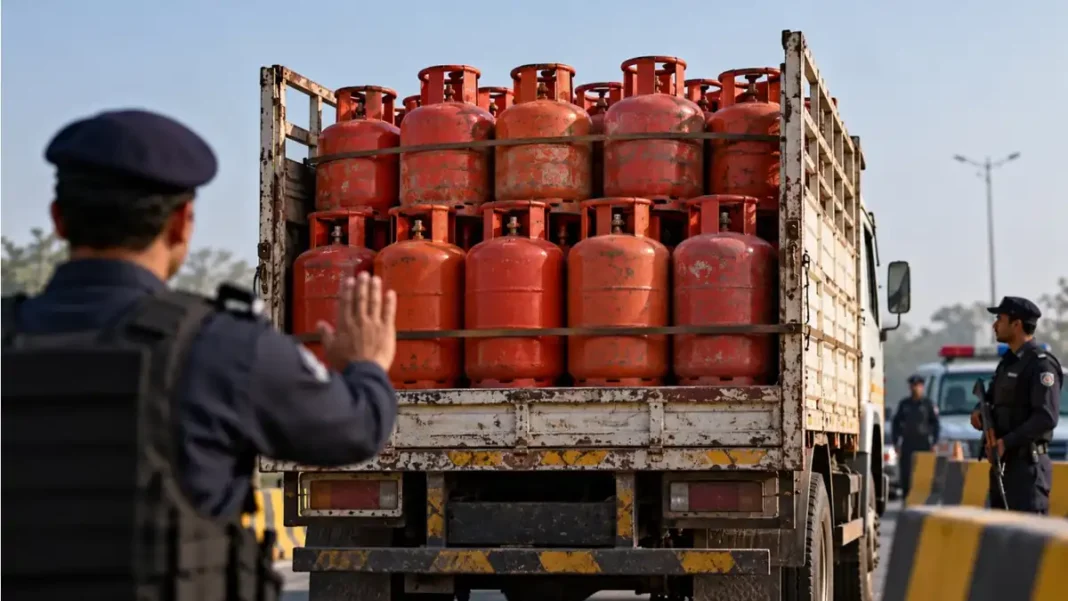
It also estimates that 56 per cent of LPG bowsers are unlicensed. Around 2,000 bowsers operate in the country, and only about 800 are stated to comply with OGRA and NEPSA standards. Enforcement against non-compliant bowsers would remain suspended until June 30, 2027, to give operators time to move towards compliance.
Cylinder filling would be restricted to licensed plants only. Bowser-to-bowser transfers would be banned. Cylinder standards would be strengthened through embossing and barcoding, a ban on unregistered empty cylinders and periodic requalification of manufacturers.
Testing and enforcement by June 30, 2027
The proposed guidelines direct OGRA to introduce quality testing at land entry points through HDIP by June 30, 2027. The guidelines also propose NEPSA satellite offices and HDIP and Pakistan Council of Scientific and Industrial Research laboratories at land entry points by the same date.
After that date, LPG volumes would not be allowed to enter through any port without spot testing. OGRA would also audit licensees’ sales volumes against their licensed storage, cylinder circulation and filling capacity. Penalties, including licence cancellation, would apply for non-compliance.
The framework requires OGRA to strengthen health, safety and environmental enforcement through regular audits, penalties, suspension of licences and cancellation of licences in case of violations. OGRA could also convene product review meetings to assess supply conditions, import plans and winter stock needs.
Law changes and winter supply
The government also proposes amendments to Sections 285 and 286 of the Pakistan Penal Code to increase penalties and make relevant offences non-bailable. Those changes would need to pass through the legislative process. They are not in force under the cabinet summary alone.
How this fits the wider LPG overhaul
Frequently asked questions
What counts as undocumented LPG imports?
Undocumented imports are LPG volumes that enter through land crossings or other informal channels without proper records, tax payment or quality testing. The cabinet summary says more than half of supply enters this way, mainly through land crossings.
Why is testing missing at land crossings?
Testing facilities are currently unavailable at land crossings, according to the summary. OGRA and HDIP inspections at Taftan have found substandard product, which is why the plan sets a June 30, 2027 deadline for testing and laboratories at entry points.
What changes by June 30, 2027?
By that date, OGRA must introduce quality testing at land entry points through HDIP, with satellite offices and laboratories in place. After that date, no LPG volume could enter through any port without spot testing. Enforcement against non-compliant bowsers, suspended until then, could then apply in full.
Will LPG supply stop in winter?
No. The Petroleum Division has stressed that imports must continue without interruption ahead of winter, when piped gas is limited. The plan aims to control undocumented supply while keeping licensed supply flowing to households that depend on cylinders.