Garhi Shahu derailment disrupts Lahore rail traffic
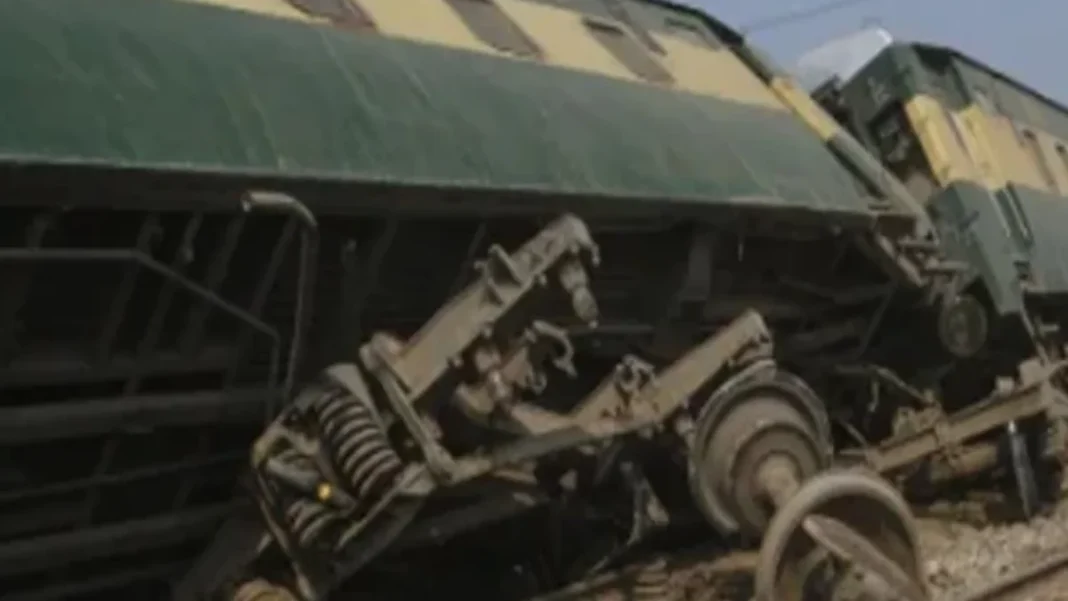
Railway traffic was disrupted in Lahore on Saturday by the Garhi Shahu derailment, after the locomotive of a goods train went off the track near the Garhi Shahu railway bridge. Authorities diverted all up and down train services to an alternative loop line while recovery work began.
The train, a GKN RMC service carrying 18 to 19 wagons, had departed from Garhi Shahu at 5:17am. As it entered Line No 1, the front portion of locomotive DE-4832 went off the track.
Garhi Shahu derailment: what happened
A railway crane was called to the site immediately after the derailment. Recovery operations were launched to clear the main line, with the loop line carrying diverted services in the meantime.
No injuries were reported in the account published on Saturday. The disruption was operational, not a passenger casualty event, but it still hit the morning flow of trains through one of Lahore’s busy rail points.
Garhi Shahu sits inside Lahore’s rail network, close to the city’s older railway workshops and yards. A blockage there does not stay local for long, since trains heading in both directions must either wait or take the loop line until the main line is clear.
An emergency until December 31
Pakistan Railways on Saturday declared an emergency until December 31, in view of repeated derailments and accidents. That decision is the most significant part of the story, because it treats this derailment not as an isolated incident but as part of a pattern.
An emergency declaration puts the railway’s safety and recovery arrangements on a higher footing for the rest of the year. It signals that the organisation itself accepts that derailments have become too frequent, and that normal routines have not been enough to stop them.
The declaration also raises the question of what changes during an emergency, from inspections and speed restrictions to maintenance priorities and staffing at vulnerable points. Those details were not set out in the account published on Saturday, and passengers and freight operators will look for them in the coming days.
Why rail safety is a national story
Pakistan’s railways carry passengers and freight across the country, and the Karachi to Lahore corridor is among the busiest. The Karachi-Rohri section of the ML-1 upgrade, a project meant to modernise that corridor, has been in the news this year, as covered in $2.5 Billion Karachi-Rohri Rail Track Set for 2027 Start. A modernised track would reduce exactly the kind of risk seen at Garhi Shahu, but it will take years to build.
In the meantime, the railway must manage an ageing network with the resources it has. Derailments damage locomotives and wagons, block lines, delay passengers and freight, and erode public confidence. Each incident also costs money in recovery and repair, at a time when the railway can ill afford either.
The link to earlier derailment coverage is a reminder that this is not new. A Rehman Baba Express derailment near Multan previously raised its toll to seven, as covered in Rehman Baba Express Derailment Toll Rises to Seven Near Multan. Passenger derailments carry a far heavier human cost, which is why a goods locomotive derailment that causes no reported injuries still deserves attention as a warning.
What happens next
Frequently asked questions
What happened in the Garhi Shahu derailment?
The front portion of locomotive DE-4832, hauling a GKN RMC goods train of 18 to 19 wagons, went off the track near the Garhi Shahu railway bridge in Lahore after departing at 5:17am on Saturday.
Were any passengers injured?
No injuries were reported in the account published on Saturday, and the train involved was a goods service.
How was rail traffic managed after the derailment?
All up and down train services were diverted to an alternative loop line, while a railway crane and recovery teams worked to clear the main line.
Why did Pakistan Railways declare an emergency?
It declared an emergency until December 31 in view of repeated derailments and accidents, treating the incident as part of a wider pattern.
When will normal services resume?
Normal services will resume once the locomotive is re-railed, the main line is cleared and the track is inspected, a timeline that was not stated in the published account.