President, PM mark Gilgit-Baltistan Independence Day
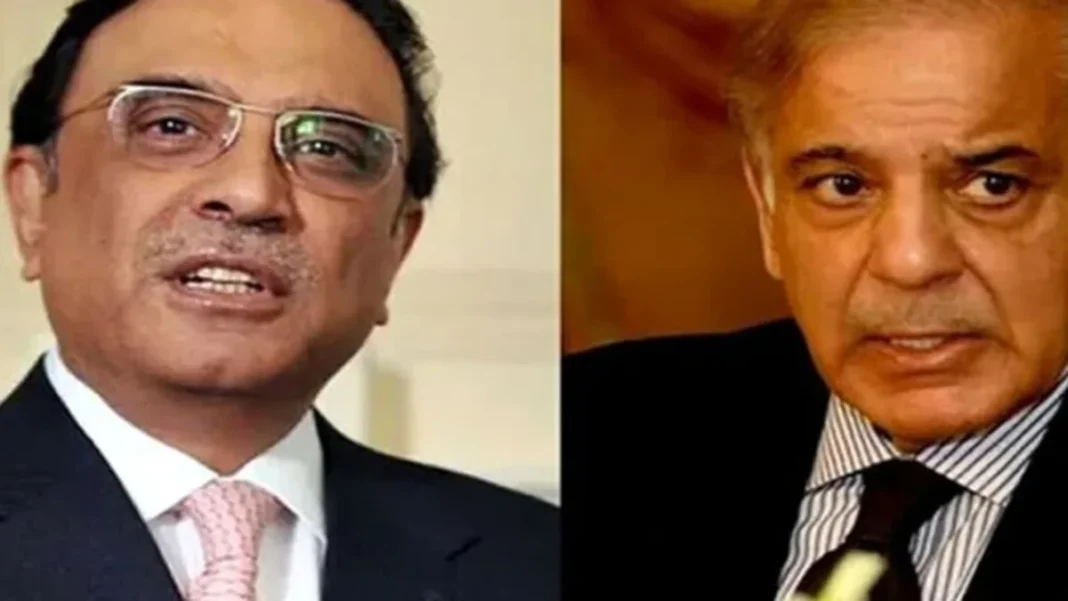
President Asif Ali Zardari and Prime Minister Shehbaz Sharif on Sunday congratulated the people of Gilgit-Baltistan as the region marked Gilgit-Baltistan Independence Day, its 79th anniversary. In separate messages, both leaders paid tribute to those who fought against Dogra rule and highlighted the region’s strategic and economic importance.
In November 1947, leaders of the freedom movement, along with the people of Gilgit-Baltistan, liberated the region from Dogra rule and acceded to Pakistan without conditions. A grand ceremony was planned at the Army Helipad in Gilgit to mark the occasion, with celebrations and tributes to the heroes of the liberation struggle.
Zardari recalls the 1947 liberation
President Zardari said the people of Gilgit-Baltistan overthrew the colonial yoke of Dogra rule 79 years ago, declared independence and soon after sent a letter to Quaid-e-Azam Muhammad Ali Jinnah for accession to Pakistan.
He said the flame for freedom had never been extinguished, and the loyalty of the region’s people to Pakistan had never been questioned across the decades.
The president traced the region’s reforms: landmark changes in 1972 under Zulfikar Ali Bhutto, when the Frontier Crimes Regulation and the Jagirdari system were abolished; the abolition of the remaining princely states, including Hunza and Nagar, in 1974; the Legal Framework Order of 1994 under Benazir Bhutto, which set up the Northern Areas Legislative Council; and the 2009 Empowerment and Self-Governance Order, which gave the region its present name, a legislative assembly, an elected chief minister and a governor.
Development must reach ordinary people
Zardari highlighted the region’s strategic location, natural resources and direct border with China. He said its people had made valuable contributions to Pakistan’s defence and development.
“Our priority must be to ensure that its people benefit from these opportunities through better roads, schools, healthcare, reliable energy and employment,” he said.
He stressed that development should bring tangible improvements to people’s lives, including quality education and healthcare, better opportunities for young people and improved market access for farmers and small businesses. He also said tourism could support local economies, while the natural environment needed protection.
Shehbaz pledges commitment to the region
Prime Minister Shehbaz Sharif said the federal government remained committed to the development and prosperity of Gilgit-Baltistan and to a bright future for its youth.
He said November 1, 1947, which marked the end of Dogra rule in Gilgit-Baltistan and the region’s accession to Pakistan, stood as a luminous and unforgettable day in its history. He paid tribute to the mujahideen, ghazis and martyrs who etched their names in history through their sacrifices during the struggle for freedom.
On energy, he said the 16-megawatt Naltar Hydropower Project had been completed, and the federal government had launched a 100MW solar energy project to provide affordable and accessible energy. A transparent digital balloting process had been adopted for the free distribution of solar panels with a combined capacity of 58MW, with about 100,000 panels distributed so far.
Feature Pakistan earlier covered the prime minister’s push to finish the GB solar project early, in Shehbaz Orders Early Finish to GB 100MW Solar Project.
On education, foundation stones had been laid for four Daanish Schools in Sultanabad, Bunji, Ghanche and Skardu, valued at Rs12.46 billion. Under the Prime Minister’s Laptop Scheme, 4,245 laptops had so far been distributed among young people in Gilgit-Baltistan.
Why Gilgit-Baltistan Independence Day matters
Frequently asked questions
What is Gilgit-Baltistan Independence Day?
Gilgit-Baltistan Independence Day, marked on November 1, recalls the day in 1947 when the region’s people overthrew Dogra rule, declared independence and acceded to Pakistan.
What did President Zardari say on the 79th Independence Day?
President Asif Ali Zardari congratulated the people of Gilgit-Baltistan, traced reforms from 1972 to 2009, and said development must bring better roads, schools, healthcare, energy and employment.
What development projects did Prime Minister Shehbaz Sharif highlight?
The prime minister highlighted the 16MW Naltar project, a 100MW solar project, about 100,000 solar panels, four Daanish Schools worth Rs12.46 billion, 4,245 laptops, and the Maqpoon Das zone with an expected 5,000 jobs.
When did Gilgit-Baltistan accede to Pakistan?
Gilgit-Baltistan acceded to Pakistan in November 1947, after its people liberated the region from Dogra rule and sent a letter to Quaid-e-Azam Muhammad Ali Jinnah.
What ceremony marked the 79th Independence Day?
A grand ceremony was planned at the Army Helipad in Gilgit, featuring celebrations and tributes to the heroes of the region’s liberation struggle.