New administrative units inevitable, says Mustafa Kamal
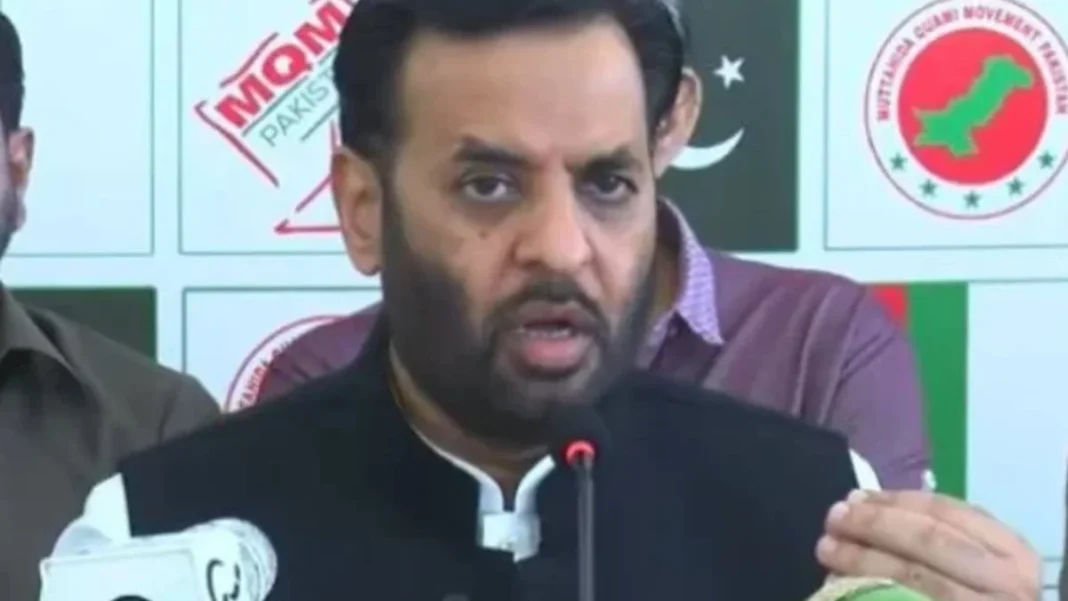
Federal Health Minister Mustafa Kamal has said Pakistan cannot be governed under the existing administrative model, and that the creation of new administrative units has become inevitable. He was speaking at an event organised by the Korangi Association of Trade and Industry in Karachi on Saturday.
Kamal, who also leads MQM-Pakistan, said he had reached the conclusion after years of struggle. Raising complaints about Karachi, he said, had become futile, because nobody seemed to care.
New administrative units: what Kamal said in Karachi
“The people of Karachi earn and contribute, yet they still have to beg the federal government for their rights,” Kamal said, adding that the federal bureaucracy in Islamabad was displeased with the presence of Karachiites.
“I honestly believe the existing government system cannot work. The longer we delay the creation of new administrative units, the greater the damage will be,” he said. He added that the issue was now being taken seriously, which was why opponents had adopted a harsher tone.
His remarks land in the middle of a wider debate about how Pakistan is governed. Retired civil servants, diplomats and generals have also warned in recent days against constitutional changes imposed against the wishes of the people, and have called for equal treatment of all provinces, as covered in Roedad Khan Club Calls for Constitutional Rule. Kamal’s argument runs in a different direction, but it shares the same starting point, that the present arrangement is under strain.
Why Karachi sits at the centre of the argument
Kamal framed his case through Karachi, a city that generates a large share of national revenue yet struggles with basic services. His point was plain, that a city which contributes so much should not have to plead for its rights.
That argument connects with the daily experience of Karachi residents, from water and transport to law and order and civic services. The city’s planners have also faced criticism in recent days, with the Sindh chief minister blaming city planners for what he called the ruining of Karachi, a story that underlines how contested the city’s governance has become.
Kamal did not set out a map, a number of units or a timetable in the remarks reported from the event. His case was about the principle, that the current model cannot work and that delay itself causes damage. Any concrete proposal would still need to answer hard questions about boundaries, resources, assemblies and the constitutional path to change.
The medicine system he pointed to
Kamal also used his own ministry’s work as an example of what a reformed system can do. He said pharmaceutical companies previously had to pay hefty bribes to register medicines with the Drug Regulatory Authority of Pakistan. Under the new system, he said, every document was processed automatically.
He said barcodes had been introduced for 86,000 branded products made by 650 pharmaceutical companies, while the ministry’s database now held information on 86,000 medicines. That figure matches the medicine pricing debate covered this week in Medicine Pricing in Focus as 86,000 Drugs Go Digital, where the health minister said medicine pricing needed serious attention.
The link matters for his wider argument. Kamal presented the automated registration system as proof that an old, rent-seeking process can be replaced by a rules-based one. His claim is that administrative reform, not just complaints, changes outcomes.
What happens next
Frequently asked questions
What did Mustafa Kamal say about new administrative units?
He said the creation of new administrative units has become inevitable, because Pakistan cannot be governed under the existing administrative model.
Where did he make the remarks?
He was speaking at an event organised by the Korangi Association of Trade and Industry in Karachi on Saturday.
Why did he focus on Karachi?
He argued that the people of Karachi earn and contribute, yet still have to beg the federal government for their rights, and that raising complaints about the city had become futile.
Did he propose a specific map or number of units?
No, the remarks reported from the event set out the principle that delay causes damage, without a published map, number of units or timetable.
What did he say about medicine registration?
He said pharmaceutical companies previously had to pay hefty bribes to register medicines with Drap, but under the new automated system every document is processed automatically, with barcodes for 86,000 branded products.