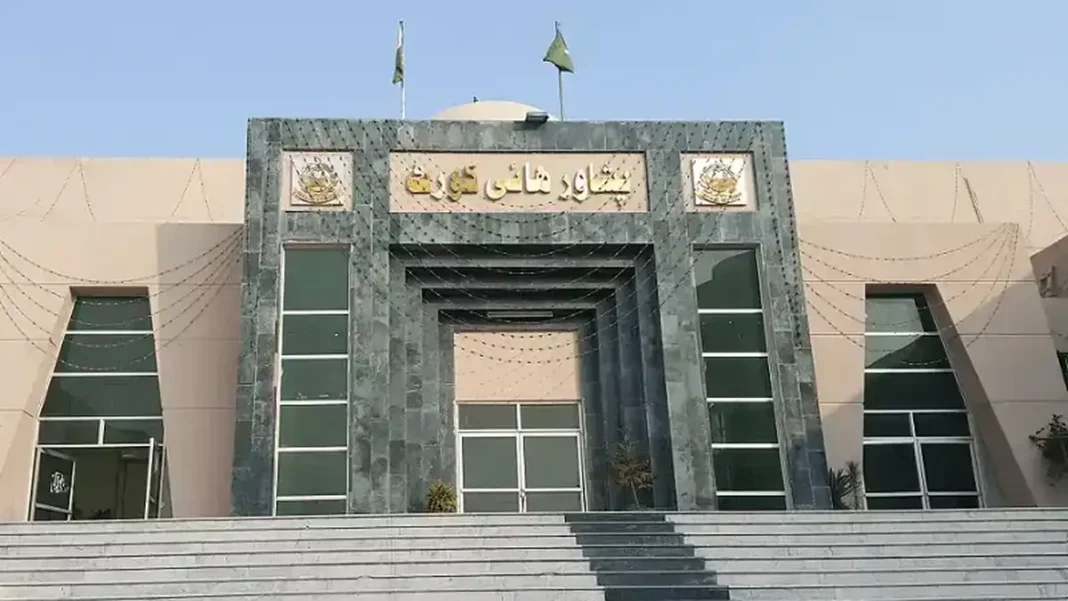
FCC to Hear Challenge to PHC’s PTI Order on November 5
The Federal Constitutional Court (FCC) has listed for hearing the Khyber Pakhtunkhwa government’s petitions against a Peshawar High Court (PHC) interim order that directed police not to arrest Pakistan Tehreek-i-Insaf (PTI) workers in the province.
An FCC division bench comprising Chief Justice Amin-ud-Din Khan and Justice Ali Baqar Najfi will take up the petitions on November 5.
The case concerns PTI workers who approached the PHC challenging their detention by the executive under Section 3 of the West Pakistan Maintenance of Public Order Ordinance 1960, known as the MPO. The matter is still pending in the high court. The Khyber Pakhtunkhwa government has challenged the interim order in the case of 48 PTI workers.
Two courts, two different pictures
The report notes a contrast that has become familiar in these cases. It has been witnessed that though the PHC has granted some relief to PTI workers, no substantive relief has been granted to the party’s supporters by the Lahore High Court.
PTI’s legal team claims that thousands of workers are detained under the MPO all over the country, especially in Punjab. The November 5 hearing will not decide the main petitions about those detentions. It will decide whether the PHC’s interim protection stays in place while the cases continue.
That distinction matters for the workers concerned. An interim order protects them from arrest in the meantime. If the FCC sets it aside, that protection goes, even though the underlying challenge to the detentions remains pending.
The court created by the 27th Amendment
Since the passage of the 27th Constitutional Amendment, the report notes, the PTI has struggled to get substantive relief in matters related to civil liberties. The party has also not received any relief from the FCC, which was created last year under the 27th Amendment.
Recently, the court rejected a petition by Bushra Bibi, the wife of PTI founder Imran Khan, seeking suspension of her sentence in the Al-Qadir Trust case.
The report also notes that the PTI is reluctant to approach the FCC in any matter, while the court has taken up several cases against the party and has even passed interim orders. The FCC judges, it adds, face a battle of perception since the federal government appointed them, while the federal government is also the primary litigant before the court.
That perception question is now part of the case itself. Whatever the bench decides on November 5, it will be read against that background, by the PTI, by the provincial government, and by lawyers watching how the new court handles its first major run of civil liberties cases.
A second case reserved
The FCC has also reserved its verdict on an appeal filed by the Khyber Pakhtunkhwa government against a high court order directing an end to CCTV surveillance inside prisoners’ cells.
During the hearing, the court raised questions about inmates’ privacy, human dignity and security. Justice Rozi Khan observed that a prison cell was like a bedroom, and questioned how cameras could be installed there.
The judge also questioned the practice in the context of Article 14 of the Constitution, which guarantees the inviolability of human dignity. Justice Aamer Farooq asked whether cameras had been installed only inside prisoners’ cells or throughout the prison, and sought to know whether every movement of inmates was monitored inside their cells.
Representing the provincial government, lawyer Shamail Aziz argued that the prisoners were involved in serious crimes and that the cameras were primarily intended to ensure security.
What November 5 will decide
The November 5 hearing is narrow in legal terms and wide in political effect. Legally, it concerns an interim order in 48 workers’ cases. Politically, it is another step in the running dispute over detentions under the MPO, governor’s rule in Khyber Pakhtunkhwa, and the role of the new constitutional court.
Frequently asked questions
What will the FCC hear on November 5?
Petitions by the Khyber Pakhtunkhwa government against a Peshawar High Court interim order directing police not to arrest PTI workers in the province.
Who will hear the case?
An FCC division bench comprising Chief Justice Amin-ud-Din Khan and Justice Ali Baqar Najfi.
What is the underlying dispute?
PTI workers challenged their detention under Section 3 of the Maintenance of Public Order Ordinance 1960. The PHC granted interim protection; the provincial government has challenged that order in the case of 48 workers.
What about the CCTV cameras case?
The FCC has reserved its verdict on the provincial government’s appeal against a high court order ending CCTV surveillance inside prisoners’ cells, after judges raised questions about privacy and human dignity under Article 14.