Safe exercises for seniors can help you stay strong, steady, and independent in daily life. Many older adults worry that movement will tire them out or cause a fall. In truth, gentle movement done with care often helps the body feel looser and more able. You do not need a gym, special clothes, or a hard routine to begin. The key is to move a little, rest when you need to, and build up slowly over time.
Before you start a new routine, it is wise to check with your doctor. This is even more important if you feel dizzy, short of breath, or unwell at times. A doctor can help you judge what kind of movement suits your health. Family members can come along and help note the advice. Keep that advice in mind as you read this guide, and treat it as general information only. Every person is different, so what suits a friend may not suit you.
Why Gentle Movement Matters as You Age
Daily life asks a lot of the body, even when the tasks look small. Standing to cook, carrying a bag of groceries, and climbing a few steps all need strength and balance. When you move gently each day, your body stays familiar with these actions. As a result, everyday tasks can feel less tiring. Gentle movement also helps keep joints from feeling stiff after long hours of sitting.
Movement supports the heart and the body in general ways. A regular walk, for instance, can help you feel more awake and less sluggish. If you want more simple heart-friendly habits, you may enjoy reading about ways to lower blood pressure naturally. However, exercise alone is not a treatment for any health problem. Think of it as one part of a healthy daily pattern, along with good sleep, balanced food, and rest.
Another benefit of gentle movement is confidence. Many seniors feel nervous about falling, and that fear can lead them to sit still even more. Sadly, sitting still can make balance weaker over time. A careful, slow routine can break that cycle. When you practise steady steps in a safe place, you learn to trust your feet again. Over time, you may feel more sure when you walk across a room. Therefore, patience is a key part of any senior exercise routine.
Safe Exercises for Seniors: How to Start Slowly
The best way to begin is small. Choose one simple activity, such as a short walk inside your home. Do it for a short while, then sit and rest. Notice how your body feels during the walk and after it. If you feel calm and comfortable, you can try again the next day. If you feel tired or sore, rest longer and try a shorter walk next time. There is no need to rush, because your body will signal, in small ways, when it is ready for a little more.
Build up only a little at a time. You might add a few more steps each week, or walk to one more room in the house. Avoid sudden jumps, such as going from a very short walk to a long outing in one day. Moreover, slow progress protects muscles and joints from strain. Remember, the goal is not to finish fast. The goal is to move a little, most days, and feel good while doing it.
Walking at a Comfortable Pace
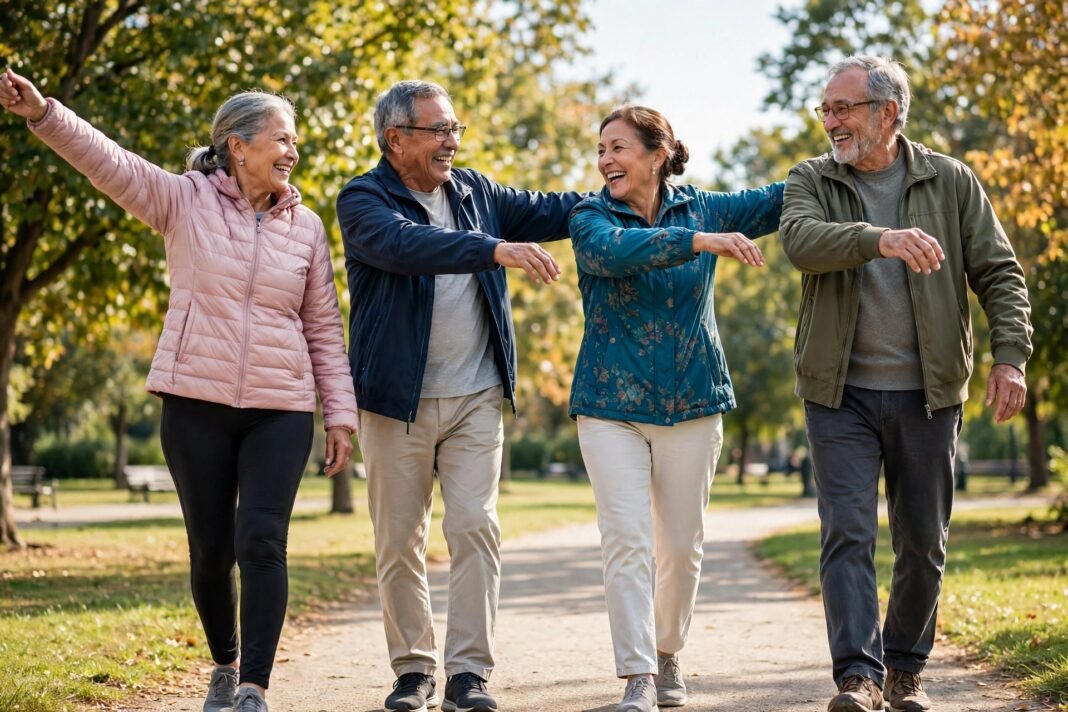
Walking is one of the simplest and most natural forms of movement for seniors. You can walk inside your home, in a garden, or on a flat path near your house. First, choose a place that feels safe, with a smooth surface and no loose rugs or wires. Walk at a pace that lets you talk easily. If you cannot speak in full sentences, slow down.
In addition, good shoes matter a great deal. Wear shoes that fit well, close firmly, and grip the ground. Avoid loose slippers and high heels, which can make a fall more likely. If you use a walking stick or a walker, bring it along and use it as usual. A family member or friend can walk with you, especially on the first few outings. Walking together is safer, and it turns exercise into a pleasant social time.
Many people find walking more enjoyable when it becomes a daily habit. You might walk after a meal, or in the early evening when the weather is mild. If the weather is hot, rainy, or very cold, walk inside instead. For more ideas about walking as a daily habit, you can read about the benefits of walking every day. Do not feel bound by any step count in that article, because a short, comfortable walk done often is a fine goal on its own.
Stretching for Ease and Flexibility
Stretching helps the body feel looser and more comfortable. After sitting for a while, a gentle stretch can ease stiffness in the neck, shoulders, and legs. Move slowly, and never force a stretch into pain. Stretch only as far as feels comfortable, then hold the position for a short while. If a stretch hurts, stop at once and try a gentler version, because pain is a clear signal to ease off, not to push harder.
Simple stretches can be done while sitting or standing near a chair. For example, you can slowly roll your shoulders back, then forward, a few times. You can lift your arms gently toward the ceiling, then lower them again. You can also point and flex your feet while sitting, which helps the ankles feel freer. However, keep each stretch slow and controlled, since quick, jerky moves can strain muscles.
Balance Habits for Steady Steps
Balance helps you stay steady when you turn, step over a small obstacle, or stand up. Gentle balance practice can be built into daily life. For example, stand near a sturdy chair or counter and hold it lightly with one hand. Lift one foot a little off the ground for a short while, then place it down again. Repeat on the other side. If you feel wobbly, sit down and rest, because a few calm tries are enough.
Simple daily habits also protect balance. Also, keep walkways clear of clutter, cords, and loose mats. Use good lighting at night, especially on stairs and in hallways. In addition, rise slowly from a chair or bed, and pause for a moment before walking. Standing up too fast can make anyone feel dizzy. These habits, along with gentle balance practice, help you move with more confidence.
Safe Exercises for Seniors Using Body Weight and Household Items
Gentle strength helps with everyday tasks such as standing up, lifting a bag, and opening a door. You can build strength using your own body weight, without any special equipment. For example, sit in a sturdy chair and stand up slowly, using your hands on the chair if you need support. Sit down again with care, and repeat a few times. Keep the movement slow, and stop if you feel tired or unsteady.
Household items can also help, in a gentle way. A small, light tin or a bottle of water can serve as a light weight for arm movements. Hold it with care, lift it slowly to shoulder height, and lower it again. However, never lift anything heavy, and never hold your breath while lifting. If an item feels too heavy, put it down and use your hands alone, because strength grows from gentle effort, not from strain.
Chair-Supported Safe Exercises for Seniors
A sturdy chair can be a great partner for senior exercise. It gives support, a place to rest, and a safe base for gentle moves. To begin, sit tall in the chair, with your feet flat on the floor. March slowly in place, lifting one knee a little, then the other. You can also lift your arms overhead, then lower them slowly.
Chair-supported standing moves are also helpful. Next, stand behind the chair and hold its back lightly. Rise slowly onto the balls of your feet, then lower your heels again. Keep the movement small, and rest between repeats. You can also step gently from side to side, holding the chair for balance. Always keep the chair on a flat surface, so it does not slip. A family member can stand nearby the first few times, until you feel sure.
Rest Days Are Part of Staying Strong
Rest days are just as important as active days. After a day of movement, give your body a day of lighter activity, such as gentle stretching or a very short walk. After all, rest helps muscles recover and keeps the routine pleasant. If you feel sore, rest longer, and do not feel guilty about it. Recovery is part of staying strong, not a sign of failure. A routine that includes rest is one you can keep for a long time.
Warming up and cooling down also protect the body. Before a walk, spend a few minutes on gentle moves, such as shoulder rolls and slow steps around the room. After a walk, slow down gradually, rather than stopping at once. Finally, wear clothes that feel loose and comfortable, and shoes that grip well. Exercising with a friend or family member adds safety and joy, because you can remind each other to rest, sip water, and keep a comfortable pace.
Signs That Mean Stop and Rest
Know the signs that mean stop and rest. Stop at once if you feel chest pain, severe breathlessness, dizziness, or sudden weakness. Sit down, rest, and ask for help if the feeling does not pass. Also stop if a joint hurts sharply, or if you feel unsteady. These signs are the body’s way of asking for care, and they should never be ignored. After resting, do not try to finish the session, because a shorter session, or a rest day, is always the wiser choice. For general ideas about staying well through daily habits, you may also enjoy reading about ways to boost immunity naturally.
Will you try one gentle move today, such as a short walk or a calm stretch in your chair? Perhaps you can ask a family member to join you, and enjoy the time together. Start small, rest often, and notice how your body feels. Over time, those small moments of movement can add up to greater ease in daily life. A kind, patient start is the best start of all.
Disclaimer: This article shares general information only. It is not medical advice, and it does not replace guidance from a doctor or another healthcare professional. Please talk to a healthcare professional about your own situation before starting a new exercise routine.