Karachi Plans Pedestrian-Only Roads, Taking a Cue From London
Karachi pedestrian-only roads are planned by Mayor Murtaza Wahab, who says selected roads in the city will close to traffic, taking inspiration from London’s decision to restrict vehicle access to Oxford Street.
Wahab said London’s mayor had designated a one-kilometre stretch of Oxford Street exclusively for pedestrians, a move that has received widespread appreciation. He noted that political parties in London had not created legal hurdles to the decision, and stressed the importance of political cooperation in implementing similar projects in Karachi.
The announcement follows the permanent closure to traffic of a section of London’s famous shopping street on Monday, 26 October. The move allows pedestrians to use an area previously occupied by vehicles, including London’s red double-decker buses and black cabs. Around half of Oxford Street has been pedestrianised in the first phase, with plans to extend the restrictions to the remaining sections depending on the success of the initiative.
What has actually been announced
It is important to be precise about what the mayor has said so far. Karachi plans to close selected roads to traffic and reserve them for pedestrians. No specific roads have been named yet, and no start date has been announced. The plan is at the announcement stage, not the implementation stage.
That distinction matters for residents and traders. A pedestrian-only road changes how people reach shops, how deliveries are made and where vehicles park. Until the city names the roads and publishes the details, those practical questions remain open.
Why London is the reference point
Oxford Street is one of the world’s best-known shopping streets, and its partial pedestrianisation is a major urban experiment. Closing half the street to traffic in the first phase, while keeping the rest under review, gives London a way to test the idea before extending it. The mayor’s reference to political cooperation is also pointed: in London, the closure went ahead without the legal and political obstacles that often stall such projects.
Karachi’s mayor appears to be drawing two lessons from that experience. The first is that a busy commercial street can be handed to pedestrians without shutting down the area. The second is that such a change needs political agreement to survive.
The encroachment test at home
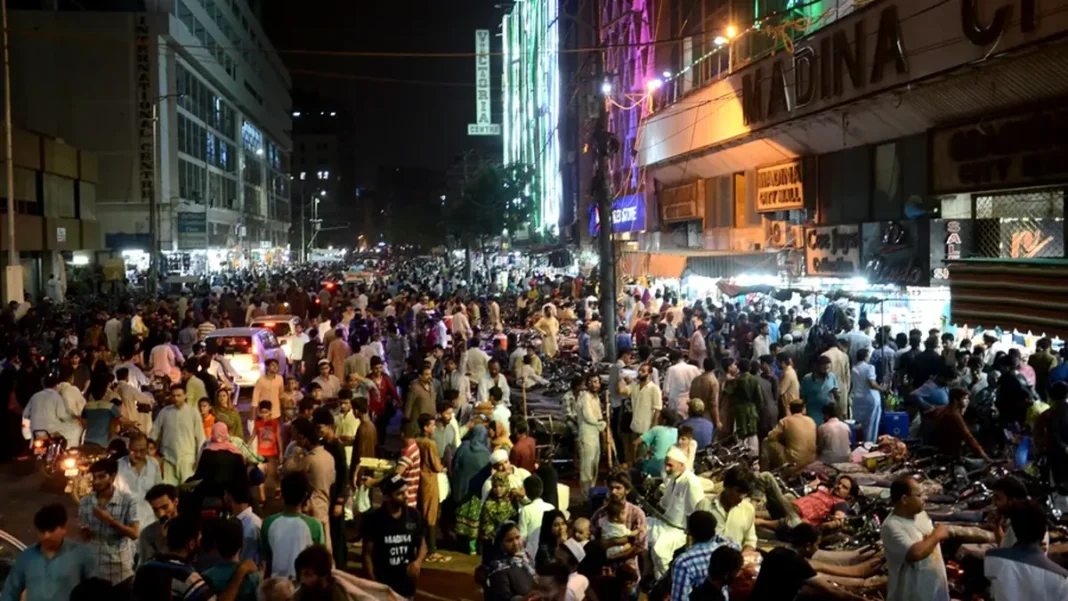
Karachi faces a more basic problem than London before any road can be made pedestrian-only: its footpaths and roads are often occupied. On 25 October, just days before the pedestrian-only announcement, the mayor gave the Karachi Metropolitan Corporation’s Anti-Encroachment Department 15 days to remove encroachments from major roads, streets, footpaths and public spaces across the city, warning of strict disciplinary action, including termination of services, against officials who fail to deliver.
That deadline is the real test of the pedestrian plan. A road reserved for pedestrians is of little use if its footpaths are blocked by stalls, structures and parked vehicles. The anti-encroachment operation, which prioritises major thoroughfares and commercial areas, will show whether the city can first clear the space it already has before it redesigns how that space is used.
Residents will also watch what happens after any clearance. The mayor has directed that cleared areas must remain free of encroachments, with firm action against repeat offenders. If cleared footpaths fill up again, a pedestrian-only designation alone will not change the experience of walking in Karachi.
What to watch next
The next steps to look for are concrete: the names of the roads proposed for pedestrian-only status, the arrangements for traders, deliveries and emergency access, and a timetable. The London model suggests a phased approach, starting with a limited stretch and extending it only if the first phase works. Karachi’s version will need the same discipline, plus something London did not need to the same degree: sustained enforcement against encroachments.
For now, the announcement signals intent. Karachi’s mayor wants the city’s busiest commercial streets to give priority to people on foot, following a model that has just been put into practice in London. Whether that intent becomes a walkable street depends on the unglamorous work of clearing footpaths, managing traffic around the closed roads and keeping the space clear once it is handed to pedestrians.
Frequently asked questions
What has Karachi’s mayor announced?
Plans to designate selected roads in Karachi as pedestrian-only, inspired by London’s pedestrianisation of part of Oxford Street.
Which Karachi roads will become pedestrian-only?
No specific roads have been named yet, and no start date has been announced.
What happened on London’s Oxford Street?
A section of the shopping street was permanently closed to traffic on 26 October, with around half pedestrianised in the first phase and the rest under review.
Why does the mayor mention political cooperation?
He noted that political parties in London did not create legal hurdles to the Oxford Street closure, and stressed that similar cooperation matters for implementing such projects in Karachi.
What is the link with encroachments?
On 25 October, the mayor gave the KMC anti-encroachment department 15 days to clear major roads, footpaths and public spaces, which is a precondition for any pedestrian-only road to work in practice.