Bangladesh Garment Workers Clash Over Wages
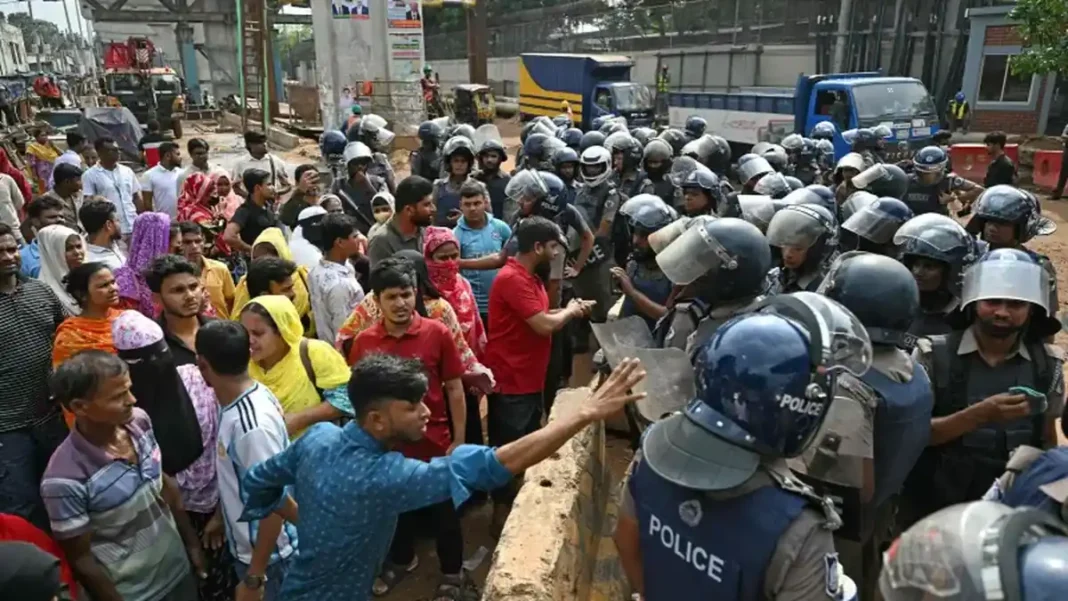
The Bangladesh garment workers clash spread across industrial hubs on Monday, November 2, 2026, as thousands of workers blocked a major highway and clashed with police over pay. Police fired stun grenades and tear gas canisters to disperse crowds in Ashulia, a suburb of Dhaka and the site of some of the country’s largest factories.
Hundreds of workers in Gazipur, north of the capital, blocked the Dhaka-Tangail highway and vandalised several vehicles. Large groups also took to the streets in the Mirpur district of Dhaka, where police dispersed demonstrators with tear gas, reporters for AFP saw. Angry workers also set fire to a police vehicle.
Bangladesh garment workers clash: what happened
The protesters demand a monthly wage of 30,000 taka. Workers currently earn about 13,000 taka a month, according to Kalpona Akter of the Bangladesh Centre for Workers Solidarity. That gap sits at the centre of the dispute.
Industry representatives said workers from at least 529 factories in Dhaka and its surrounding industrial areas had left their workplaces on Sunday. The areas named included Savar, Ashulia, Jirani and Gazipur. The walkout spread on Monday even after the government moved to address the wage question.
The government announced on Sunday that it would establish a wage board to review the minimum wage in the garment industry. Labour leaders say workers’ grievances run wider than the formation of the board. They point to inflation and rising household expenses as the deeper cause of anger on the streets.
“Food prices, cooking gas and electricity bills have all gone up. The government must either bring down the prices of essential commodities or raise our wages,” said Mamum, 28, a factory worker. Machine operator Sharmin, 24, said: “We keep the wheels of the economy turning. They must listen to us.”
Why a wage board did not calm the protests
A wage board is a review body, not a pay rise. It studies the case for a new minimum wage and makes a recommendation. Workers on Monday were asking for an outcome, not a process, which helps explain why Sunday’s announcement did not end the unrest.
Home Minister Salahuddin Ahmed warned that the government was taking strong action to stop the protests. “Those engaging in unlawful activities and conspiracies under the guise of labour movements will be tackled with an iron hand,” he said after meeting industry leaders on Monday.
At the same time, Ahmed said Prime Minister Tarique Rahman had instructed officials after an emergency cabinet meeting late on Sunday to ensure workers’ rights and improve their living standards. Rahman also told officials to make sure production and exports continued unhindered, Ahmed said.
Kamrul Hasan, general secretary of the Ekota Garments Sramik Federation, told AFP that some labour leaders had gone into hiding. “We were not prepared for this unrest either, as the wage board has already been formed,” he said. “But workers are now protesting over wages and other unresolved issues.”
What the unrest means for Bangladesh exports
Bangladesh is the world’s second-biggest garment exporter, behind China. The country has a population of about 170 million people. Its garment industry employs millions of workers and generates the bulk of its export earnings.
Bangladesh’s main manufacturer associations warned that prolonged unrest could disrupt production, delay export shipments and affect commitments to international buyers, the state-run BSS news agency reported on Monday.
For Pakistan, which also sells garments and textiles abroad, disruption in the world’s second-largest garment exporter is a market to watch, not a windfall to assume. No buyer shift has been reported in the coverage of the protests.
Related Feature Pakistan coverage includes the Bangladesh garment wage board announcement.
Frequently asked questions
What are Bangladesh garment workers demanding?
They demand a monthly minimum wage of 30,000 taka, more than double the current level of about 13,000 taka a month, according to the Bangladesh Centre for Workers Solidarity.
Where did the clashes take place?
Workers blocked the Dhaka-Tangail highway in Gazipur, protested in Dhaka’s Mirpur district, and clashed with police in Ashulia, home to some of the country’s largest factories.
Did the government respond before the protests?
Yes. On Sunday, the government announced a wage board to review the minimum wage in the garment industry. Workers continued to protest on Monday, saying their grievances go beyond the board itself.
How many factories were affected?
Industry representatives said workers from at least 529 factories in Dhaka and surrounding industrial areas, including Savar, Ashulia, Jirani and Gazipur, left their workplaces on Sunday.
Why does this matter for exports?
Bangladesh is the world’s second-biggest garment exporter, behind China. Its garment industry employs millions of people and generates the bulk of the country’s export earnings, so prolonged unrest could delay shipments to international buyers.