Punjab Hospital Panic Buttons Bring Help by QR
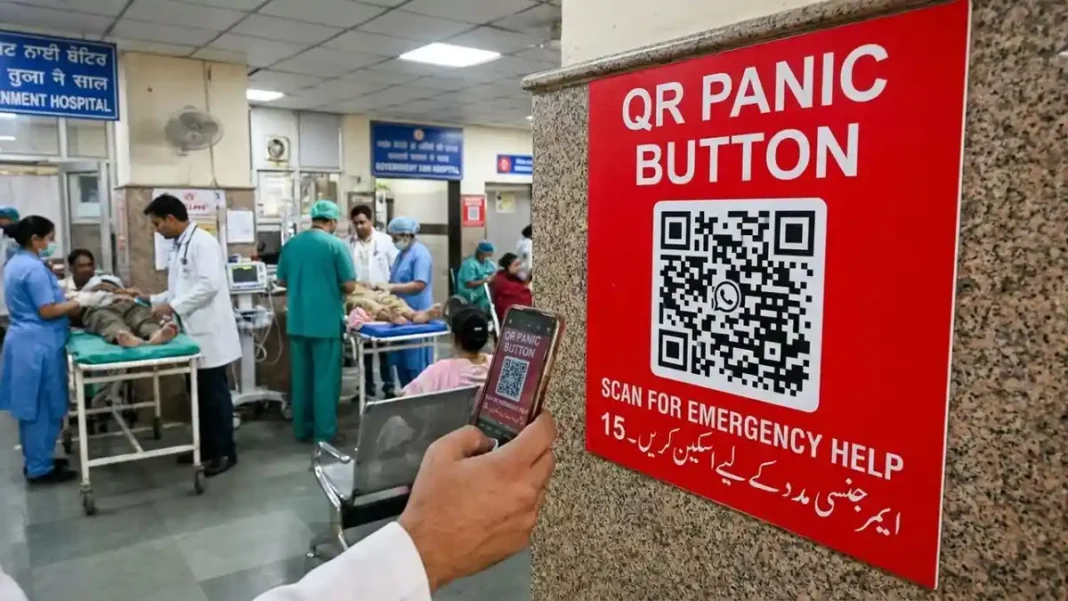
Punjab hospital panic buttons are being installed in government hospitals across the province, including Lahore, by the Punjab Safe Cities Authority (PSCA). The emergency QR panic buttons aim to give citizens quick, technology-enabled access to Safe City emergency services, particularly during medical emergencies when timely help can prove critical.
The project will roll out in phases across government hospitals. By scanning the QR code, citizens can connect directly with the Punjab Safe Cities Authority. The relevant hospital’s details will appear automatically on their mobile phones, letting them register their contact number and seek help through a call to Emergency Helpline 15, live chat, or video call.
The system is designed for moments when a patient or attendant feels stuck. Instead of searching for a help desk or a phone number, one scan opens a direct line to Safe City staff who can see which hospital the request comes from.
Punjab hospital panic buttons: blood help first
A key feature of the initiative is its link with the Safe City Virtual Blood Bank. The link will help patients and their attendants arrange urgently required blood.
When a request arrives, the Safe City team will help connect patients in need with available donors of the required blood group. The process aims to make finding blood donors easier, faster and more accessible than relying on ward-to-ward appeals or social media posts.
Citizens can also call Emergency Helpline 15 and press option 4 to receive guidance on blood requirements and basic first aid assistance. That phone route matters for people without a smartphone, or when scanning a code is not practical in an emergency.
The QR panic button facility will not be limited to blood-related emergencies. Citizens will also be able to use the system to seek Safe City help in other emergencies, giving them access to emergency support through a single digital platform.
How the system works, step by step
First, the patient or attendant scans the QR panic button displayed in the hospital. Second, the hospital’s details appear on the phone, and the user registers a contact number. Third, the user chooses a channel: a call to helpline 15, live chat, or video call.
Safe City staff then respond to the request. For blood needs, they connect the patient with donors of the matching group through the Virtual Blood Bank. For other emergencies, they direct the request to the relevant support.
The PSCA described the installation as an important milestone in using modern technology to improve public services and strengthen emergency response. The authority said it remains committed to expanding technology-driven public safety and emergency facilitation services across Punjab.
What to watch as the rollout spreads
The rollout is phased, so not every government hospital will have the buttons on day one. Patients should look for the QR signs in their hospital, and hospitals should place them where attendants can find them fast: near entrances, emergency wards and blood banks.
Two questions will decide whether the system helps in practice. The first is response time: how quickly Safe City staff answer a scan or a call. The second is donor matching: whether the Virtual Blood Bank holds enough registered donors across blood groups and cities.
Privacy also matters. Users register a contact number to use the system, so the authority must keep those details to the emergency at hand. No detail on data handling was set out in the material reviewed.
Frequently asked questions
What are Punjab hospital panic buttons?
They are emergency QR codes installed in government hospitals across Punjab, including Lahore, by the Punjab Safe Cities Authority. Scanning one connects citizens directly with Safe City emergency services.
How do Punjab hospital panic buttons work?
Scanning the QR code shows the hospital’s details on the phone, lets the user register a contact number, and offers help through a call to Emergency Helpline 15, live chat, or video call.
Can the panic buttons help find blood?
Yes. The system links with the Safe City Virtual Blood Bank, which helps connect patients in need with available donors of the required blood group.
What if a person cannot scan the QR code?
Citizens can call Emergency Helpline 15 and press option 4 for guidance on blood requirements and basic first aid assistance.
Are the buttons only for blood emergencies?
No. Citizens can also use the system to seek Safe City assistance in other emergencies, through a single digital platform.