Fridge Cyberattack Hits Supermarkets Across Europe
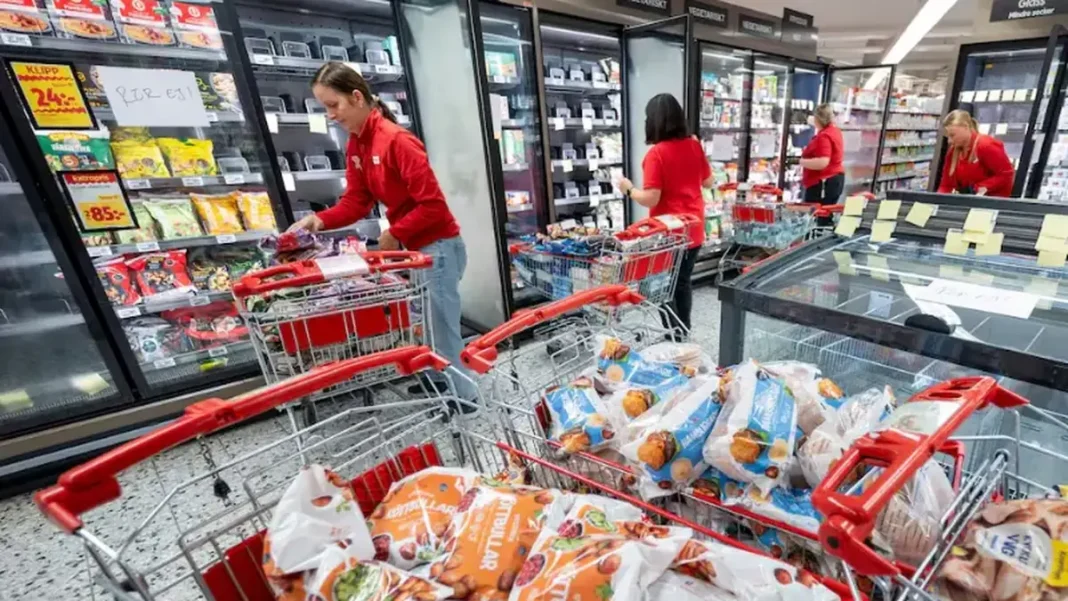
Supermarkets in at least five European countries saw temperatures in their cold storage units soar on Monday, 2 November 2026, after hackers struck refrigeration systems. The Europe fridge cyberattack affected stores in Belgium, Estonia, Finland, Luxembourg and Sweden, and several chains confirmed that their fridges had been hit.
No group has claimed responsibility for the attack. It follows a similar incident in France three weeks earlier, on 12 October, when hundreds of store refrigeration systems were hit and retailers had to throw out spoiled food.
Stores hit across five countries
In Belgium, Carrefour reported disruption in about 15 of its 700 stores. A company spokesman, Mich Vergauwen, said plainly: “It’s a cyberattack; there is no other reason.”
Ikea Belgium said a cyberattack hit its store in Mons, in the south-west of the country, and caused freezer temperatures to rise suddenly in the early hours of Monday. Chains Delhaize, Colruyt and Intermarche also reported technical problems affecting their fridges in Belgium, while Delhaize said four of its stores in Luxembourg were affected as well.
In Sweden, the Coop chain confirmed that six of its around 800 stores had been hit early on Monday. Spokesman Carlos Cancino said: “We can confirm that it is a cyber incident. The problem has now been resolved, and the fridges and freezers are working as normal.”
Cancino added that Coop did not know who was behind the attack. He noted, however, that the six affected stores had been connected to a 4G mobile network rather than the updated 5G system, which left them more exposed to hackers.
Finland and Estonia report cases too
In Finland, irregular temperatures were detected in a few smaller grocery stores belonging to the Kesko group. Petri Kayhko, head of corporate security at Kesko, said the company was investigating the cause and had not ruled out interference through the network.
Roni Kokkola, an information security specialist at Finland’s National Cyber Security Centre, also would not rule out cyber interference. He said such attacks had been seen in Europe in recent months, so a spread beyond France to other countries had been expected. “Nowadays it’s very typical that all kinds of vulnerabilities are being exploited ever more actively and rapidly,” he said.
In Estonia, at least one supermarket was attacked by hackers who raised the temperature in its refrigeration units to 50 degrees Celsius, public broadcaster ERR reported. The units were older models supplied by Danfoss, similar to those targeted in the France attack. Jann Mutso, director of Kitman Coldtech, a maker and distributor of refrigeration systems, told ERR: “The handwriting is the same, but I can’t say more.”
Why the Europe fridge cyberattack matters
The incident shows how a single weak point in a supply chain can reach shops in several countries at once. Many supermarket fridges are no longer standalone machines. They connect to outside control systems so temperatures can be watched and adjusted from a distance, and that connection also gives attackers a way in.
Belgian refrigeration group Sabcobel said it had begun securing its installations after the October attack in France, but around 10 per cent were still not fixed, and some were in the shops affected on Monday.
After the attack in France, Danfoss said most of the affected equipment were legacy products which no longer receive software or security updates. That detail matters for shoppers as well as stores, because old equipment that cannot be patched stays open to the same kind of attack.
EU food and agriculture commissioner Christophe Hansen said at the time that food security requires more attention at all levels, and that the exploitation of food was now a reality.
The same lesson applies well beyond Europe. As shops, banks and public services put more daily systems online, the security of older connected equipment becomes a public concern, not only a technical one. The point also matters closer to home, where the national cybercrime agency has pursued prosecutions over illegal call centres.
Frequently asked questions
Which countries were hit by the fridge cyberattack?
Belgium, Estonia, Finland, Luxembourg and Sweden.
How many stores were affected?
Carrefour Belgium reported disruption in about 15 of its 700 stores, Coop in Sweden confirmed six of its around 800 stores, and Delhaize reported four affected stores in Luxembourg.
Was this linked to the earlier attack in France?
The method looks similar, and some affected stores used equipment from Danfoss, the same supplier targeted on 12 October in France. No group has claimed responsibility for either attack.
Why were some stores more exposed than others?
Coop said its six affected stores were connected to a 4G network rather than the updated 5G system. Danfoss has also said much of the equipment hit in France was legacy stock that no longer receives security updates.
Is shoppers’ food safe?
Affected stores said their systems are working normally again. Food that spent time above safe storage temperatures during the incident would have to be discarded.