China Pushes Middle East Dialogue in Beijing Talks
China stepped up diplomatic efforts on Monday, 2 November 2026, to ease the Middle East crisis, urging a return to the negotiating table in back-to-back meetings with Iranian, Omani and Saudi officials in Beijing. The China Middle East dialogue push comes days after United States President Donald Trump issued a fresh war threat, more than eight months into a conflict triggered by US-Israeli strikes on Iran.
Beijing supports Tehran in safeguarding its own sovereignty and security, Foreign Minister Wang Yi told Ali Bagheri Kani, the deputy secretary of Iran’s Supreme National Security Council, according to a Chinese statement.
Wang later called for dialogue to end the conflict while safeguarding regional energy security and the safety of shipping lanes, as he met Saudi National Security Adviser Musaad bin Mohammad al-Aiban.
What Beijing said to each side
Wang told Bagheri Kani that all parties should, in a spirit of reason and pragmatism, focus on a political solution rather than once again resorting to armed conflict. China’s foreign ministry had not previously announced Bagheri Kani’s visit to Beijing.
Trump said on Saturday that the United States had knocked out much of Iran’s military but still had to take care of one or two targets, with Tehran warning of reprisals if attacked.
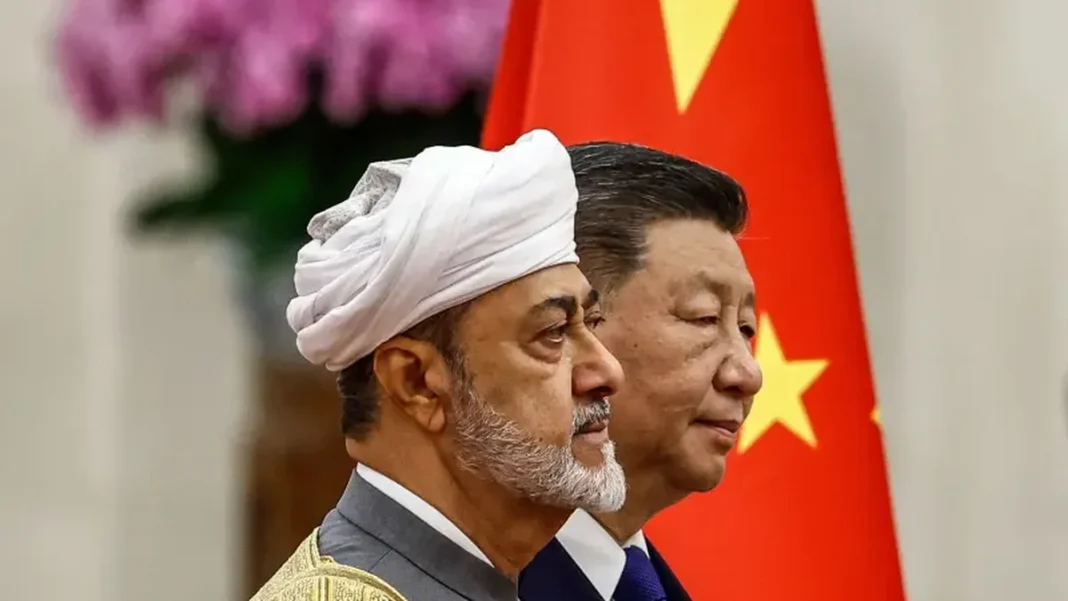
President Xi Jinping also met Oman’s sultan for talks in Beijing on Monday, the first visit to China by the Gulf nation’s head of state since diplomatic ties were established. Xi told Haitham bin Tariq that China was ready to contribute to peace, stability and prosperity in the region.
The Chinese leader said the Middle East should not become a wrestling ground for major-country rivalry and geopolitical conflicts, state news agency Xinhua reported. It was a clear message to Washington as well as to regional capitals: Beijing wants the crisis settled at the table, not on the battlefield.
Shuttle diplomacy planned for later this month
Later this month, Beijing will send its Middle East envoy to Iran, Oman and Saudi Arabia as part of shuttle diplomacy visits aimed at promoting peace talks and easing tensions, a Chinese foreign ministry spokesperson told a news briefing.
China, a top economic partner of Iran, has long sought a detente in the months-long conflict, which has disrupted global shipping at times and spilled over into neighbouring countries. Energy security gives Beijing a direct stake in the outcome, since Gulf shipping lanes carry oil and gas on which the world economy depends. The timing also matters for Pakistan: a new US strike on Iran would be madness, former IAEA chief Mohamed ElBaradei warned earlier on Monday, and on the same day Liu Haixing met Pakistan’s top military leadership in Rawalpindi.
Why the China Middle East dialogue matters now
Three points give the Beijing meetings weight. First, China met officials from three sides in one day, which lets it carry messages between capitals that are not talking directly. Second, the planned shuttle visits later this month give the effort a next step, rather than leaving it as a single round of statements. Third, the warning about major-country rivalry speaks to a fear shared across the Gulf: that the region could become the ground for a wider contest between great powers.
None of this guarantees a breakthrough. Iran and the United States remain far apart, and Trump has shown he is willing to use military threats as pressure. Beijing has influence as a trading partner, but it does not control the decisions in Tehran or Washington.
What happens next
The test will come when Beijing’s envoy travels to Iran, Oman and Saudi Arabia later this month. If those visits produce a shared proposal, or even an agreement to keep talking, the Beijing meetings will count as more than ceremony. If they produce only further statements, the crisis will remain where it is, with military threats still hanging over the region.
Frequently asked questions
Who did China meet in Beijing on 2 November 2026?
Foreign Minister Wang Yi met Iranian official Ali Bagheri Kani and Saudi National Security Adviser Musaad bin Mohammad al-Aiban. President Xi Jinping also met Oman’s Sultan Haitham bin Tariq.
What did China call for?
China urged all parties to return to the negotiating table and focus on a political solution rather than resorting to armed conflict, while safeguarding regional energy security and shipping lanes.
Why is China involved in the Middle East crisis?
China is a top economic partner of Iran and a major buyer of Gulf energy, so disruption to shipping lanes and regional stability affects its interests directly.
What is planned next?
Beijing will send its Middle East envoy to Iran, Oman and Saudi Arabia later in November for shuttle diplomacy visits aimed at promoting peace talks.
How does this relate to recent US threats?
The meetings came days after President Donald Trump issued a fresh war threat, saying the US had knocked out much of Iran’s military, with Tehran warning of reprisals if attacked.