Iran Saudi Arabia Talks Ongoing, Araghchi Says
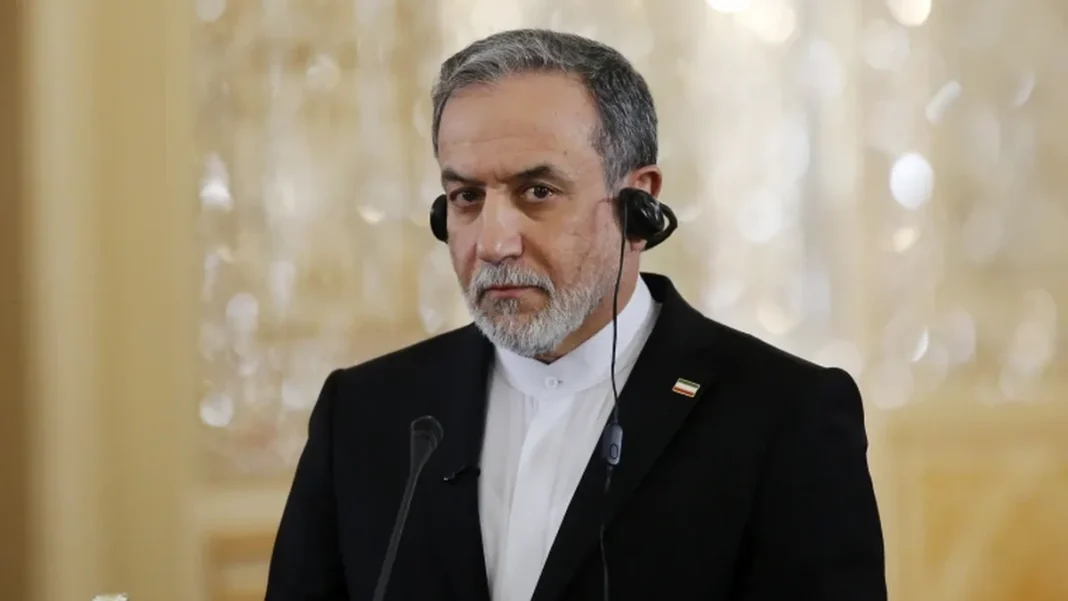
Iran Saudi Arabia talks are ongoing, Foreign Minister Abbas Araghchi has said, as Tehran aims to reach new regional security arrangements for countries in the region without foreign military involvement.
Araghchi spoke on Tuesday, as fighting in the region continued and as mediators worked to narrow gaps between Tehran and Washington. His remarks were reported by Reuters, which also carried a senior Iranian official’s account of the separate United States-Iran talks.
Last week, top officials from Saudi Arabia, Turkiye and Pakistan met Iranian officials in Tehran. That was the first high-level contact between Iran and the three nations since August. Riyadh said the visit was intended to open negotiating channels to prevent the return of military escalation, as fighting between Saudi Arabia and Yemen’s Houthis had intensified in recent weeks.
Pakistan’s presence in that visit gives the talks a direct link to Islamabad. Pakistan has long balanced ties with both Riyadh and Tehran, and it has a direct interest in any arrangement that lowers the risk of a wider regional war, protects shipping through the Strait of Hormuz, and keeps Gulf air routes open for its workers and exporters.
Iran Saudi Arabia talks continue while fighting goes on
The talks are taking place against a background of strikes and counter-strikes. Houthi attacks on Saudi Arabia escalated as the group advanced towards the Bab el-Mandeb Strait, a key shipping chokepoint on the opposite side of the Arabian Peninsula from the Strait of Hormuz.
The Houthis have also attacked Saudi oil facilities and airports, including Riyadh’s international airport, disrupting flights and oil exports and drawing Saudi air strikes on Yemen in response. Yemen has been mired in civil war since the Houthis pushed the internationally recognised, Saudi-backed government out of the capital, Sanaa, in 2014.
Meanwhile, the United States carried out defensive strikes on Iran’s Qeshm Island overnight, with a United States official saying the strikes targeted surface-to-air missiles used against United States assets. The Revolutionary Guards said they downed a United States MQ-9 drone overnight in the skies over the east of the Strait of Hormuz. Feature Pakistan reported the Qeshm strikes earlier, and they remain the sharpest reminder that diplomacy and military action are running in parallel.
Mediators are working hard to narrow gaps between Tehran and Washington, the senior Iranian official said, after Qatari mediators travelled to Tehran on Monday night for talks on a version of the draft United States-Iran deal that has been under negotiation for eight days.
The official cautioned that Tehran’s conditions must be met if the United States wants Hormuz reopened. Nuclear talks could only start afterwards, the official added, and Tehran would not accept Washington’s excessive demands.
Tehran says the ball is in Washington’s court
Iran’s Parliament Speaker Mohammad Bagher Ghalibaf said on Tuesday that the ball was in the United States’ court after Tehran gave a strong and rational response to Washington.
He said the enemy seeks to force the Iranian nation into submission through threats and military action, but they are sorely mistaken, and Iran will not submit. He added that Tehran’s response to any miscalculation by the United States would be unpredictable and disregard geographical constraints.
United States President Donald Trump raised doubt on Monday about whether he would follow through on a threatened resumption of military strikes against Iran after the midterm elections on Tuesday. He added that he believed Tehran wanted to make a deal as soon as possible.
That combination, public warnings from Tehran, a draft deal under negotiation for eight days, and a United States president linking the next military decision to an election, leaves the region in a fragile pause. Talks between Iran and Saudi Arabia, and the separate mediation with Washington, are both aimed at turning that pause into something more durable.
For Pakistan, the stakes are practical. A regional security arrangement without foreign military involvement, which is what Araghchi said Tehran seeks, would still need to answer hard questions about shipping, air safety, oil flows and the war in Yemen. The fact that Saudi, Turkish and Pakistani officials sat with Iranian officials in Tehran last week shows that those questions are now being discussed directly, rather than only through intermediaries.
The Saudi talks run alongside separate United States-Iran talks, where Washington has signalled progress, Pakistan’s earlier Tehran security dialogue, and the debate over an Iranian nuclear weapons ban.
Frequently asked questions
What did Iran’s foreign minister say?
Abbas Araghchi said talks between Iran and Saudi Arabia are ongoing, and that Tehran aims to reach new regional security arrangements without foreign military involvement.
Who visited Tehran last week?
Top officials from Saudi Arabia, Turkiye and Pakistan met Iranian officials in Tehran, the first high-level contact between Iran and the three nations since August.
What is happening with the United States and Iran?
Qatari mediators travelled to Tehran on Monday night for talks on a draft United States-Iran deal under negotiation for eight days. The United States also carried out defensive strikes on Qeshm Island overnight.
What did Iran’s parliament speaker say?
Mohammad Bagher Ghalibaf said the ball was in the United States’ court, and that Tehran’s response to any miscalculation would be unpredictable and disregard geographical constraints.
Why does this matter for Pakistan?
Pakistan joined last week’s Tehran visit, and it has direct interests in lower regional tensions, safe Hormuz shipping, open Gulf air routes, and protection for its workers and exporters in the Gulf.