PTA Tells Parliament It Cannot Recover Telecom Fines Because of Court Stay Orders
pta-telecom-fines-recovery-stay-orders-november-2026
Technology
telecom fines
PTA Telecom Fines Blocked by Court Orders
PTA telecom fines recovery has stalled as court stay orders delay collection, the regulator told a National Assembly committee.
PTA, telecom fines, National Assembly, Hafeez Ur Rehman, mobile services, internet services, telecom operators
local Pakistan angle: the committee’s service-quality complaint running alongside the fines dispute, with lawmakers saying problems have stayed unresolved for two and a half years.
3 November 2026
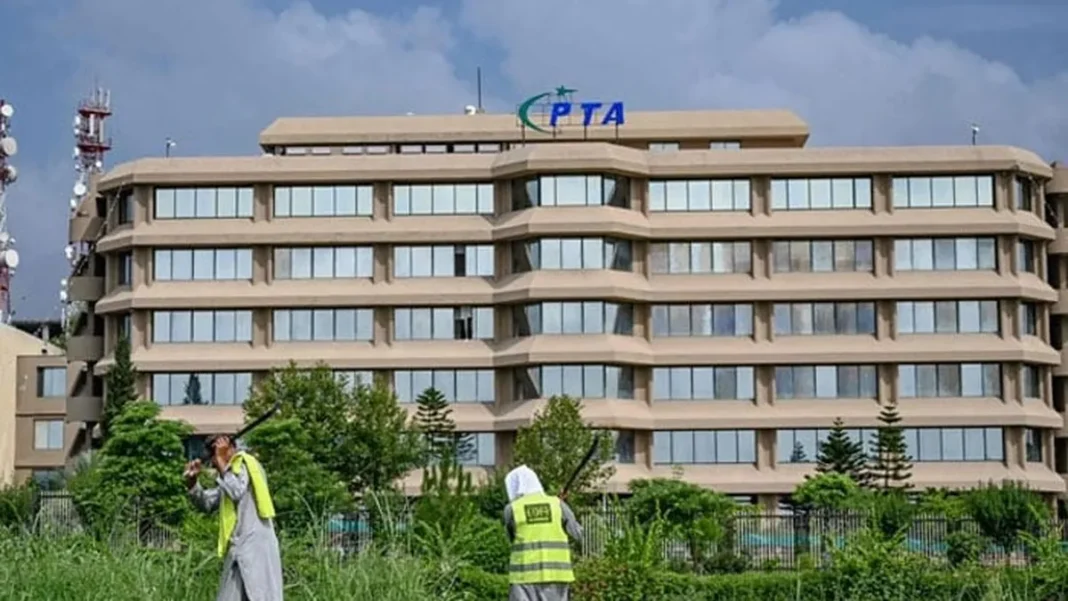
Publisher must verify a real PTA building or mobile tower photograph full-size before publish.
The Pakistan Telecommunication Authority has told a parliamentary committee that it has struggled to recover telecom fines, because court proceedings and stay orders keep delaying collection. The issue came up on Tuesday during a meeting of the National Assembly Standing Committee on Information Technology and Telecom, where lawmakers questioned the regulator over enforcement against operators.
Committee Chairman Syed Aminul Haque asked PTA officials why the authority had imposed fines on telecom companies but recovered nothing from them. The question goes to the heart of regulation in Pakistan’s telecom sector. A fine that is never collected has little effect as a deterrent, and a regulator that cannot enforce its penalties loses credibility with both companies and consumers.
PTA Chairman Major General (retired) Hafeez ur Rehman replied that telecom companies frequently approach courts and obtain stay orders against penalties, delaying the recovery process. The authority’s Director General Enforcement told the committee that legal proceedings had affected collections, but said decisions in some cases had started coming through, which could provide relief in the recovery process. The report does not give the total amount of fines outstanding, the names of the companies involved, or the number of cases pending, so readers cannot judge the scale of the backlog from this meeting alone.
Telecom fines: stay orders, and why enforcement turns into litigation
A stay order is a court direction that pauses an action until the case is heard. In telecom regulation, a company fined by the PTA can challenge the fine in court and seek a stay, which stops collection while the challenge is pending. Courts grant stays to prevent irreversible harm before a full hearing, but the process can take months or years, during which the fine remains unpaid and the underlying service problem may continue.
The PTA chairman said issuing show-cause notices to operators was among the last available options, because enforcement action often leads to prolonged legal disputes. That statement reveals a difficult position for the regulator. If it acts firmly, it faces litigation. If it acts softly, it faces criticism from parliament and consumers for failing to improve services. The chairman said the regulator had been inspecting telecom infrastructure and directing companies to improve their services, but inspections and directions carry less weight when penalties behind them are stalled in court.
Lawmakers link fines to poor mobile and internet service
The fines discussion took place as committee members expressed frustration over the continued poor quality of mobile and internet services across Pakistan. Lawmakers said telecom service problems had remained unresolved despite repeated discussions over the past two and a half years. That complaint gives the fines dispute its public importance. For subscribers, the question is not how much the PTA has fined companies. It is whether calls connect, whether data works, and whether complaints are resolved.
Pakistan now has tens of millions of mobile and broadband users, and recent figures shared with parliament put YouTube viewing and social media use at very high levels. The PTA itself reported 1.8 million 5G users across 24 cities, alongside far larger numbers for older networks. In that setting, service quality is a basic public service issue, not a technical detail. Dropped calls, slow data and weak coverage affect work, study, business and access to government services.
Lawmakers have raised these problems before, and the committee’s frustration suggests that repeated discussions have not produced visible improvement. The regulator’s answer, that it inspects infrastructure and issues directions, will satisfy parliament only if subscribers notice a change. A fine that is imposed but not collected, and a direction that is issued but not followed, both leave the subscriber in the same position.
The fines dispute comes as Pakistan reached around 1.8 million 5G users, Pakistan topped world YouTube viewership, PTA reported mobile network issues at 166 sites, and the New York Times sued Brave over AI scraping.
Frequently asked questions
Why has the PTA not recovered telecom fines?
PTA Chairman Hafeez ur Rehman told the National Assembly committee that telecom companies frequently approach courts and obtain stay orders against penalties, delaying recovery.
Who raised the issue in parliament?
National Assembly Standing Committee on Information Technology and Telecom Chairman Syed Aminul Haque asked why fines had been imposed but nothing had been recovered.
Are any cases moving forward?
The PTA’s Director General Enforcement told the committee that decisions in some cases had started coming through, which could provide relief in the recovery process.
How does this relate to service quality?
Committee members linked the fines dispute to poor mobile and internet services, saying problems had remained unresolved despite repeated discussions over the past two and a half years.
Has the PTA given the total amount of unpaid fines?
No total amount, company names or case numbers were given in the report of the committee meeting.