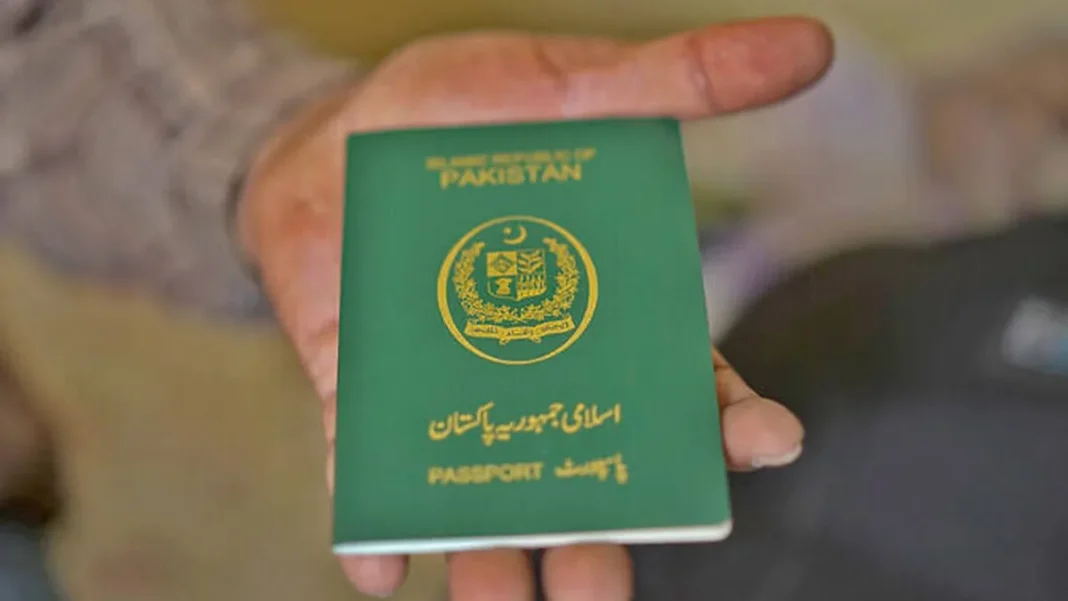
Pakistan to Make E-Passport Security Chips at Home
Pakistan has decided to take steps towards producing e-passport security chips at home, in a move aimed at improving security and reducing reliance on foreign technology. The Directorate General of Immigration and Passports (DGIP) took the decision during a virtual meeting chaired by its director general, with officials of the Pakistan Security Printing Corporation (PSPC). The meeting was reported by 24NewsHD TV on Tuesday.
The step concerns the small electronic chip inside an e-passport. That chip stores the holder’s identity and biometric details, and border systems read it to verify the document. Making the chip locally would give Pakistan direct control over a sensitive part of its travel documents.
E-passport security chips: what was decided
The meeting reviewed the full passport production system. Officials examined printing, supply chain management and the timely availability of passport booklets. They also discussed ways to strengthen e-passport security features and bring existing security standards in line with international requirements.
In addition, the meeting focused on polycarbonate data cards, the hard plastic page that carries the holder’s photo and personal details. Officials discussed improving production of those cards to ensure better quality and compliance with international standards.
The director general then directed PSPC officials to work with a team from the National University of Sciences and Technology (NUST). Their task is to take effective steps towards developing passport chips locally and ensuring their security. Officials stressed that the plan fits the government’s vision of digital transformation and greater reliance on local technological capability.
No timeline has been announced yet for the first locally made chip. The report describes a decision to begin work, not a finished product. Readers should therefore treat local chip production as a project under way, with details on trials, certification and rollout still to come.
Why the chip matters
An e-passport looks like an ordinary booklet, but its chip does the heavy work. The chip stores the holder’s facial image, biographical details, a unique identification number and a digital signature. It uses contactless Near Field Communication (NFC) technology, so compatible border systems can read it without physical contact.
Pakistan’s e-passports follow standards set by the International Civil Aviation Organization (ICAO), the United Nations agency for international civil aviation. Those standards let Pakistani travellers use compatible e-gates at airports abroad and help border officers spot forged documents faster.
When Pakistan launched e-passports, officials said the document carried 29 new security features compared with earlier passports, including laser engraving and infrared and ultraviolet elements. The chip sits at the centre of that system. If the chip is weak, the rest of the security features matter less. If it is strong and properly certified, the whole document is harder to forge.
The switch to e-passports only
Local chip production comes just weeks after a major change in passport issuance. Pakistan moved to issuing only e-passports for new applications in October 2026, ending new machine-readable passports (MRPs) at offices in Pakistan and at missions abroad. Machine-readable passports issued earlier remain valid until their printed expiry dates.
The history behind that switch is short. Pakistan began issuing e-passports on March 30, 2022, initially for diplomats and residents of Islamabad. From August 2023, all citizens could choose between an MRP and an e-passport. In June 2026, the government decided in principle to phase out MRPs fully, with Interior Minister Mohsin Naqvi saying the move would help eliminate fraud and forgery.
That sequence explains the timing of the chip decision. Once every new passport carries a chip, the chip becomes a permanent and large-scale need. Importing every chip leaves supply, cost and security in other hands. Building the capability at home, with NUST’s research base and PSPC’s printing role, is the next logical step in the same policy.
What happens next for applicants
For now, nothing changes for passport applicants. They will continue to receive e-passports through the normal process, and existing MRPs remain valid until expiry. Guidance on replacing a lost or duplicate CNIC remains relevant for applicants who need identity documents before applying, since NADRA records support passport applications.
Travellers should also note that passport rules abroad keep changing. Canada, for example, has tightened its visa and asylum framework under Bill C-12, which affects what Pakistani travellers must prepare. A secure e-passport helps at the border, but it does not change visa rules by itself.
Watch for the first NUST and PSPC trial results, any ICAO certification step, and the point at which locally made chips enter live booklets. Until then, the story is a decision, not yet a product in citizens’ hands.
Frequently asked questions
What are e-passport security chips?
They are small electronic chips embedded in e-passports. They store the holder’s facial image, biographical details, a unique identification number and a digital signature, and border systems read them through contactless NFC technology.
Who will develop the chips in Pakistan?
The Pakistan Security Printing Corporation will work with a team from the National University of Sciences and Technology (NUST), on the direction of the director general of immigration and passports.
Why does Pakistan want to make passport chips locally?
Officials say local production will improve security and reduce dependence on foreign technology. It also fits the government’s digital transformation plan and its push for local technological capability.
Do applicants need to do anything different now?
No. New applicants continue to receive e-passports through the normal process. Machine-readable passports issued earlier remain valid until their printed expiry dates.
When did Pakistan switch to e-passports only?
Pakistan moved to issuing only e-passports for new applications in October 2026, after first issuing e-passports in March 2022 and offering them to all citizens from August 2023.
When will locally made chips appear in passports?
No date has been announced. The decision covers starting the work with NUST and PSPC, and trial, certification and rollout details are still to come.