Apple AI Smart Glasses Tipped for Late 2027
Apple is reportedly preparing its first Apple AI smart glasses for release in late 2027, according to reports from Bloomberg’s Mark Gurman and MacRumors. The glasses would rely on cameras, voice commands and artificial intelligence rather than a screen in front of the wearer’s eyes.
Apple has not announced the product, and every detail so far comes from reporting rather than an official statement. The design, features, price and release date could still change. Still, the reports sketch a clear strategy: Apple wants a voice-first wearable that works closely with the iPhone, instead of a full augmented reality headset.
Apple AI smart glasses: two cameras, no display
Unlike traditional augmented reality glasses, Apple’s first model is not expected to have a display. Users would not see digital information projected in front of their eyes. Instead, the glasses would use cameras and voice to help users interact with their surroundings.
The glasses are expected to include two cameras with different jobs: a high-resolution camera for photos and video, and a lower-resolution wide-angle camera for hand gestures and visual information for Siri. The second camera matters most for control, since it could let users control features through hand movements rather than touching the glasses or reaching for a phone. It could also help Siri understand what the wearer is looking at.
Apple’s glasses are expected to work closely with the iPhone and use the upgraded Siri AI introduced with iOS 27, according to the reports. In practice, they would act as an extension of the phone and the voice assistant, not as a standalone computer.
Built-in speakers and voice-first controls
The glasses will feature built-in speakers and microphones, the reports say. Users could listen to music, make phone calls and talk to Siri through the frames. They could also receive spoken notifications and get walking directions through voice instructions.
That voice-first approach sets Apple apart from display-led rivals. Apple may add display technology in future models, but reports suggest such features are still several years away. Privacy also features in the reported plans, with a visible indicator to alert people when the cameras are recording. Apple has not confirmed the final camera and privacy features, so that detail remains a reported plan, not a promise.
Four frame designs under testing
Apple is reportedly testing at least four frame designs: a large rectangular frame similar to Ray-Ban Wayfarers, a slimmer rectangular design, and two oval or circular options in different sizes. Colours under exploration include black, ocean blue and light brown. According to Bloomberg, Apple is developing its own frames using acetate, a material commonly used in eyewear. The glasses could feature vertically arranged oval camera lenses with surrounding lights, giving bystanders a visible signal when recording is active.
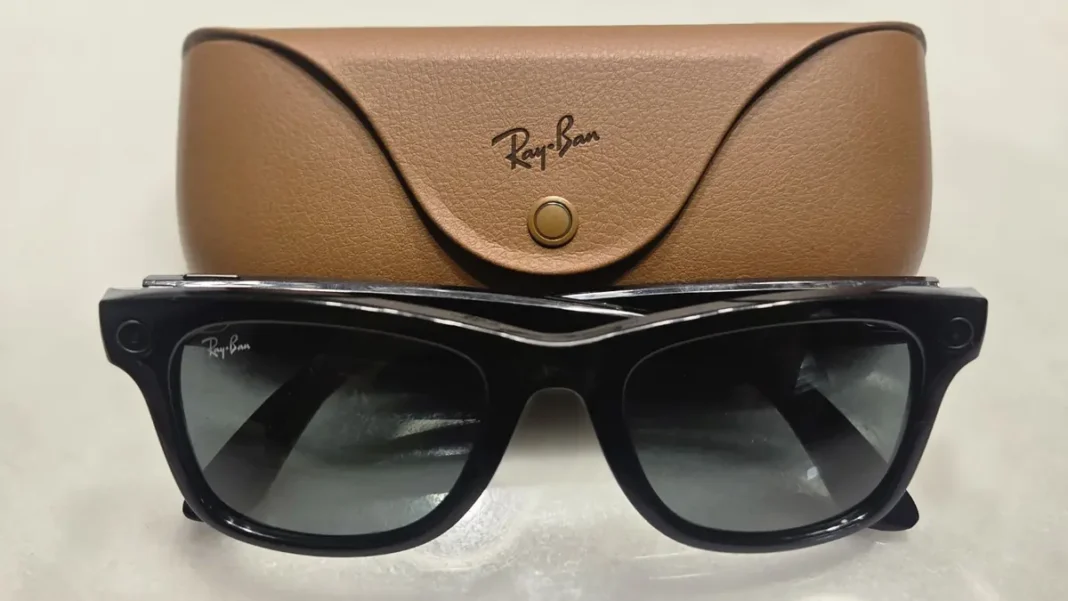
The target market is clear. Bloomberg has suggested that Apple intends to compete with smart glasses currently sold in the 200 to 500 US dollar price range in the United States. That puts Apple’s device up against Meta’s Ray-Ban smart glasses, which offer similar camera and audio functions. Apple’s edge, on the reported plan, would be closer integration with its AI and iPhone ecosystem.
What it could mean for buyers in Pakistan
For buyers in Pakistan, the reported price band is only a starting point. A device sold for 200 to 500 dollars in the United States usually costs more in Pakistan once import costs and taxes are added, and official local availability often follows the US launch by months. No Pakistan price or launch date has been reported, so local buyers should treat late 2027 as a global target, not a local one.
The timing also fits Apple’s wider AI push. Apple recently posted a record quarterly result, as covered in Apple’s record 114.5 billion dollar quarter. A voice-first wearable would give that AI work a new home beyond the phone, the watch and the earbuds. Pakistan already has around 1.8 million 5G users across 24 cities, as reported in Pakistan’s 5G user base. Better mobile networks make voice assistants more useful, but only if prices stay within reach.
Apple had previously considered launching the device sooner, but development delays reportedly pushed back the schedule. The company could unveil the glasses at its Worldwide Developers Conference (WWDC) in June 2027, ahead of a possible release later that year. Until Apple speaks, that timetable remains a report, not a fact.
Frequently asked questions
When will Apple AI smart glasses launch?
Reports point to a possible unveiling at WWDC in June 2027 and a release later that year. Apple has not announced the product or confirmed a date.
Will Apple AI smart glasses have a display?
No, the first model is not expected to have an augmented reality display. It would rely on cameras, voice commands and AI instead.
What cameras will Apple AI smart glasses have?
Reports describe two cameras: a high-resolution camera for photos and video, and a lower-resolution wide-angle camera for hand gestures and visual information for Siri.
How much will Apple AI smart glasses cost?
Apple has not announced a price. Bloomberg has suggested the company aims to compete with smart glasses sold in the 200 to 500 US dollar range in the United States.
Will Apple AI smart glasses work with the iPhone?
Yes, on the reported plan they would work closely with the iPhone and use the upgraded Siri AI introduced with iOS 27.
What frames is Apple testing for its smart glasses?
Reports say Apple is testing at least four frame designs, including a large rectangular style, a slimmer rectangular style and two oval or circular options, in colours such as black, ocean blue and light brown.