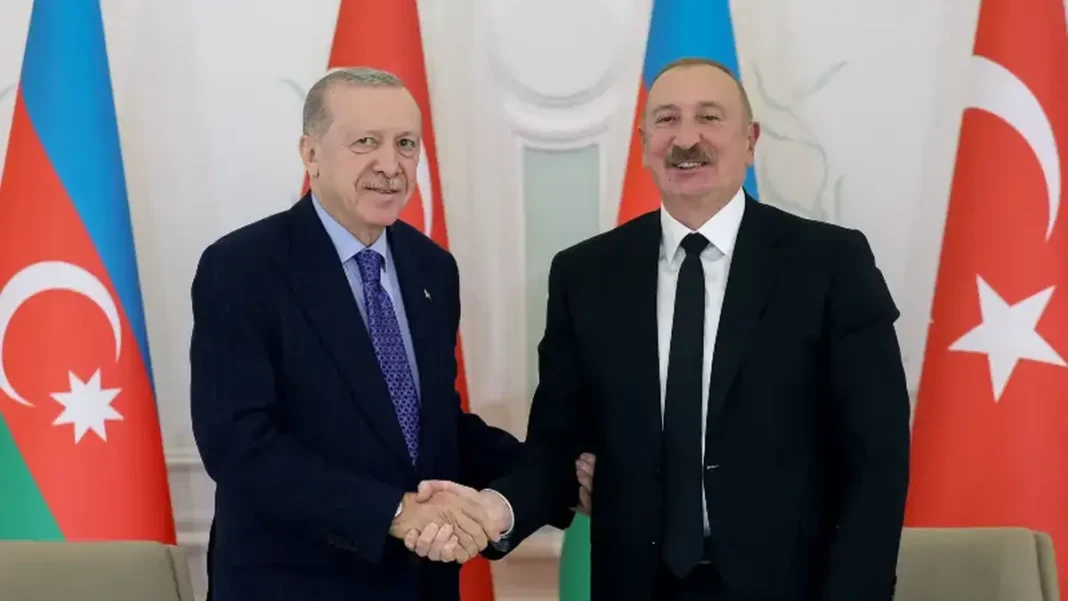
Presidents Recep Tayyip Erdogan and Ilham Aliyev put Turkiye Azerbaijan unity back on show on Sunday, pledging that the alliance between their countries would hold firm after weeks of public friction.
Erdogan arrived in Azerbaijan’s Fuzuli district as the country marked Victory Day, commemorating its 2020 war with Armenia. Aliyev and First Lady Mehriban Aliyeva welcomed Erdogan and his wife Emine at the airport, where a guard of honour lined up.
“With the permission of Almighty God, our unity will endure forever,” Erdogan told a joint press conference with Aliyev. “This unity of hearts, which we describe with the motto ‘One Nation, Two States,’ is an everlasting torch that draws strength from our shared past and illuminates our future.”
Aliyev said the alliance remained unshaken. “Together, Azerbaijan and Turkiye are even stronger,” he said, adding that Erdogan’s visit “shows the whole world our unity”.
Turkiye Azerbaijan unity after weeks of tension
The visit came after weeks of open friction between the two allies. The trouble began in September, when Azerbaijan changed its school uniform rules so that clothing judged incompatible with secular schooling — in practice, the Islamic headscarf — was no longer allowed in classrooms.
In Turkiye, Erdogan’s government has removed most restrictions on wearing the hijab. The move drew criticism from his Justice and Development Party (AKP), and presidential adviser Oktay Saral publicly called on Baku to drop the restrictions.
Yeni Azerbaijan, Aliyev’s ruling party, described the criticism as “interference in Azerbaijan’s internal affairs”. Baku then declared 31 Turkish citizens persona non grata — among them an opposition MP and several party figures — over social media posts critical of Azerbaijan.
Erdogan removed Saral from his post. Aliyev, though, did not attend the October 30 gathering of Turkic leaders in Ankara even after a personal invitation from Erdogan, sending Foreign Minister Jeyhun Bayramov in his place.
The Fuzuli visit, on the day Azerbaijan marks its capture of Shusha in the 2020 war, was therefore a deliberate display.
A deeper rift behind the hijab row
Analysts say the quarrel reflects deeper unease over Baku’s diplomatic independence and its close ties to Israel.
“Azerbaijan-Turkiye tensions stemmed from the fact that Baku does not see itself as the younger brother in this alliance and insists on relations between equal partners,” Elkhan Shahinoglu, head of the Baku-based Atlas Research Centre, told AFP.
“The hijab dispute is a symptom of a deeper rift,” Gonul Tol, an analyst at the Washington-based Middle East Institute, wrote on X. “Tensions have long simmered over a number of issues including Azerbaijan’s sovereignty, Ankara’s influence in Baku, diverging policies toward Israel, and Turkiye’s rapprochement with Armenia.”
Baku has built close military and economic links with Israel, which armed Azerbaijan during the 2020 war over Karabakh. The closeness to Israel has irritated Ankara, where the government has turned sharply against Israel over the war in Gaza; Erdogan has accused Israel of genocide.
Ankara is also trying to repair ties with Armenia, a neighbour whose border Turkiye shut in the 1990s out of solidarity with Azerbaijan.
Why the alliance still holds
For all the friction, military and energy cooperation still binds the two countries, and Azerbaijani oil and gas reach Western markets largely through Turkiye.
Azerbaijan’s population is mostly Shia Muslim, yet decades of Soviet rule made it one of the Muslim world’s most secular states. That identity sits at the heart of the hijab dispute.
For the wider region, the reunion matters because the alliance shapes the South Caucasus, affecting energy routes and the balance between Turkiye, Russia and Iran.
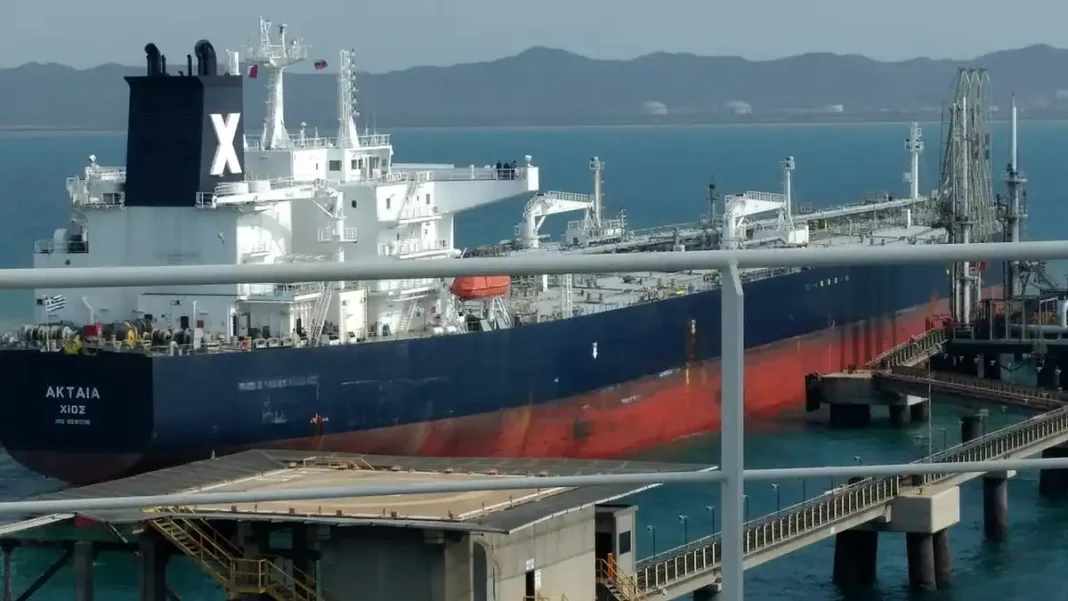
The region has seen a tense few days: three tankers caught fire in the Strait of Hormuz on Sunday, a building in Riyadh’s financial district was damaged in a Houthi attack, Egypt reopened its embassy in Libya after a 12-year closure, and Syria sent troops to Yemen as part of a Saudi deployment. Against that backdrop, a public show of unity between two of the region’s closest allies carries weight beyond the ceremony in Fuzuli.
Frequently asked questions
What did Erdogan and Aliyev agree?
The two presidents vowed the Turkiye-Azerbaijan alliance would remain solid and their unity would endure.
Why were Turkiye and Azerbaijan in tension?
Tensions flared in September after Baku revised school uniform rules to bar Islamic headscarves in classrooms. Turkish officials criticised the move, Baku called it interference, and 31 Turkish nationals were declared persona non grata.
What is Victory Day in Azerbaijan?
Victory Day, marked on November 8, commemorates Azerbaijan’s capture of Shusha in Karabakh during its 2020 war with Armenia.
What does “One Nation, Two States” mean?
It is the motto for their alliance: Turkiye and Azerbaijan as one nation, the Turkic peoples, in two states, bound by shared language, history, military cooperation and energy ties.
Why does the alliance matter?
Turkiye is a key transit route for Azerbaijani oil and gas exports to Western markets, and the two countries are closely bound by military ties.