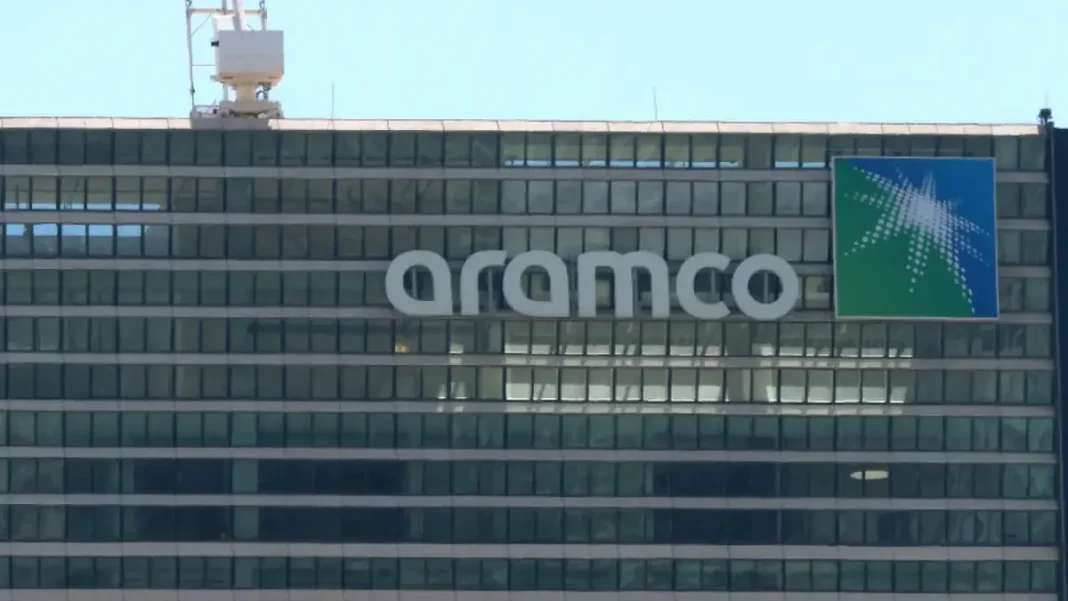
Saudi Arabia confirmed on Sunday that an attempted missile attack damaged the Aramco building in Riyadh, causing limited material damage but no casualties. The Aramco Riyadh attack came as Yemen’s Houthis fired missiles towards the Saudi capital and the Saudi-led coalition said it shot down several of them.
Loud booms were heard across Riyadh on Sunday morning, shortly after Saudi Civil Defence issued an early warning alert. The coalition fighting the Houthis said it had intercepted two ballistic missiles fired towards Riyadh, and later two cruise missiles in Riyadh and the southern region.
A tower in the King Abdullah Financial District (KAFD) was damaged by a projectile, a witness and three people briefed on the matter said. Several witnesses told AFP the Aramco building in the district had been damaged.
The Saudi energy ministry then confirmed the attack, state television reported. It said debris fell on the building and caused limited material damage. No casualties were reported.
What happened in the Aramco Riyadh attack
The strike reached the capital’s financial district despite the coalition’s interceptions. Civil Defence had also issued alerts in Dhahran, home to Aramco’s headquarters, as well as Dammam, Abqaiq and Al-Ahsa, and later said the danger had passed in each area. Earlier on Sunday, the coalition said it had intercepted a ballistic missile launched by the Houthis towards the Eastern region.
On Saturday night, the Houthis claimed six operations against Saudi targets, including Aramco oil facilities in Khurais and Riyadh airport. The coalition has also kept up airstrikes inside Yemen, and the Houthis’ health ministry said strikes on Al Shariyah village, east of Sanaa, killed 33 people and wounded 39. The coalition has not commented on that claim.
The United Nations says more than 1,600 people have been killed and more than 300,000 displaced since fighting resumed in Yemen.
Markets fall as Gulf watches Iran
The attack rattled Gulf markets on Sunday. Saudi Arabia’s benchmark index fell one per cent, and Qatar’s index slid 1.3 per cent.
Investors were also watching for signs that US President Donald Trump would order fresh attacks on Iran. The Aramco Riyadh attack took place against a tense regional backdrop, with Washington pressing a naval blockade of Iran and a new land task force to choke off Tehran’s supply routes.
The United States has offered a reward of up to $20 million for information about Iran’s nuclear programme, and a tanker caught fire in the Strait of Hormuz after hitting a naval mine. Washington has also set up Task Force Iron Gate to disrupt Iran’s overland trade in weapons and sanctioned goods.
US Vice President J.D. Vance has spent the past two weeks in indirect talks with Iran, aimed at a new ceasefire and a resumption of nuclear negotiations. He has been speaking almost daily with key figures from mediating countries, including Pakistan, Qatar and others. Pakistan has also engaged Iran directly to defuse tensions.
Qatar’s prime minister, Sheikh Mohammed bin Abdulrahman Al Thani, warned the region could not afford another round of escalation and urged both sides to settle for a good agreement rather than wait for a perfect one.
Iran, meanwhile, has signalled it is ready for further confrontation. Its top security official warned on Saturday that Washington would face a devastating response if it started a war.
Why the strike matters for the region
The damage to the Aramco building in the heart of Riyadh’s financial district shows that the Houthis can still reach the Saudi capital, despite the coalition’s air defences. It also underlines how the war in Yemen and the standoff over Iran have fused into a single regional crisis.
For Saudi Arabia, the strike tests its missile defences and shows the cost of the Yemen war. For the wider Gulf, it raises fresh questions about energy security, with Aramco at the centre of the world’s oil market. For Pakistan, drawn into mediation between Washington and Tehran, the escalation adds urgency to diplomacy that has so far kept the conflict from spreading.
A Houthi missile was intercepted over the Riyadh region only a day earlier, which shows the tempo of attacks is rising. Whether the coalition and the Houthis pull back now will shape the week ahead, along with any decision from Washington on Iran.
Frequently asked questions
What happened to the Aramco building in Riyadh?
A projectile damaged a tower in the King Abdullah Financial District, and the energy ministry confirmed the Aramco building was hit, with limited material damage and no casualties.
Who fired the missiles at Riyadh?
The Saudi-led coalition said Yemen’s Houthis fired the missiles. The group had claimed a series of operations against Saudi targets, including Aramco facilities in Khurais and Riyadh airport, on Saturday night.
Were there any casualties in the Aramco Riyadh attack?
No. The Saudi energy ministry said the attack caused limited material damage and no casualties were reported.
How did Gulf markets react?
Saudi Arabia’s benchmark index fell one per cent on Sunday, and Qatar’s index slid 1.3 per cent, as investors watched for signs of further escalation.