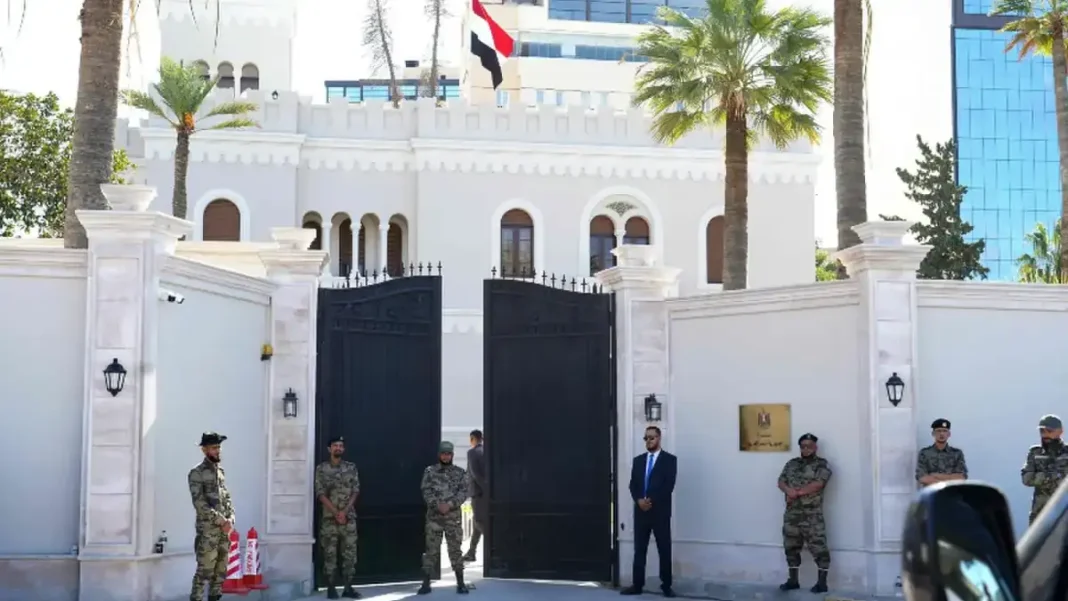
Egypt has reopened its embassy in Tripoli after a 12-year closure, marking a rapprochement with Libya’s western-based administration. The Egypt embassy Libya reopening signals a shift in Cairo’s approach to a country split between rival governments.
The embassy was reopened on Saturday, the foreign affairs ministry in Cairo said in a statement. Egypt’s foreign minister, Badr Abdelatty, attended the ceremony and said the historical significance of the embassy building “aligns with the deep-rooted human and cultural ties that characterise Egyptian-Libyan relations”.
Egypt closed its Tripoli embassy in 2014, when many foreign missions shut down as conflict escalated and rival governments set themselves up in the capital and in the east of the huge North African country. The reopening ends more than a decade of absence from the Libyan capital.
Egypt embassy Libya: why the reopening matters
The move marks a change of course for Cairo, which has been one of the most prominent backers of eastern-based military commander Khalifa Haftar, a rival of the Tripoli-based government. For years, Egypt’s ties ran mainly to the east. Reopening the embassy in Tripoli shows Cairo now wants a working relationship with the west as well.
Libya has been split since the fall of Muammar Qadhafi in a Nato-backed uprising in 2011, and no single government controls the whole territory.
In the west, the internationally recognised Government of National Unity is headed by Prime Minister Abdulhamid Dbeibah. In the east, the Libyan National Army under Haftar and the House of Representatives hold sway in Benghazi, with a rival government led by Osama Hammad.
The reopening does not erase those divisions, but it gives Cairo a direct channel to the government most countries recognise, and puts Egypt back in the capital where diplomacy over Libya’s future is conducted.
Twelve years away from Tripoli
When Egypt closed the embassy in 2014, Libya was sliding into a second civil war. Rival parliaments and governments claimed legitimacy, militias fought for control of cities and oil facilities, and foreign missions left for their own safety. Egypt was among the countries that pulled out.
In the years that followed, Cairo threw its weight behind Haftar’s forces in the east. Haftar launched a campaign to take Tripoli in 2019, which failed after a year of fighting. A ceasefire in 2020 froze the front lines but left the country divided, and efforts to hold national elections and reunite the state have stalled since. The embassy building itself survived the years of absence, and its reopening, with the Egyptian flag flying over the gate, shows Cairo now sees value in dealing with Tripoli directly rather than only through the east.
For Libya, the return of the Egyptian mission is also practical. Egypt is Libya’s large eastern neighbour, and the two countries share a long border, deep trade links and close family ties. Many Egyptians have lived and worked in Libya for decades.
The reopening may also help wider diplomacy. Libya’s neighbours and the United Nations have pressed for a political process that brings the rival camps together. A Cairo that talks to both Tripoli and Benghazi is better placed to support that process than one that deals with only one side.
What happens next
The test now is whether the reopening leads to steady engagement. If Cairo keeps channels open to both governments, it could help nudge Libya’s rivals towards talks. If the move proves symbolic only, the split that has defined Libya for 15 years will remain.
For the region, the reopening fits a wider pattern of Arab states restoring ties that were cut during years of war and upheaval. Syria has also been rebuilding its regional relationships, and Pakistan has been pressing for dialogue to defuse tensions across the region.
Libya’s own challenges remain stark. The country is still divided, its oil wealth is contested, and smuggling networks exploit its long coastline and desert borders. A UN report has also linked a UAE firm to mercenaries in neighbouring Sudan, a reminder of how conflicts spill across the region’s borders. An embassy reopening will not fix those problems on its own. But it is a step towards normal relations between two neighbours that have been estranged for too long, and it gives both sides a place to talk.
Frequently asked questions
When did Egypt reopen its embassy in Libya?
Egypt reopened its embassy in Tripoli on Saturday, November 7, 2026, after a 12-year closure. Foreign Minister Badr Abdelatty attended the reopening ceremony.
Why did Egypt close the embassy in 2014?
Egypt closed its Tripoli embassy in 2014, when many foreign missions shut down as conflict escalated and rival governments set themselves up in Tripoli and in eastern Libya.
Who governs Libya now?
Libya is split. The internationally recognised Government of National Unity, headed by Prime Minister Abdulhamid Dbeibah, sits in Tripoli. In the east, the Libyan National Army under Khalifa Haftar and the House of Representatives hold sway, with a rival government led by Osama Hammad.
What does the reopening mean for Egypt-Libya ties?
It marks a shift for Cairo, long a backer of Haftar in the east, towards direct engagement with the Tripoli government. It restores a diplomatic channel after 12 years and may support wider efforts to reunite Libya.