Karachi Blue Plaques Honour Sadequain, Sabri and Sharif
Karachi blue plaques will mark the homes of the city’s famous sons and daughters, starting with the artist Sadequain, the qawwal Amjad Sabri and the comedian Umer Sharif. The District Central Commemorative Plaques Initiative aims to celebrate their work and revive the district’s historical, intellectual and cultural identity.
The programme takes its idea from a 19th-century London initiative, in which a blue plaque is mounted on a public building to mark a historical link between that place and a famous person. Dawn reported that the Karachi scheme will place plaques at the residences of distinguished personalities, linking their lives and achievements with the neighbourhoods they called home.
Central Deputy Commissioner Taha Saleem said the concept was not new, as similar schemes had been implemented in different parts of the world for decades. He said plaques had already been installed at the residences of legendary artist Sadequain in Federal B Area Block 13, late qawwal Amjad Sabri and legendary host, actor and comedian Umer Sharif in Liaquatabad.
Why District Central
The drive seeks to acknowledge individuals whose contributions to literature, education, the arts, science, sports and other fields brought recognition to Pakistan. It also aims to reclaim the district’s rich historical legacy at a time when many of its famous residents have moved away.
Taha Saleem said District Central was among the city’s districts from which a considerable number of residents had migrated to other parts of Karachi or moved out of the city. He said several distinguished personalities had either relocated or passed away, but their roots remained firmly connected to District Central.
“It is our responsibility to honour these personalities and the places they called home. Through this initiative, we are not only recognising their contributions but also celebrating the identity of District Central,” he said.
The deputy commissioner said he was notifying a committee which would identify more deserving personalities for plaques. He also plans to add scannable codes to the plaques, so visitors can read about each personality’s life, contributions and achievements.
The first three Karachi blue plaques
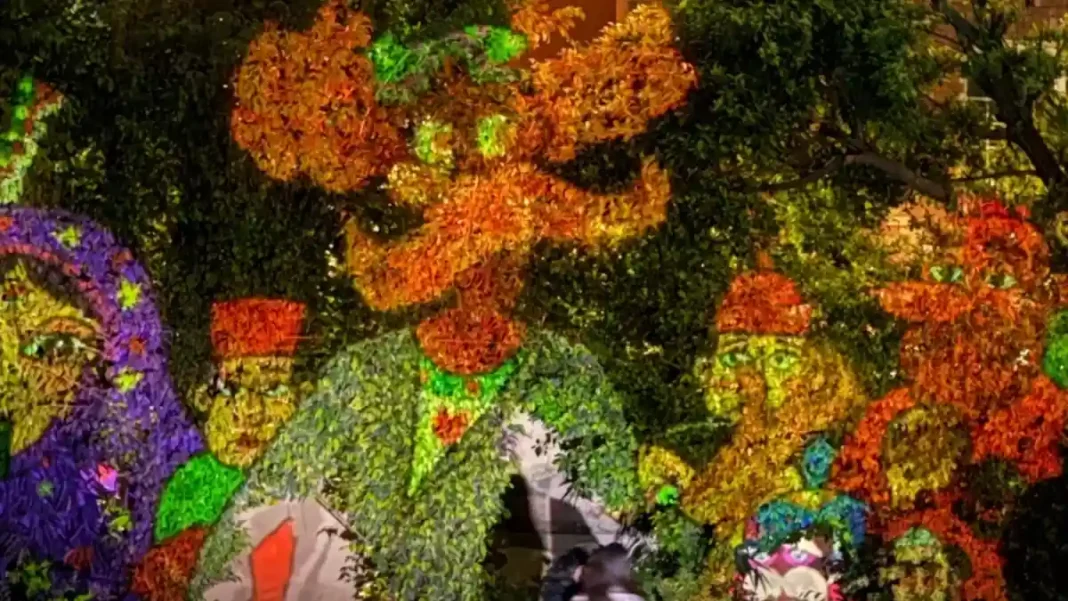
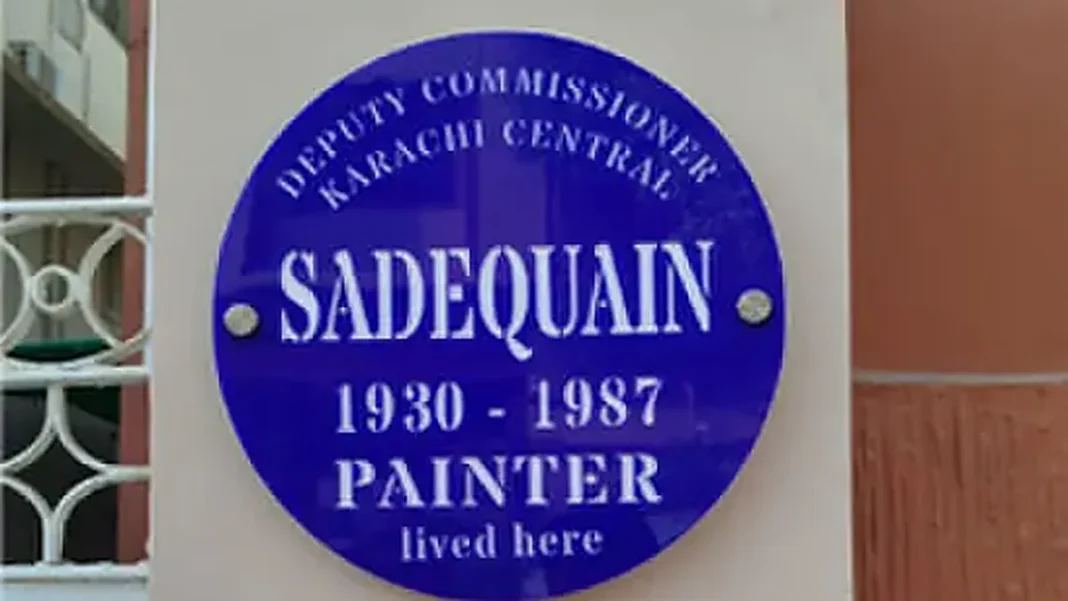
Sadequain, whose plaque now stands outside his home in Federal B Area, was one of Pakistan’s most celebrated painters. The plaque records his years, 1930 to 1987, and the single word “painter”, a plain tribute to a man whose calligraphy and murals filled public buildings across the country.
Amjad Sabri, who lived in Liaquatabad, was one of the most loved voices in qawwali, a form of devotional music that he carried to audiences far beyond Pakistan. Umer Sharif, also of Liaquatabad, spent decades on stage and television as a host, actor and comedian, and his work shaped popular comedy for a generation.
The three names show the range the scheme intends to cover. They come from different fields, different eras and different neighbourhoods, yet all three lived in District Central, and the plaques now mark those streets as part of the city’s cultural map.
The idea of marking a home with a plaque is simple, but it changes how a street is seen. A house that looks ordinary from the outside gains a story, and a passer-by learns that a painter, a singer or a comedian once lived behind its gate. For a district that has seen many of its famous residents leave, that small act of memory carries weight.
What happens next
The committee now being formed will draw up a longer list of names. Residents and local groups are expected to suggest personalities from their own neighbourhoods, and each plaque will need verification that the person lived at the address.
The scheme also fits a wider effort to record Karachi’s heritage before it is lost to rebuilding. Rawalpindi has faced similar pressure, where old temples, gurdwaras and havelis have lost land to encroachment, and none has been declared national heritage. Karachi’s own old quarters face the same risk, and the plaques offer one way to fix a name and a story to a place.
Karachi’s development plans continue to move ahead, from new roads to solar panels in 100 schools and a marble city on 300 acres. The plaques add a quieter layer to that change, one that asks the city to remember who lived here before the new roads arrived.
Frequently asked questions
What is the Karachi blue plaques initiative?
It is the District Central Commemorative Plaques Initiative, a scheme to install blue plaques outside the homes of distinguished personalities in Karachi’s District Central, celebrating their contributions and the district’s cultural identity.
Whose homes have received plaques so far?
Plaques have been installed at the residences of artist Sadequain in Federal B Area Block 13, and qawwal Amjad Sabri and comedian Umer Sharif in Liaquatabad.
Where did the blue plaque idea come from?
The idea comes from a 19th-century London initiative, in which a blue plaque is mounted on a public building to mark a historical link between that place and a famous person.
Who decides which personalities get a plaque?
District Central Deputy Commissioner Taha Saleem is notifying a committee to identify more deserving personalities for plaques across the district.
Will the plaques carry more information?
Yes. The deputy commissioner plans to add scannable codes to the plaques, so visitors can read about each personality’s life, contributions and achievements.