Karachi Dengue Cases Top Rest of Sindh Combined
Karachi dengue cases have passed the rest of Sindh combined this year, with 2,369 infections in the provincial capital against 2,100 across the rest of the province.
The mosquito-borne disease gained further ground in the autumn, infecting 2,055 people across Sindh in September and October alone. That two-month tally passed the 1,992 cases reported during the preceding eight months of the year.
The Sindh Health Department figures put Karachi at the centre of the province’s growing dengue crisis. The city recorded 269 more infections than the rest of the province combined.
Karachi dengue cases surge in September and October
In Karachi alone, 943 cases were reported during September and October, including 495 in October and 448 in September. The city has also recorded one dengue-related death this year.
The sharp rise towards the end of the year follows the usual seasonal pattern. Mosquito breeding rises after the monsoon, when standing water collects in streets, homes and construction sites. Karachi’s size and density then give the mosquito more people to bite and more places to breed.
Health experts say the pattern calls for action at street level, not only in hospitals. Removing standing water from homes, streets and neighbourhoods is the single most effective step, because the mosquito breeds in clean, stagnant water.
How dengue spreads and what it looks like
Dengue is transmitted through the bite of an infected female mosquito, which is most active during the early morning and evening hours. That was the advice of Dr Umar Sultan, consultant physician and assistant professor at Jinnah Postgraduate Medical Centre, who spoke to The Express Tribune.
The prominent symptoms include sudden high fever, severe headaches and intense body aches. Some patients may also develop red spots on their skin. In severe cases, patients can suffer bleeding from the nose and mouth.
Dr Sultan said dengue could reduce the platelet count in the blood, which affects the body’s ability to form clots and raises the risk of bleeding and life-threatening complications. He stressed that timely diagnosis and proper medical treatment were essential whenever symptoms appeared.
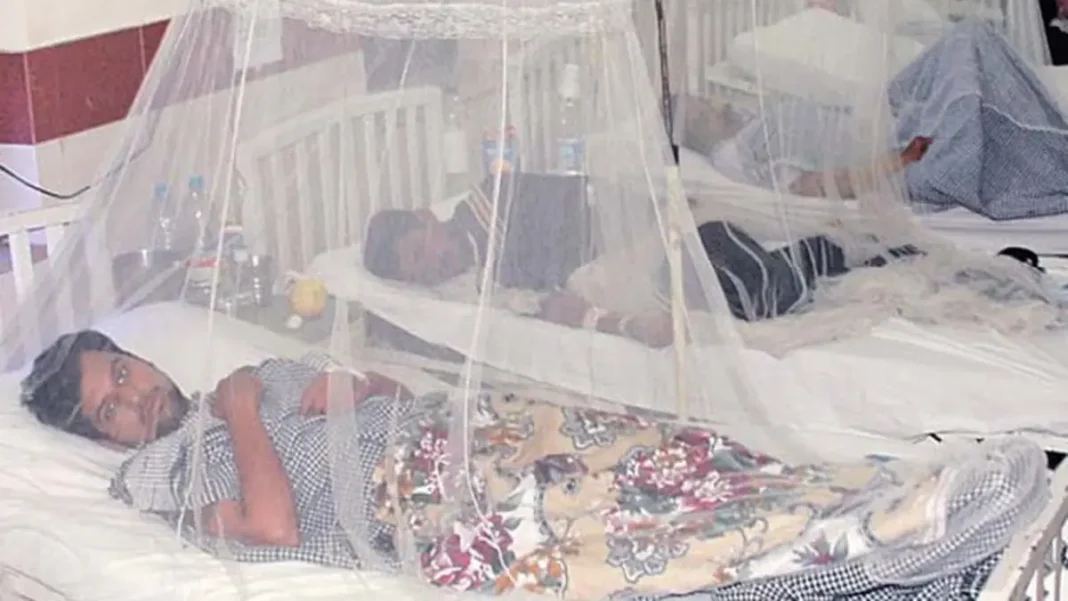
Health experts have advised citizens to use mosquito nets, insect repellents and other protective measures to avoid mosquito bites.
Why Karachi carries the heaviest load
Karachi’s share of cases is striking. The city holds about 2,369 of the province’s 4,469 cases this year, or more than half. The rest of Sindh, with far more districts, recorded fewer cases in total.
The gap points to the city’s particular risks. Karachi has large areas of stagnant water after rain, open drains, and construction sites where water collects. Its hospitals also detect and report cases more fully than facilities in smaller districts, which may understate the true spread elsewhere.
Either way, the burden falls on Karachi’s hospitals. Wards have had to set aside beds for dengue patients, and families have had to watch for warning signs at home.
Dengue beyond Karachi
The disease is not limited to Sindh. Feature Pakistan reported dengue cases in Charsadda earlier this month, showing that the mosquito is active across the country. The Pakistan Medical Association has also called for a forensic audit of disease control programmes, which points to gaps in prevention and response.
Karachi’s health system faces other strains at the same time. Parts of the city face a water shortage from November 13, which makes it harder for households to store water safely. A 600-bed hospital is being built in Larkana, but new capacity takes time to reach patients.
What happens next
The Health Department will be watching whether cases fall as temperatures drop and mosquito activity eases. The immediate need is for fumigation, removal of standing water, and clear advice to the public on symptoms and early treatment.
For residents, the steps are simple. Empty standing water, cover water containers, use nets and repellent, and seek care early if a high fever follows a mosquito bite. Early treatment saves lives, and the one death recorded in Karachi this year is a reminder of what delay can cost.
Frequently asked questions
How many dengue cases has Karachi reported this year?
Karachi has reported 2,369 dengue cases this year, more than the 2,100 recorded across the rest of Sindh combined.
How many cases were reported in September and October?
Sindh recorded 2,055 cases in September and October alone. Karachi accounted for 943 of them, with 495 in October and 448 in September.
What are the symptoms of dengue?
Sudden high fever, severe headaches and intense body aches are the main symptoms. Some patients develop red spots on the skin, and severe cases can involve bleeding from the nose and mouth.
When is the dengue mosquito most active?
The female mosquito that spreads dengue is most active during the early morning and evening hours, according to doctors at Jinnah Postgraduate Medical Centre.
How can people protect themselves from dengue?
Remove standing water from homes and streets, cover water containers, use mosquito nets and insect repellents, and seek medical care early if symptoms appear after a mosquito bite.