Voyager 1 One Light-Day Milestone After 49 Years in Space
Voyager 1 one light-day from Earth is the distance NASA’s probe reached on Wednesday, 18 November 2026, becoming the first human-made object to travel that far from home. The probe crossed the mark at a distance of about 25.9 billion kilometres, or 16.1 billion miles. A radio signal sent from Earth now takes a full day to reach it, and a reply takes another full day to come back.
The crossing happened at 10:16 UTC, which was 3:16pm in Pakistan. NASA confirmed the milestone on Wednesday. Earth’s orbit makes the gap shift through the year, but Voyager 1 moves outward so fast that it will stay more than a light-day away.
Tiffany Kataria of NASA called the feat “the best illustration of just how vast space is”. She told AFP that it took Voyager 1 nearly 50 years to reach the edge of our own solar system, “let alone to only a light-day”.
What a Voyager 1 one light-day means
A light-day is the distance light travels in 24 hours. Light moves at about 300,000 kilometres a second, so one light-day works out to roughly 25.9 billion kilometres. Voyager 1 has needed 49 years, two months and 13 days to put that much distance between itself and Earth.
Dawn noted the scale in another way. A Boeing 747 flying non-stop at its cruising speed of about 900 kilometres an hour would take around 3,300 years to cover one light-day. The flight would have had to leave in the Bronze Age, when Rameses II ruled Egypt, to arrive by 2026.
The record Voyager 1 broke had stood since 1998. On 17 February that year, it passed Pioneer 10 at 10.4 billion kilometres from the Sun and became the most distant human-made object. It has held that title ever since.
Voyager 1’s 49-year journey
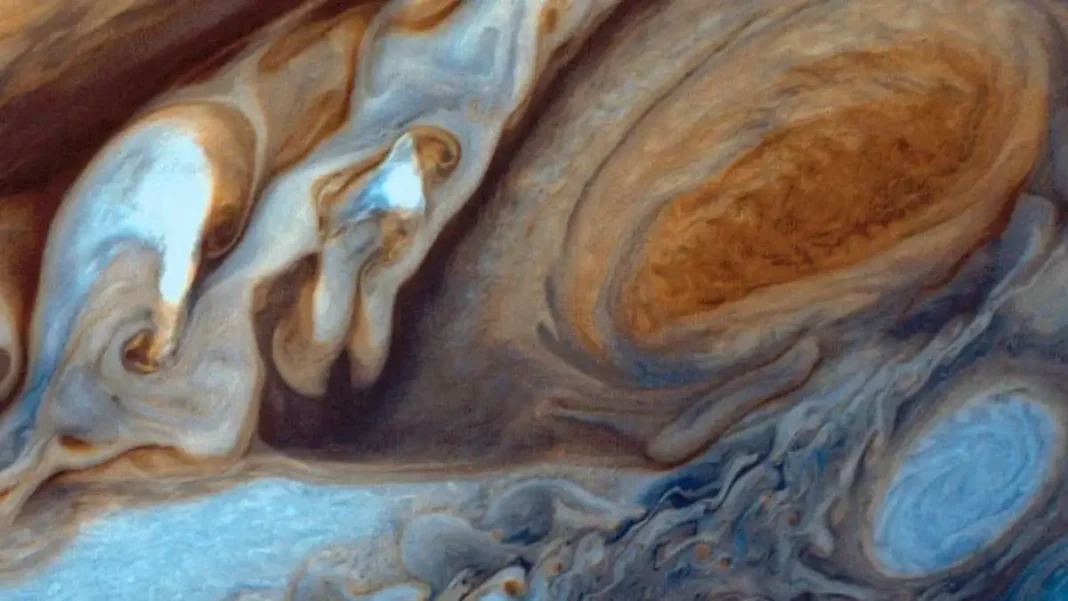
Voyager 1 left Earth on 5 September 1977. Its twin, Voyager 2, had launched first, on 20 August 1977, but Voyager 1 took a faster route. It flew past Jupiter in 1979 and Saturn in 1980. The Jupiter visit showed the planet is lashed by lightning and its moon Io is covered in active volcanoes. The Saturn visit showed its rings are made of hundreds of smaller ringlets.
A gravity assist from Saturn, plus a close flyby of its moon Titan, sent Voyager 1 out of the plane of the planets. In 2004 it crossed the termination shock, where the solar wind slows as it meets pressure from beyond. On 25 August 2012 it crossed the heliopause and became the first human-made object to enter interstellar space.
Two instruments still work in interstellar space
Only two of Voyager 1’s ten science instruments still run: the magnetometer and the plasma wave subsystem. They study magnetic fields, plasma waves, dust and galactic cosmic rays. Cameras and other equipment have been switched off to save power. In 2020 the instruments recorded a sudden rise in magnetic field strength and plasma density that stayed high, against expectations.
Power is the mission’s limit. The plutonium supply loses about four watts of output each year, so engineers keep switching off equipment to stretch what is left. NASA expects the probe to keep one instrument running into the 2030s.
Planetary scientist Linda Spilker of NASA’s Jet Propulsion Laboratory has worked on the mission since 1977. “When I was first working on Voyager back in 1977, I never expected Voyager 1 to reach one light-day,” she told ScienceAlert. “I am so proud to be a part of the Voyager mission.”
The Golden Record and what comes next
Both Voyager probes carry a Golden Record, a gold-plated copper disc 30 centimetres wide. It holds greetings in 55 languages, plus photographs and sounds from Earth. It was made as a message for any life that might one day find the craft.
NASA marked the milestone with a public event called Shine Bright for Voyager’s Light-Day. On the night of Tuesday, 17 November, people around the world were asked to flash the probe’s call sign, VGR, in Morse code with a torch or a phone.
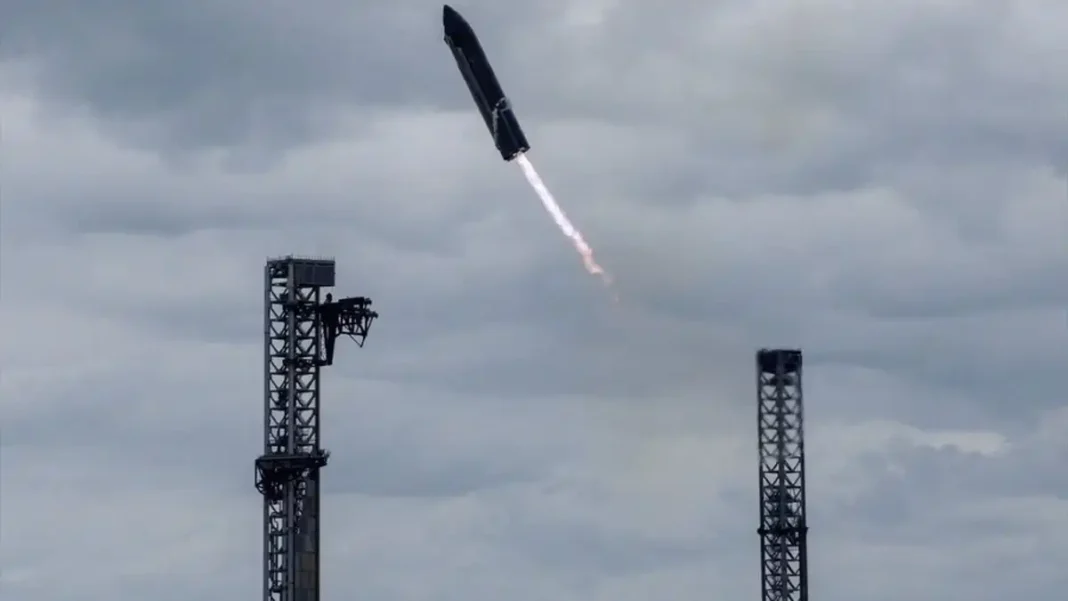
For readers in Pakistan, the crossing took place at 3:16pm PKT on Wednesday. The mission also matters closer to home. Feature Pakistan has reported on the new space race and what it means for Pakistan, and on the SpaceX Starship catch, a step toward reusable rockets. Europe’s Euclid telescope is mapping hundreds of millions of galaxies, while a failed Vulcan launch showed how hard space flight remains.
Voyager 2 is on the same path, more slowly. It is expected to reach one light-day in November 2035, if it is still running.
Frequently asked questions
What is one light-day?
One light-day is the distance light travels in 24 hours, about 25.9 billion kilometres. Voyager 1 reached that distance from Earth on 18 November 2026.
How long does a signal take to reach Voyager 1?
A radio signal sent from Earth now takes 24 hours to reach Voyager 1. A reply takes another 24 hours to come back, so a full exchange takes two days.
When was Voyager 1 launched?
Voyager 1 launched on 5 September 1977. Its twin, Voyager 2, launched first, on 20 August 1977, but Voyager 1 took a faster route past Jupiter and Saturn.
What is Voyager 1 still measuring?
Two instruments still work: the magnetometer and the plasma wave subsystem. They study magnetic fields, plasma waves, dust and galactic cosmic rays in interstellar space.
How much longer can Voyager 1 keep working?
Its plutonium power supply loses about four watts a year. NASA expects it to keep one instrument running into the 2030s, and it could fall out of range of the Deep Space Network around 2036.