Losing weight doesn’t always require strict diets or endless hours at the gym. In fact, what you do during the first hour after waking up can influence your metabolism, appetite, energy levels, and food choices for the rest of the day.
Although there is no magic trick for rapid weight loss, healthy morning habits can help you burn more calories, eat less without feeling deprived, and stay consistent with your weight-loss goals.
The good news is that these habits are simple, free, and supported by scientific research. Even better, you can start practicing them tomorrow morning.
Let’s explore the five best morning habits for weight loss that can make a real difference over time.
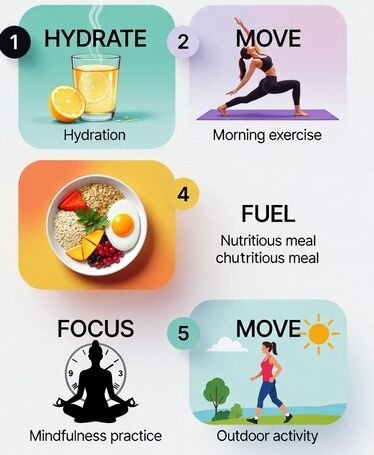
1. Drink Water Immediately After Waking Up
Your body loses water while you sleep. As a result, you may wake up mildly dehydrated. Drinking water first thing in the morning helps restore hydration and prepares your body for the day.
Moreover, water may temporarily increase your metabolism. Researchers have found that drinking about 500 ml (17 ounces) of water can increase resting energy expenditure by approximately 24–30% for up to an hour in healthy adults.
Water also helps control appetite. Sometimes the brain mistakes thirst for hunger, leading people to eat when they actually need fluids.
Drinking water before breakfast may reduce calorie intake during the meal, making it easier to maintain a calorie deficit.Keep a bottle of water beside your bed. Drink one or two glasses before reaching for coffee or breakfast. A study published in The Journal of Clinical Endocrinology & Metabolism found that water consumption temporarily increased metabolic rate in healthy adults.
2. Eat a High-Protein Breakfast
Skipping breakfast may work for some people, but many individuals experience stronger cravings later in the day when they miss their morning meal.
Instead, choose a breakfast rich in protein. Research published in The American Journal of Clinical Nutrition shows that higher-protein diets improve satiety, support weight management, and help preserve lean muscle during weight loss.
Protein helps you feel full for longer. It also reduces the hunger hormone ghrelin while increasing hormones that promote fullness.
As a result, you are less likely to snack on sugary foods before lunch.
Additionally, your body uses more energy to digest protein than carbohydrates or fats. This is known as the thermic effect of food, which slightly increases calorie burning after meals.
Good high-protein breakfast options include:
- Eggs with vegetables
- Greek yogurt with berries
- Cottage cheese and fruit
- Oatmeal with nuts and seeds
- Protein smoothie made with milk or yogurt
- Tofu scramble for vegetarians
Aim for 20–30 grams of protein at breakfast if possible.
3. Get Morning Sunlight
Many people overlook sunlight, yet it plays an important role in overall health.
Morning sunlight helps regulate your body’s internal clock, also known as the circadian rhythm. A healthy circadian rhythm improves sleep quality, and better sleep is strongly linked to healthier body weight.
Moreover, exposure to natural sunlight supports vitamin D production. Although vitamin D alone does not cause weight loss, low vitamin D levels have been associated with obesity in several studies.
Even a short walk outdoors offers multiple benefits. You get sunlight, move your body, and begin your day with more energy.
Try spending 10 to 30 minutes outdoors within the first hour after waking, depending on your location and skin sensitivity.
4. Move Your Body Before Breakfast
You do not need an intense workout every morning.
Even light movement can improve blood circulation, increase energy levels, and help you burn extra calories.
For example, you can:
- Walk for 20–30 minutes
- Stretch for 10 minutes
- Practice yoga
- Ride a bicycle
- Do bodyweight exercises
- Dance to your favorite music
Some people prefer exercising before breakfast. This is often called fasted exercise. The World Health Organization recommends regular physical activity to support weight management and reduce the risk of chronic diseases. Studies also show that regular exercise improves body composition when combined with healthy eating.
Research suggests that exercising in a fasted state may increase fat oxidation during the workout. However, the most important factor is consistency. The best workout is the one you can maintain regularly.
Morning exercise also improves mood by releasing endorphins. Consequently, you may feel more motivated to make healthier food choices throughout the day.
5. Plan Healthy Meals Before Your Day Gets Busy
Many unhealthy food choices happen because people make decisions when they are hungry or stressed.
Planning your meals in the morning helps prevent this problem.
Take five minutes to decide:
- What will you eat for lunch?
- What healthy snacks will you bring?
- What will you have for dinner?
This simple habit reduces impulsive eating and decreases your reliance on fast food.
Additionally, preparing healthy snacks such as fruit, yogurt, nuts, or cut vegetables makes it easier to stay on track.
Meal planning also helps you control portion sizes and avoid unnecessary calories.
Common Morning Mistakes That Can Slow Weight Loss
Many people unknowingly sabotage their progress with these habits:
- Skipping water after waking up
- Eating sugary cereals or pastries for breakfast
- Drinking high-calorie coffee beverages
- Staying indoors all morning
- Spending hours sitting without movement
- Leaving meals unplanned
Fortunately, replacing these habits with healthier choices can improve your long-term results.
Frequently Asked Questions (FAQs)
1. What is the best morning habit for weight loss?
Drinking water after waking up, eating a high-protein breakfast, and engaging in regular morning physical activity are among the most effective habits. The best choice is the one you can maintain consistently.
2. Can drinking water in the morning help with weight loss?
Yes. Drinking water supports hydration and may temporarily increase metabolic rate. It can also help reduce appetite before meals.
3. Is exercising before breakfast better for burning fat?
Some studies suggest fasted exercise may increase fat oxidation during the workout. However, total daily physical activity and a balanced diet are more important for long-term weight loss.
4. Should I skip breakfast to lose weight?
Not necessarily. While some people do well with intermittent fasting, many benefit from a protein-rich breakfast that helps control hunger and reduce overeating later in the day.
5. How long does it take to see results?
Results vary depending on your eating habits, activity level, sleep, and overall lifestyle. Consistently practicing healthy habits over several weeks is more effective than relying on short-term solutions.