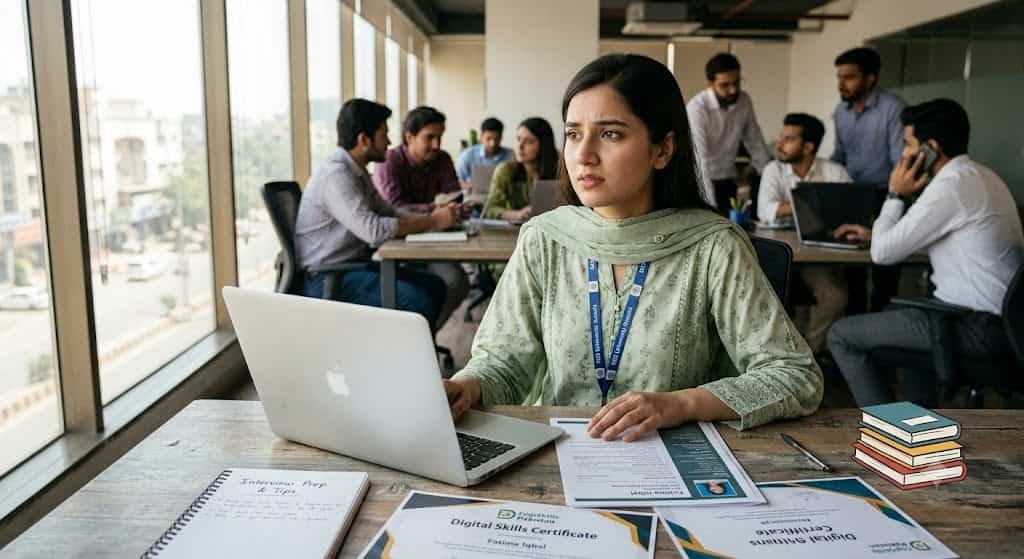
Every year, thousands of young Pakistanis complete their education with dreams of building successful careers. They spend years studying, developing skills, and preparing themselves for professional life. However, after graduation, many face a difficult reality: finding a suitable job has become one of the biggest challenges for their generation.
The Pakistan Gen Z unemployment crisis is becoming a serious concern as young people struggle with limited opportunities, changing job requirements, rising living costs, and a growing gap between education and industry needs.
Pakistan has one of the youngest populations in the world. This young workforce has enormous potential, but many talented individuals still find themselves searching for direction, stability, and meaningful career opportunities.
The unemployment challenge is not only about finding any job. Young people today want careers that provide financial security, personal growth, and a future they can trust. When these opportunities become limited, frustration, stress, and uncertainty increase.
The employment struggle is also connected with wider issues affecting young Pakistanis. From education pressure and financial worries to mental health challenges, many concerns come together to create what we discussed in our detailed guide on Pakistan Gen Z Under Pressure.
Understanding Pakistan Gen Z Unemployment Crisis
The current employment situation among young Pakistanis reflects a changing economic environment. Companies are becoming more selective, technology is transforming industries, and traditional career paths are no longer enough to guarantee success.
Previous generations often followed a simple route: complete education, find a stable job, and build a career gradually. However, Gen Z is entering a different world.
Today’s job market demands more than academic qualifications. Employers increasingly look for practical experience, digital skills, communication abilities, adaptability, and problem-solving capabilities.
Many young graduates discover this reality only after entering the job market. They realize that their degree alone may not provide the competitive advantage they expected.
This creates a difficult gap between what students learn during education and what employers actually require.
The unemployment problem becomes even more frustrating when years of education still fail to translate into meaningful employment. Our analysis of the education and employment gap facing Pakistan’s Gen Z explains why many qualified young Pakistanis increasingly feel left behind.
Why Are Pakistani Young People Struggling to Find Jobs?
The Gap Between Education and Industry Requirements
One of the biggest reasons behind youth unemployment in Pakistan is the difference between classroom learning and workplace expectations.
Many universities provide theoretical knowledge, but employers often need practical abilities. Companies want candidates who can immediately contribute, use modern tools, communicate effectively, and solve real problems.
A graduate with a degree but without practical exposure may struggle against someone who has developed industry-related skills through internships, projects, or online learning.
This does not mean education has lost its importance. Instead, it shows that modern careers require a combination of education, skills, and experience.
Young Pakistanis who focus on continuous learning can create better opportunities for themselves.
Lack of Professional Experience Among Fresh Graduates
Many fresh graduates face a frustrating situation after completing their studies.
Employers often ask for experience, but young candidates cannot gain experience without getting their first opportunity.
This creates a cycle where talented individuals struggle to enter the professional world.
Internships, volunteer work, freelance projects, and personal portfolios can help students overcome this challenge. These experiences demonstrate practical abilities and increase confidence during job applications.
The modern job market rewards people who can show what they can do, not only what qualifications they have.
Limited Quality Jobs and Growing Competition
The Pakistan Gen Z unemployment crisis is also connected with increasing competition.
Every year, thousands of students enter the workforce. However, the number of high-quality jobs does not always grow at the same pace.
Young people compete for limited positions in government departments, private companies, and multinational organizations.
This competition becomes even harder when economic challenges affect business growth and hiring decisions.
Many young professionals accept jobs below their qualifications because they need income and experience. Others consider freelancing, entrepreneurship, or international opportunities as alternatives.
Rising Financial Pressure on Young Pakistanis
Financial pressure has become another major concern for Gen Z.
Young people are not only thinking about employment. They are also worried about:
- Rising education costs
- Increasing living expenses
- Supporting families
- Building financial independence
- Planning their future
A low-paying job may not provide enough stability, especially when inflation affects daily expenses.
As a result, many young Pakistanis search for careers that offer better growth opportunities and financial freedom.
The Skills Gap: The Biggest Challenge for Pakistan Gen Z
The modern economy is changing quickly. Technology has transformed how companies operate and what skills they need.
Many employers now prefer candidates who understand digital tools and can adapt to new technologies.
Some of the most valuable skills for Pakistan Gen Z include:
Artificial Intelligence Skills
AI is becoming part of almost every industry. Young professionals who understand AI tools can improve productivity and create new career opportunities.
Learning how to use AI for research, content creation, business operations, and problem-solving can provide a competitive advantage.
Digital Marketing Skills
Businesses are moving online, creating demand for professionals who understand:
- Social media marketing
- Search engine optimization
- Online advertising
- Content strategy
- Brand building
Digital marketing has opened opportunities for both employment and freelancing.
Communication and Leadership Skills
Technical knowledge alone is not enough.
Companies value employees who can:
- Communicate clearly
- Work in teams
- Present ideas
- Manage challenges
- Lead projects
Strong human skills help young professionals stand out in competitive markets.
Is a University Degree Enough for Career Success?
A university degree remains valuable, but it is no longer the only requirement for professional success.
The workplace has changed significantly. Employers now look for candidates who combine education with practical abilities.
A student studying business, for example, can improve career opportunities by learning digital marketing, data analysis, communication, and project management.
Similarly, a computer science student can benefit from learning artificial intelligence, cybersecurity, and real-world development skills.
The future belongs to people who continue learning beyond traditional education.
Freelancing: A New Path for Pakistan Gen Z
While traditional employment remains important, freelancing has created new opportunities for young Pakistanis.
Many Gen Z individuals are exploring online careers because freelancing allows them to work with international clients and develop independent income streams.
Popular freelancing skills include:
- Content writing
- Graphic design
- Web development
- Digital marketing
- Video editing
- Virtual assistance
- AI-based services
Freelancing is not an instant solution, but with proper skills, consistency, and professional discipline, it can become a realistic career option.
This growing trend will be explored further in our upcoming cluster article:
How AI Is Creating New Career Opportunities
Many young people fear that artificial intelligence will reduce job opportunities. However, AI is also creating new career paths.
The future job market will likely reward people who can work alongside technology.
Instead of seeing AI only as a threat, Gen Z can use it as a productivity tool.
Young professionals who learn AI applications can improve their efficiency and discover opportunities in emerging fields.
The important question is not whether AI will change jobs. The question is whether individuals are prepared to adapt.
The Mental Impact of Career Uncertainty
Unemployment is not only a financial issue. It also affects emotional well-being.
Many young people experience:
- Stress about the future
- Fear of failure
- Pressure from society
- Comparison with others
- Loss of confidence
Social media can increase this pressure because young people constantly see others sharing achievements, careers, and success stories.
However, every career journey develops at a different pace.
Building skills, seeking guidance, and staying consistent can help young people manage uncertainty.
What Can Pakistan Gen Z Do to Overcome Career Challenges?
Young Pakistanis can improve their career opportunities by taking a proactive approach.
Important steps include:
- Learning practical skills alongside education
- Building professional networks
- Creating portfolios
- Taking internships
- Exploring digital careers
- Improving communication abilities
- Seeking mentorship
The future belongs to individuals who remain adaptable and continue improving themselves.
What Pakistan Needs to Support Its Young Workforce
Solving the Pakistan Gen Z unemployment crisis requires effort from multiple sides.
Educational institutions need stronger connections with industries. Companies should provide more internship and training opportunities. Government and private organizations need to support entrepreneurship and skill development programs.
Young people represent Pakistan’s future workforce. Investing in their abilities means investing in the country’s economic growth.
The Pakistan Gen Z unemployment crisis is not simply a story about job shortages. It reflects a deeper transformation in how careers are created and developed.
Today’s young generation is facing challenges that previous generations did not experience, but it also has access to opportunities that were once impossible.
Digital platforms, artificial intelligence, remote work, and entrepreneurship have created new possibilities.
Pakistan Gen Z is not lacking talent or ambition. The real challenge is connecting talent with the right skills, guidance, and opportunities.
When young people receive proper support and prepare themselves for the changing world, they can become one of the strongest forces behind Pakistan’s future growth.
Related Reading:
Explore our pillar article: Pakistan Gen Z Under Pressure: What Is Really Worrying the Country Youth? to understand the wider challenges affecting Pakistan’s young generation.