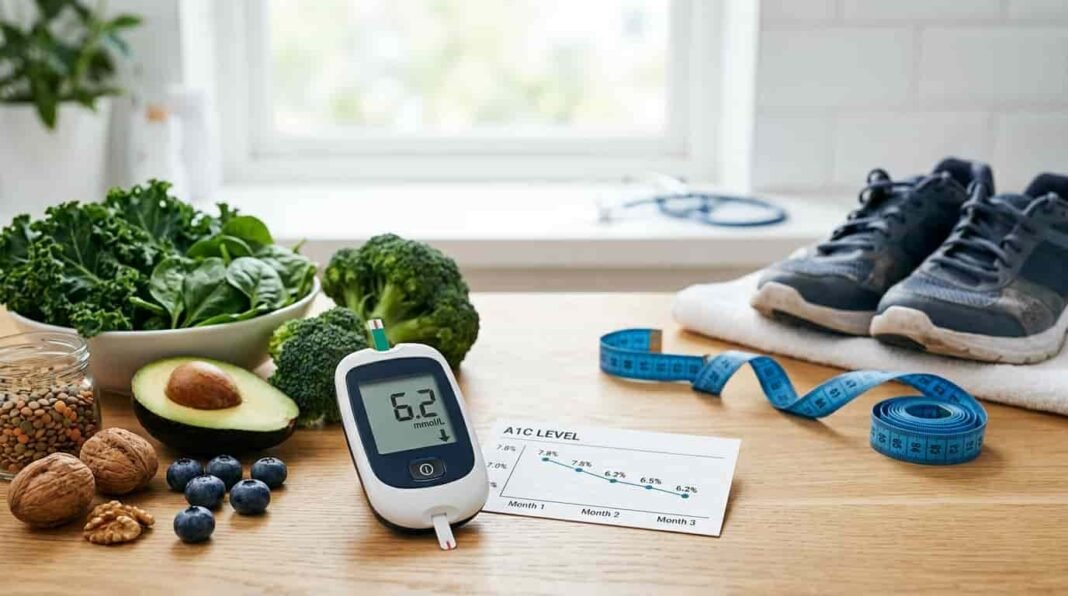
If your latest HbA1c result is higher than you expected, the next three months can make a meaningful difference. HbA1c reflects your average blood glucose over roughly the previous three months, so consistent daily changes can show up in your next test.
However, lowering HbA1c does not mean starving yourself, completely avoiding carbohydrates, or exercising for hours every day. For most people, a combination of better food choices, regular physical activity, appropriate weight management, glucose monitoring, adequate sleep, and the right medical treatment provides a safer approach.
The American Diabetes Association (ADA) states that an HbA1c target below 7% is appropriate for many nonpregnant adults with diabetes. However, the right target varies from person to person. Age, medications, risk of low blood sugar, other medical conditions, and overall health can all affect the appropriate goal.
Therefore, think of the next 90 days as an opportunity to improve your overall glucose pattern rather than chasing one number.
Here are 10 practical strategies that may help you lower your HbA1c over the next three months.
1. Start by Knowing Your Current HbA1c and Your Target
You cannot build an effective three-month plan without knowing where you are starting.
HbA1c measures the percentage of hemoglobin in your red blood cells that has glucose attached to it. Higher average blood glucose generally leads to a higher HbA1c result.
For many adults with diabetes, an HbA1c below 7% is a common treatment goal. However, this is not a universal target. Some people may safely aim lower, while others may need a less strict target.
For example, someone with a history of severe hypoglycemia may require a different approach from a younger adult with newly diagnosed type 2 diabetes.
Before beginning your 90-day plan, write down your latest HbA1c result. Then discuss your personal target with your doctor or diabetes care team.
Do not compare your target blindly with another person’s number. Successful diabetes management should focus on a safe target that suits your individual situation.
2. Pay Attention to Carbohydrate Quality and Portion Size
Carbohydrates have a major influence on blood glucose after meals. However, controlling blood sugar does not necessarily mean eliminating all carbohydrates.
A better strategy is to improve both the type and amount of carbohydrate you eat.
Highly refined carbohydrate foods and sugary drinks can make glucose management more difficult. Examples include sweetened soft drinks, sugary tea or coffee, sweets, cakes, biscuits, and many heavily refined foods.
Instead, build meals around nutrient-dense foods and choose carbohydrate sources that fit your individualized eating plan.
Vegetables, beans and lentils, whole grains, nuts, seeds, and whole fruit can form part of a balanced diet, depending on your personal needs.
Portion size also matters.
A large serving of rice, bread, pasta, or another carbohydrate-rich food can deliver considerably more carbohydrate than a smaller serving, even when the food itself is considered healthy.
Try paying attention to what happens to your glucose after different meals. You may discover that certain portions cause much larger rises than others.
This information can help you make practical adjustments instead of following an unnecessarily restrictive diet.
3. Make Fiber-Rich Foods a Regular Part of Your Meals
One of the easiest ways to improve the quality of your diet is to eat more naturally fiber-rich foods.
Vegetables, legumes, whole grains, nuts, seeds, and whole fruits provide fiber along with many other nutrients.
A simple approach is to make non-starchy vegetables a large part of your lunch and dinner.
For example, a meal could contain vegetables or salad alongside a protein source and a controlled portion of carbohydrate.
Beans, chickpeas, and lentils can also be useful choices for many people. They contain carbohydrates, but they also provide fiber and protein.
Whole fruit is generally a more useful choice than sugary drinks or many fruit juices because the whole food retains its natural structure and fiber.
You do not need an exotic “diabetes superfood.”
Instead, focus on ordinary foods you can afford, enjoy, and continue eating after the three-month period ends.
Consistency matters far more than following a perfect diet for one week and abandoning it the next.
4. Walk and Exercise Regularly
Physical activity is one of the most useful tools for improving diabetes management.
Your muscles use glucose for energy during activity. Regular exercise can also support overall metabolic health, cardiovascular fitness, weight management, and well-being.
The NIDDK recommends aiming for at least 150 minutes of moderate-intensity physical activity, such as brisk walking, each week.
That might sound like a lot at first, but 150 minutes can equal around 30 minutes on five days of the week.
You also do not necessarily have to complete all your activity in one long session.
If your fitness level allows, start by adding walking to your normal day. Walking after meals can be an especially convenient way to become more active.
For example, instead of immediately sitting on the sofa after dinner, take a comfortable walk.
People who have been inactive should build their activity gradually. Those with heart disease, significant diabetes complications, foot problems, or other medical conditions may need specific exercise advice from their healthcare professional.
Most importantly, choose an activity you can repeat consistently.
A sustainable walking routine for three months will usually be more useful than an extreme exercise program that you quit after several days.
5. Add Strength Training to Your Week
Cardio exercise gets plenty of attention, but resistance training also deserves a place in a diabetes-friendly fitness routine.
Current diabetes exercise guidance recommends resistance exercise for adults with diabetes several times per week, depending on the individual’s abilities and health status. The ADA has recommended two to three resistance-training sessions per week on nonconsecutive days.
Strength training does not always require a gym.
Depending on your fitness and medical condition, exercises may include body-weight movements, resistance bands, free weights, or exercise machines.
Beginners should start at an appropriate level and learn correct technique rather than immediately lifting heavy weights.
You can combine strength training with walking or another aerobic activity.
For example, your week could contain brisk walking on several days and resistance exercises on two or three nonconsecutive days.
This combination can make your three-month plan more balanced and may also support muscle mass and physical function.
6. Lose Excess Weight If It Is Appropriate for You
Not everyone with elevated HbA1c needs to lose weight. However, for people with type 2 diabetes who also have overweight or obesity, weight management can form an important part of treatment.
The ADA’s 2026 Standards of Care recommend nutrition, physical activity, and behavioral interventions for people with type 2 diabetes and overweight or obesity to support weight and health goals.
You do not need to follow a crash diet.
In fact, an extreme short-term diet can make long-term adherence more difficult.
Instead, look for calorie reductions you can realistically maintain.
Removing or reducing sugary drinks is one example. Smaller portions of calorie-dense foods can also make a meaningful difference over time.
Cooking more meals at home may help some people control portions and ingredients.
Weight loss also does not have to happen rapidly.
The goal should be sustainable improvement, not winning a race against the bathroom scale.
If you use insulin or medicines that can cause hypoglycemia, major changes in diet, activity, or weight may alter your medication needs. Discuss substantial lifestyle changes with your healthcare professional.
7. Monitor Your Glucose and Learn From the Numbers
An HbA1c test gives you a long-term picture, but it cannot tell you exactly what happened after breakfast yesterday or dinner tonight.
Home glucose monitoring can provide that additional information.
The NIDDK notes that glucose monitoring can help people and their healthcare teams understand how food, physical activity, and diabetes medicines affect blood glucose.
Instead of treating every glucose reading as a grade, treat it as information.
Suppose your glucose repeatedly rises much more after one particular breakfast. That pattern gives you something useful to discuss with your healthcare professional or dietitian.
You might need to change the portion, food combination, meal timing, activity pattern, or treatment plan.
People using continuous glucose monitors can see even more detailed patterns.
The ADA’s 2026 guidance lists a time-in-range target above 70% for many nonpregnant adults using CGM, while emphasizing that goals must be individualized.
Do not become obsessed with a single unusual reading.
Instead, look for repeated patterns over days and weeks.
Those patterns can help you make better decisions throughout your three-month HbA1c improvement plan.
8. Take Your Diabetes Medication as Prescribed
Lifestyle changes are powerful, but they are not a replacement for prescribed diabetes treatment.
If your doctor has prescribed metformin, insulin, a GLP-1–based medicine, an SGLT2 inhibitor, or another glucose-lowering treatment, take it according to the prescribed plan.
Do not reduce, increase, start, or stop diabetes medication simply because you want your HbA1c to fall faster.
Diabetes medicines work in different ways, and the most appropriate treatment depends on much more than HbA1c alone.
Doctors may consider cardiovascular disease, kidney health, body weight, hypoglycemia risk, other medications, and additional medical conditions when developing a treatment plan. The ADA emphasizes comprehensive, individualized diabetes treatment rather than focusing only on glucose.
If your glucose remains consistently high despite following your current plan, contact your healthcare professional.
Similarly, seek medical advice if you start experiencing frequent low glucose readings after changing your diet or exercise routine.
A lower HbA1c is beneficial only when you reach it safely.
9. Take Sleep and Stress Seriously
Food and exercise often dominate conversations about HbA1c, while sleep gets ignored.
However, sleep forms part of overall diabetes management.
The NIDDK advises that most adults aim for around seven to eight hours of sleep per night and notes that adequate sleep may benefit blood glucose, mood, and energy levels.
Try maintaining a reasonably consistent sleep schedule.
Reduce unnecessary late-night screen time if it keeps you awake. Keep your sleeping environment comfortable and avoid turning bedtime into another period of work.
Persistent sleep problems deserve medical attention.
Loud snoring, choking or gasping during sleep, severe daytime sleepiness, or frequently waking unrefreshed can justify a discussion with a healthcare professional.
Stress management also matters.
Living with diabetes itself can become stressful. Work, family responsibilities, financial pressures, and health concerns can make healthy routines harder to maintain.
Walking, relaxation exercises, enjoyable hobbies, social support, and professional mental health support where needed can all form part of a healthier routine.
You do not need a completely stress-free life to improve your HbA1c.
Instead, build routines that prevent stressful days from repeatedly disrupting your meals, exercise, sleep, and medication schedule.
10. Follow a Consistent 90-Day Plan Instead of Looking for Quick Fixes
The final tip may be the most important: consistency beats perfection.
HbA1c reflects approximately three months of average blood glucose, which makes a 90-day period a useful window for evaluating meaningful changes.
Do not expect one “perfect” meal or one intense workout to transform your HbA1c.
Likewise, one restaurant meal or missed workout does not destroy your progress.
Focus on what you repeatedly do.
During the first month, concentrate on understanding your current habits.
Identify the foods that create problems, establish a walking routine, take your medications correctly, and begin monitoring glucose according to your healthcare plan.
During the second month, improve the routine.
You might increase your weekly activity, add resistance training, improve meal portions, prepare more food at home, and work on your sleep schedule.
During the third month, focus on consistency.
By this stage, the goal is not to introduce another extreme diet. Instead, maintain the habits that have worked and discuss persistent glucose problems with your healthcare team.
At the end of the period, your doctor may recommend repeating your HbA1c test.
People with diabetes generally need HbA1c testing at least twice a year, while healthcare professionals may check it more frequently when treatment goals are not being met or treatment is changing.
A Simple Daily Routine for the Next 3 Months
Your plan does not have to be complicated.
Start your morning with a balanced breakfast that fits your diabetes meal plan. Take prescribed medication at the correct time and check glucose when your healthcare team recommends it.
At lunch, pay attention to carbohydrate portions and include vegetables and an appropriate protein source.
Avoid making sugary drinks part of your daily routine. Water is a simple option for hydration for most people.
Stay physically active during the day rather than sitting for long uninterrupted periods whenever your health allows.
After meals, consider a comfortable walk when appropriate.
At dinner, once again focus on portion size and overall meal balance instead of trying to eliminate every carbohydrate.
Prepare for sleep at a reasonable time and aim for a consistent sleeping pattern.
Then repeat.
These actions may look small individually, but repeated habits influence the glucose levels that eventually contribute to your HbA1c result.
What Should Your HbA1c Be?
There is no single perfect HbA1c target for every person.
According to the ADA’s 2026 Standards of Care, an HbA1c below 7% is appropriate for many nonpregnant adults when it can be achieved without severe or problematic hypoglycemia. Some individuals may have lower goals, while others may appropriately have higher targets.
An HbA1c test also has limitations.
Certain conditions affecting red blood cells or hemoglobin can influence HbA1c results. Pregnancy and some forms of anemia can also affect how healthcare professionals interpret the test.
Therefore, speak with your healthcare professional if your HbA1c result seems inconsistent with your regular glucose readings.
Can You Really Lower HbA1c in 3 Months?
Yes, meaningful improvement can occur over approximately three months because HbA1c reflects average glucose during that period.
However, nobody can responsibly promise that every person will lower HbA1c by a specific number within 90 days.
Someone starting at 10% has a very different situation from someone starting at 7.2%.
Medication, insulin production, insulin resistance, diet, activity, weight changes, illness, stress, sleep, and other medical conditions can all influence the result.
This is why advertisements promising to “drop HbA1c instantly” should raise concern.
There is no tea, spice, supplement, detox drink, or single food that replaces evidence-based diabetes management.
Your strongest strategy is usually a combination of appropriate medical treatment and sustainable daily habits.
lower your HbA1c in three months
If you want to lower your HbA1c in three months, do not search for one dramatic trick.
Start with the basics and repeat them consistently.
Improve the quality and portions of your meals. Stay physically active. Include resistance exercise when appropriate. Work toward a healthy weight if your healthcare team recommends weight loss.
Monitor glucose according to your treatment plan and learn from recurring patterns. Take your prescribed medicines correctly, prioritize sleep, manage stress, and stay in contact with your healthcare team.
Most importantly, make changes that you can continue beyond the next HbA1c test.
The real goal is not simply to produce a better laboratory number after 90 days. It is to build better glucose control while protecting your heart, kidneys, eyes, nerves, and overall health for years to come.
Medical Disclaimer: This article provides general educational information and does not replace medical advice, diagnosis, or treatment. Diabetes medications and glucose targets should be individualized by a qualified healthcare professional. Never stop or change prescribed diabetes medicine without discussing it with your healthcare provider.