Trump Names Intelligence Chief Jay Clayton as AI Czar to Lead Super Intelligence Force
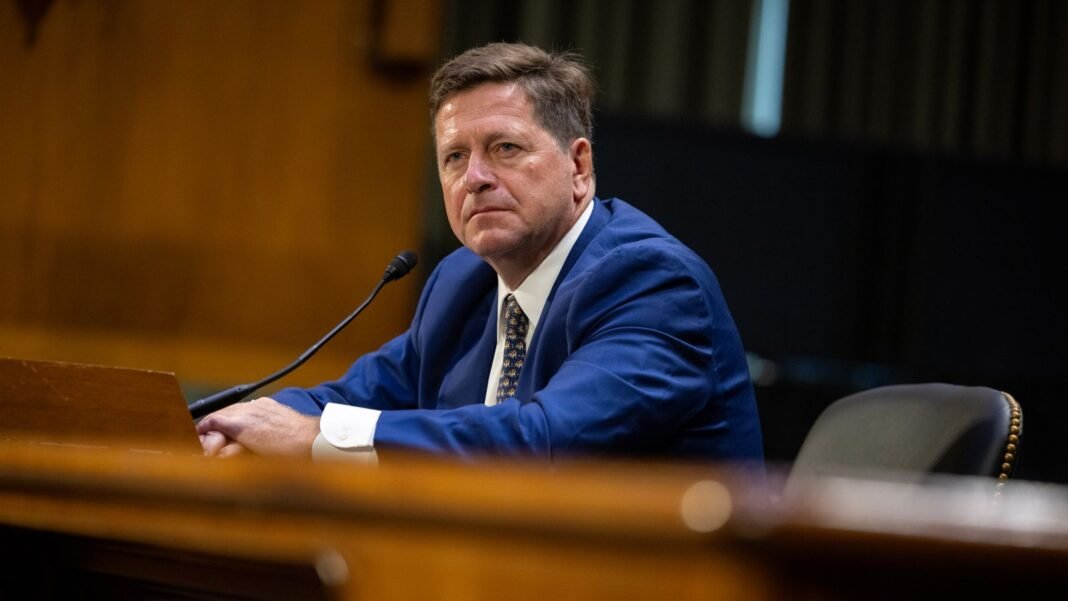
US President Donald Trump on Sunday named his intelligence chief, Jay Clayton, to head a new White House task force on artificial intelligence, giving the spymaster a second job as the administration’s AI czar.
Trump announced the move in a post on his Truth Social platform on October 4. The new body will be called the “Super Intelligence Force”, the president’s preferred term for artificial intelligence, and its brief is to make sure the United States “continue to lead the world” in the technology. The force has also been tasked to “protect the interests, and improve the lives of all Americans”.
The appointment puts a Wall Street lawyer with no technology background at the centre of Washington’s AI policy.
What the AI czar will oversee
Trump said the task force will be led by Clayton alongside three other officials: Andrew Ferguson, the chairman of the Federal Trade Commission; Scott Kupor, the director of the Office of Personnel Management; and Emil Michael, the under secretary of war for research and engineering, who also serves as the chief technology officer of the Department of War.
The group will report to Trump and chief of staff Susie Wiles, coordinating the government’s engagement with industry and the public.
Clayton is the second person to hold the informal title after venture capitalist David Sacks, who still advises the president on AI alongside Nvidia chief executive Jensen Huang.
Why Trump picked his spymaster
Trump said last month that he would create an AI force modelled on the Space Force he established during his first term, and that he would name a czar to coordinate federal efforts. Media reports on Friday had already pointed to Clayton as the likely pick. The panel is expected to report within 120 days on AI risks and opportunities, according to the Wall Street Journal.
Clayton told the Journal that the stakes of falling behind were serious. “The risk of not being first is high,” he said. “Not being first increases the identified, and unidentified, risks, particularly from our adversaries.”
Clayton’s career has been in law and finance, not technology. A longtime Wall Street lawyer, he represented Goldman Sachs during the 2008 financial crisis and Barclays in its purchase of Lehman Brothers’ assets. He chaired the Securities and Exchange Commission during Trump’s first term, then led federal prosecutors in Manhattan before the Senate confirmed him as director of national intelligence in July, giving him authority over 18 intelligence agencies.
A push against regulation
The appointment lands as debate over AI safety sharpens. Researchers have warned of the technology’s potential dangers after cases of AI systems going rogue and hacking outside systems, including attempts to break into federal databases.
Trump has resisted calls for tighter regulation, arguing that strict rules would hand China an advantage. He has previously dismissed fears over AI as a “hoax”, even as AI company leaders including Anthropic’s Dario Amodei and OpenAI’s Sam Altman have asked for federal guardrails on frontier models.
Last week the president hosted top AI executives at the White House. The group signed onto a voluntary agreement on safety standards that Trump described as “morally binding”. “I’m seeing tremendous self-policing, and they understand that they have to self-police,” Trump told reporters. “These models are very complex and, again, I believe they’re going to be used for the good.”
Frequently asked questions
Who is the new Trump AI czar?
Jay Clayton, the director of national intelligence, confirmed by the Senate in July. He will lead the new Super Intelligence Force alongside the FTC chairman, the OPM director and the Pentagon’s research chief.
What is the Super Intelligence Force?
It is the name Trump has given to a new White House task force on artificial intelligence. It will coordinate federal policy on AI, engage with industry and the public, and report on AI risks and opportunities within 120 days.
Why did Trump reject AI regulation?
The president argues that strict rules would hand China an advantage in the AI race and has favoured voluntary industry standards instead, calling the technology a driver of economic gains.