Quick Facts
- Location: The narrowest point of the Khyber Pass, District Khyber, Khyber Pakhtunkhwa, Pakistan, between Peshawar and the Afghan border.
- Altitude: Around 967 metres (3,174 feet) above sea level.
- Famous For: The 1837 Ali Masjid Fort, the shrine of Hazrat Ali, the narrowest gorge of the historic Khyber Pass, and the battles of the Anglo-Afghan wars.
- Nearest City: Peshawar, roughly 40 kilometres to the east.
- Accessibility: Road access from Peshawar through Jamrud. The pass is a controlled route with security checkpoints; Pakistani visitors travel freely with ID, while foreign visitors need prior permission.
- Known Landmarks: Ali Masjid Fort on the heights, the shrine and hand-marked boulder, regimental plaques on the valley walls, Sphola stupa near Landi Kotal, and the Michni check post.
- Best For: History lovers, photographers, and day trippers from Peshawar who want to stand in one of the most storied mountain passes in the world.
Why Visit Ali Masjid, Khyber Pass
Few places on earth carry the weight of history that Ali Masjid does. This is the narrowest point of the Khyber Pass, the 53-kilometre corridor through the Spin Ghar mountains that has carried armies, traders, pilgrims, and invaders between Central Asia and the Indian subcontinent for more than two thousand years. Standing here, with the gorge walls closing in on both sides and the old fort watching from the heights, you are in a place where geography itself shaped empires.
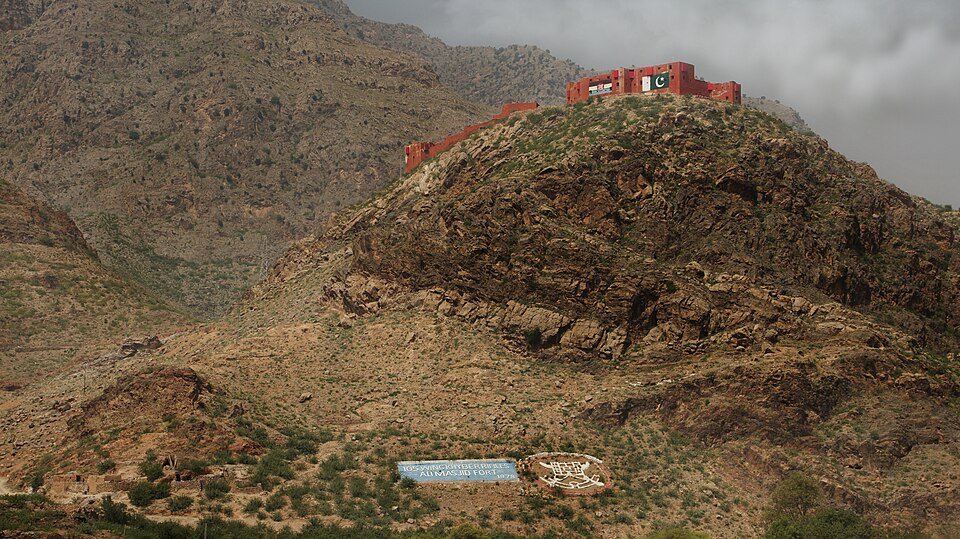
Ali Masjid is not a polished tourist resort. It is raw, real, and deeply atmospheric. The fort on the ridge, first raised in 1837, still dominates the skyline. The valley walls carry the painted insignia of British regiments that served here since 1857. A small shrine marks the spot where, according to local tradition, Hazrat Ali once stopped, and a huge boulder nearby bears what believers say is the mark of his hand. Few destinations in Pakistan compress this much history into such a small space.
For travellers based in Peshawar, Ali Masjid makes a powerful half-day or full-day trip. The drive itself is the attraction: the road climbs from the Peshawar valley floor into the pass, past Jamrud Fort, through checkpoints and bazaars, until the gorge narrows and Ali Masjid appears. In recent years, with the return of peace to District Khyber, domestic tourists have been coming here in growing numbers to picnic by the cold streams, visit the waterfalls at nearby Charbagh, and photograph the fort.
This Ali Masjid Khyber Pass travel guide gives you everything you need: the real history with dates, how to reach it from Islamabad, Lahore, and Karachi, what the weather is like through the year, where to stay and eat, and the practical rules for visiting a route that is still a working military and trade corridor.
History of Ali Masjid, Khyber Pass
The Khyber Pass has been in use since antiquity. Alexander the Great’s army crossed these mountains in the 4th century BC, the Chinese pilgrim Xuanzang passed through in the 7th century AD, and during the Mughal period the pass formed part of the great trade and military road between Agra and Kabul. Ali Masjid sits at the pass’s narrowest point, and whoever held these heights controlled movement through the entire corridor. The old saying about the spot was that it was once too narrow for two fully laden camels to pass each other.
The name comes from a local tradition. It is said that Ali ibn Abi Talib, the cousin and son-in-law of the Prophet Muhammad, visited this place, and a mosque and shrine were built here in his memory. A massive boulder near the shrine carries marks that local belief holds to be the imprint of his hand. Travellers on the old trading route between Kadam and Ali Masjid would step out of the line of march to say a hurried prayer at the shrine, a practice that continued for generations.
The fort on the heights above the shrine was first constructed in 1837 by the Afghan ruler Dost Muhammad Khan, who understood that the narrowest point of the pass was its key. The fort’s story from that point on is a catalogue of the Anglo-Afghan wars. The British captured it in 1839 during the First Anglo-Afghan War. In 1842, during the disastrous British retreat from Kabul, the fort was garrisoned by British troops; when a relief force under Colonel Charles Wild was attacked by Afghan troops of Akbar Khan at the entrance of the pass and forced back, the garrison was compelled to evacuate Ali Masjid and fall back to Jamrud.
The most famous battle came on 21 November 1878, at the start of the Second Anglo-Afghan War. The Peshawar Valley Field Force under Lieutenant General Sir Samuel Browne advanced on the fort, which was held by Afghan forces, and captured it after heavy fighting in what became known as the Battle of Ali Masjid. With the pass in British hands, the Treaty of Gandamak in May 1879 ceded control of the Khyber to the British, and Ali Masjid passed firmly into the British Raj. The fort’s small cemetery still holds the graves of British soldiers who fell in the Second Afghan War, and the surrounding valley walls bear the insignia of regiments that served here.
In 1947 the fort and the pass became part of Pakistan. For decades the area was part of the Federally Administered Tribal Areas, and after the 2018 merger it became part of Khyber Pakhtunkhwa as District Khyber. Tourism, which had flourished in an earlier era with the famous Khyber Safari train, faded during the years of militancy. Since the restoration of peace, domestic tourism has returned: local officials report hundreds of visitors, many on motorcycles from Peshawar, coming to Ali Masjid, the Charbagh waterfall, and the streams of Shalman to beat the summer heat. The government has been promoting the district’s historic sites, and places like the Khyber Rifles mess and the Michni check post, long visited only by dignitaries, are part of the area’s living history.
Top Things to Do in Ali Masjid, Khyber Pass
See the Ali Masjid Fort from the road
The fort sits on the heights above the gorge, and it remains a working military installation, so visitors cannot simply walk in. But its position means it dominates every view. The best photographs are taken from the road below, where the old colonial-era structure crowns the ridge. In clear morning light the stone walls stand out sharply against the sky, and you can make out why 19th-century generals called this the key to the pass. Bring a zoom lens if you have one.
Visit the shrine and the marked boulder
The shrine of Hazrat Ali and the great boulder with the hand-like marks are the spiritual heart of Ali Masjid. Travellers stop here to pray and to see the marks that tradition attributes to Ali. It is a quiet, respectful place, and visitors should dress modestly, remove shoes where custom requires, and keep voices low.
Read the regimental plaques on the valley walls
One of the most unusual sights in the pass is the collection of painted insignia and plaques on the mountain walls, left by British regiments stationed here since 1857. Driving slowly through the gorge, you can spot these emblems on the rock faces. They are an open-air military archive, and local guides can point out the most prominent ones.
Drive the full pass to Landi Kotal
Ali Masjid lies about 16 kilometres east of Landi Kotal, the main town of the pass. Continuing west takes you through the heart of the Khyber to Landi Kotal, where you will find the second-century Sphola stupa right beside the road and, at the town entrance, a mountain wall decorated with colourful commemorative tablets of regiments. The Michni check post area further west is as far as most tourists go; the Torkham border itself is a working crossing, not a tourist stop.
Picnic by the cold streams and waterfalls
In summer, the area around Ali Masjid, Charbagh, and Shalman draws crowds of picnickers escaping the heat of the plains. The Charbagh waterfall near Landi Kotal is a popular spot, and vendor stalls around Ali Masjid serve snacks and fast food to the steady stream of visitors. If you visit on a summer weekend, expect company; on a weekday, you may have the stream banks nearly to yourself.
Photograph Jamrud Fort on the way in
Just outside the pass entrance stands Jamrud Fort, the great Sikh-era fortress that guards the eastern mouth of the Khyber. It is also a military site, so admire it from the road. The contrast between the Sikh fort at the entrance and the Afghan-built, British-held fort at Ali Masjid tells the whole strategic story of the pass in two buildings.
Famous Places In and Around Ali Masjid, Khyber Pass
Jamrud Fort — Sikh-era fortress at the eastern entrance of the pass. Landi Kotal — the pass’s main town, 16 km west of Ali Masjid, with bazaars and the Khyber Rifles mess. Sphola Stupa — a second-century Buddhist stupa beside the road at Landi Kotal. Michni Check Post — historic frontier post near the Afghan border, the usual turnaround point for tourists. Charbagh Waterfall — popular picnic and waterfall spot near Landi Kotal. Peshawar — the old frontier city 40 km east, with the Peshawar Museum’s Gandharan collection and Qissa Khwani Bazaar, covered in our places to visit travel content. More northern routes are covered in our Hunza Valley travel guide and Explore Pakistan section.
How to Reach Ali Masjid, Khyber Pass
Ali Masjid is reached by road from Peshawar, which is the gateway to the Khyber Pass. The route runs west from Peshawar city along the historic Khyber road, through the Jamrud gate, into the pass itself. Ali Masjid is the first major landmark inside the pass, roughly 40 kilometres from central Peshawar. Beyond Ali Masjid the road continues to Landi Kotal (about 16 km further) and on to the Michni check post area near the Afghan border.
The nearest airport is Bacha Khan International Airport in Peshawar, which has regular flights from Islamabad, Lahore, and Karachi, as well as international connections. From the airport or from Peshawar city, you continue by road into the pass.
From Islamabad, the drive to Peshawar is about 180 kilometres on the M-1 motorway, roughly 2.5 to 3 hours, then another hour or so into the pass depending on checkpoint stops. From Lahore, take the M-2 to Islamabad and then the M-1 to Peshawar, about 490 kilometres in total or around 6 to 7 hours of driving. From Karachi, flying to Peshawar is the sensible option; the road journey is roughly 1,600 kilometres and takes the better part of two days.
Road conditions in the pass are paved but narrow in places, with heavy truck traffic heading to and from the Torkham border. There are multiple security checkpoints where you will need to show your CNIC (or passport for foreigners), and the vehicle may be logged. Travel during daylight hours, and go with a local driver who knows the checkpoint routine. The old Khyber Safari tourist train from Peshawar to Landi Kotal no longer runs, so road is the only option.
Route Details
Step 1: Reach Peshawar by motorway (from Islamabad/Lahore) or by air (from Karachi and other cities). Base yourself in Peshawar for the night if arriving late.
Step 2: Leave Peshawar westward on the Khyber road toward Jamrud, about 18 kilometres. You will pass the Jamrud gate and Jamrud Fort.
Step 3: Enter the Khyber Pass. The road climbs and the valley narrows. Keep your ID ready for checkpoints.
Step 4: Reach Ali Masjid, the narrowest point of the pass. Stop for the shrine, the fort views, and the regimental plaques.
Step 5: Continue west to Landi Kotal (about 16 km) for the bazaars and Sphola stupa, then to the Michni check post area, which is the usual point to turn around.
Step 6: Return to Peshawar the same day; the whole trip works comfortably as a day excursion.
Where to Stay in Ali Masjid, Khyber Pass
There are no hotels at Ali Masjid itself; it is a historic site on a working trade and military route, not a resort town. Everyone stays in Peshawar and visits the pass as a day trip, which is exactly how the trip works best.
Peshawar has options at every level. At the top end, the Pearl Continental Peshawar and the Serena Hotel Peshawar are the city’s established five-star properties, both with restaurants, gardens, and reliable service for international visitors. The mid-range tier around University Road and Saddar includes well-known three-star hotels and serviced guesthouses that are comfortable and far cheaper. Budget travellers will find simple hotels and lodges near the railway station and in the old city, basic but adequate for a night.
Book in Peshawar rather than trying to stay in Landi Kotal, where accommodation is limited and aimed at traders and truckers rather than tourists. If you want an early start for the pass, choose a hotel on the western side of Peshawar, closer to the Jamrud road, to cut morning traffic.
Where to Eat: Local Foods of Ali Masjid, Khyber Pass
Food on this trip means Peshawari food, and that is a very good thing. Peshawar is one of Pakistan’s great food cities. The essential dishes are chapli kebab, the flat minced-beef kebab fried with pomegranate seeds and spices; Peshawari karahi, meat cooked simply with tomatoes and black pepper in an iron wok; seekh kebab and tikka from the charcoal grills; and namkeen gosht, lamb cooked with minimal spice so the meat speaks for itself. Finish with Peshawari kulfi or a glass of qahwa, the green tea that is the frontier’s default drink.
The old city’s food streets around Qissa Khwani Bazaar and Namak Mandi are where the famous karahi houses operate. On the pass road itself, roadside dhabas near Jamrud serve kebabs, dal, and fresh naan to truckers and travellers at very reasonable prices. Around Ali Masjid, small vendor stalls sell snacks, pakoras, and cold drinks to picnickers; these are convenient but basic, so eat your main meals in Peshawar. A full meal at a Peshawar kebab house is budget-friendly by city standards, and even the top hotel restaurants cost far less than their equivalents in Islamabad or Lahore. Carry drinking water for the pass itself, as shops are sparse between Jamrud and Landi Kotal.
Weather in Ali Masjid, Khyber Pass
Ali Masjid sits at around 967 metres, high enough to be noticeably cooler than the Peshawar plains below but far below the snow line of the high mountains. Summers are hot, winters are mild and pleasant, and the pass road stays open all year. The table below gives approximate seasonal ranges for the pass area.
| Season | Temperature Range | Conditions |
|---|---|---|
| Winter (Dec–Feb) | 5°C to 16°C | Cool, clear days; cold nights. Pleasant for sightseeing; carry a warm jacket. |
| Spring (Mar–Apr) | 15°C to 30°C | Warming up; the surrounding hills turn green. Excellent for the drive and photography. |
| Summer (May–Sep) | 28°C to 40°C | Hot, but cooler than Peshawar city. Peak picnic season; streams and waterfalls are at their best. |
| Autumn (Oct–Nov) | 15°C to 28°C | Mild and clear; arguably the most comfortable season for the trip. |
Rain falls mainly in winter and during the monsoon months, when sudden downpours can make the pass road slippery. Dust storms occasionally sweep through in early summer. The fort and gorge look their most dramatic in the clear light of autumn and winter mornings.
Language and Culture of Ali Masjid, Khyber Pass
The language of the pass is Pashto, spoken by the Afridi and other tribes of District Khyber. Urdu is widely understood in the bazaars and at checkpoints, and hotel staff in Peshawar generally speak English. Learning a greeting in Pashto, such as “starray mashay” (good morning), is always appreciated.
This is a conservative tribal area with a strong code of hospitality and honour. Visitors are welcomed warmly, but they are expected to behave with corresponding respect. Dress modestly: long trousers and covered shoulders for men, and for women a headscarf and loose clothing are strongly advisable. Ask permission before photographing people, and never photograph military installations, checkpoints, or security personnel; this is a working frontier, and photography restrictions are enforced. Women travellers can visit comfortably as part of a group or with a guide, though solo women may attract attention in the bazaars. Bargaining in the bazaars is expected and good-natured.
Shopping in Ali Masjid, Khyber Pass
There is no shopping mall at Ali Masjid, and none is needed. The bazaars of Landi Kotal and Jamrud are the places to browse: dry fruits, nuts, and spices brought down from Afghanistan and the tribal areas; second-hand and imported goods of every description; and traditional items like tribal jewellery, daggers, and embroidered caps. Prices are negotiable, and the traders are experienced bargainers, so treat it as entertainment.
For a wider selection, Peshawar’s bazaars are far better. Qissa Khwani Bazaar and the surrounding old-city markets sell Peshawari chappals (sandals), khaddar cloth, brass work, and carpets. The dry fruit market near the old city is excellent in winter. Buy food items and souvenirs in Peshawar and treat the pass bazaars as a browse-and-bargain experience on the day trip.
Travel Tips for Ali Masjid, Khyber Pass
Packing Essentials
Carry your original CNIC or passport; you will be asked for it at checkpoints. Bring sun protection, a hat, and drinking water, as the gorge reflects heat in summer. A warm layer is useful even in spring and autumn because the pass is windier than Peshawar. Comfortable walking shoes handle the uneven ground around the shrine and viewpoints. A camera with a zoom lens is worth the weight for the fort and the regimental plaques.
Safety Tips
The pass is a controlled military and trade route: follow the rules and you will have no problems. Travel in daylight and return to Peshawar before dark. Do not photograph the fort, checkpoints, or any military personnel or installations. Stay on the main road and in the recognised visitor areas around Ali Masjid and Landi Kotal. Foreign visitors must arrange prior permission through the authorities or a registered tour operator; do not attempt to enter the pass without it. Check the current security situation before you go, as conditions in the tribal districts can change.
Money & Connectivity
Carry cash in Pakistani rupees. There are no ATMs between Peshawar and Landi Kotal, and the vendor stalls at Ali Masjid take cash only. Mobile signals from the major networks work along the pass road, though coverage dips in the deepest parts of the gorge. Fuel up in Peshawar; there are fuel stations at Jamrud but none you should rely on inside the pass.
Best Time to Visit Ali Masjid, Khyber Pass
Spring (March–April)
The best all-round season. Temperatures are comfortable, the hills are green, and the light is excellent for photography. Checkpoint queues are shorter than in peak summer.
Summer (May–September)
Hot, but this is when the pass comes alive with picnickers. The streams and waterfalls around Ali Masjid, Charbagh, and Shalman are at their fullest, and the evenings cool down. Go on a weekday to avoid the biggest crowds.
Autumn (October–November)
Clear skies, mild days, and thin crowds. Arguably the finest season for the drive and for photographs of the fort.
Winter (December–February)
Mild by northern Pakistan standards, with crisp clear days. A good season for history-focused visits, though the streamside picnic spots are quiet and the water is icy.
Final Thoughts
Ali Masjid is one of those rare places where the history books come alive under your feet. The narrow gorge, the fort on the ridge, the shrine, the regimental plaques on the rock walls: together they tell two thousand years of movement between Central Asia and the subcontinent. It is not a long trip and it is not a difficult one, but it is a trip that stays with you.
Go with respect for the place and its people, follow the rules of the route, and take the time to stand quietly at the narrowest point of the pass and imagine the caravans, armies, and pilgrims that squeezed through here before you. Few travel experiences in Pakistan are this concentrated. Plan it as a day trip from Peshawar, and pair it with the city’s food and bazaars for one of the great short itineraries in the country.
FAQs
Where is Ali Masjid in the Khyber Pass?
Ali Masjid is at the narrowest point of the Khyber Pass in District Khyber, Khyber Pakhtunkhwa, about 40 kilometres west of Peshawar and 16 kilometres east of Landi Kotal.
What is the best time to visit Ali Masjid?
October to April offers the most comfortable weather. Summer is hotter but is the peak season for picnics by the streams and waterfalls.
How do I reach Ali Masjid from Islamabad?
Drive the M-1 motorway from Islamabad to Peshawar (about 180 km, 2.5–3 hours), then continue west through Jamrud into the Khyber Pass. Ali Masjid is the first major landmark inside the pass.
Can foreigners visit the Khyber Pass?
Foreign visitors need prior permission (an NOC) to travel beyond the settled areas into the pass. Arrange this through the authorities or a registered tour operator before you go.
Is Ali Masjid safe for tourists?
Domestic tourists visit in large numbers, especially in summer. Travel in daylight, carry ID, follow checkpoint instructions, and do not photograph military sites.
Is Ali Masjid suitable for families?
Yes. It works well as a family day trip from Peshawar: the drive is short, the picnic spots suit children, and the history keeps older kids interested.
Where should I stay when visiting Ali Masjid?
Stay in Peshawar. The Pearl Continental and Serena hotels are the top-end options, with many mid-range and budget hotels around University Road and Saddar.
What food should I try on the trip?
Eat in Peshawar: chapli kebab, Peshawari karahi, seekh kebab, namkeen gosht, and Peshawari kulfi, with qahwa to finish. Roadside dhabas near Jamrud are good for a simple lunch.