Quick Facts
- Location: Braldo Valley, Shigar District, Gilgit-Baltistan, Pakistan
- Altitude: Around 3,040 meters (9,970 feet) above sea level
- Famous For: Being the final settlement and launchpad for treks and expeditions to K2, Concordia, and the Baltoro Glacier
- Nearest City: Skardu, about 173 kilometers away by jeep road
- Accessibility: Only by 4×4 jeep from Skardu via Shigar Valley and the Braldu Gorge (6 to 7 hours); no regular public transport
- Known Landmarks: The village itself on the Braldu River, the foot of the Biafo Glacier, and the start of the Baltoro trek route
- Best For: Serious trekkers, mountaineers, adventure travelers, and anyone attempting the K2 base camp or Concordia trek
Why Visit Askole
Askole is not a holiday destination in the ordinary sense. It is a staging post at the edge of the known world: the last village before the high Karakoram begins, the place where roads end and the great glacier treks start. Every expedition to K2, the world’s second-highest mountain, and every trek to Concordia, the throne room of the mountain gods, begins here. Standing in this small Balti village at 3,040 meters, watching porters load supplies and trekkers set out toward the Baltoro, you feel the weight of mountaineering history in a way no museum can convey.
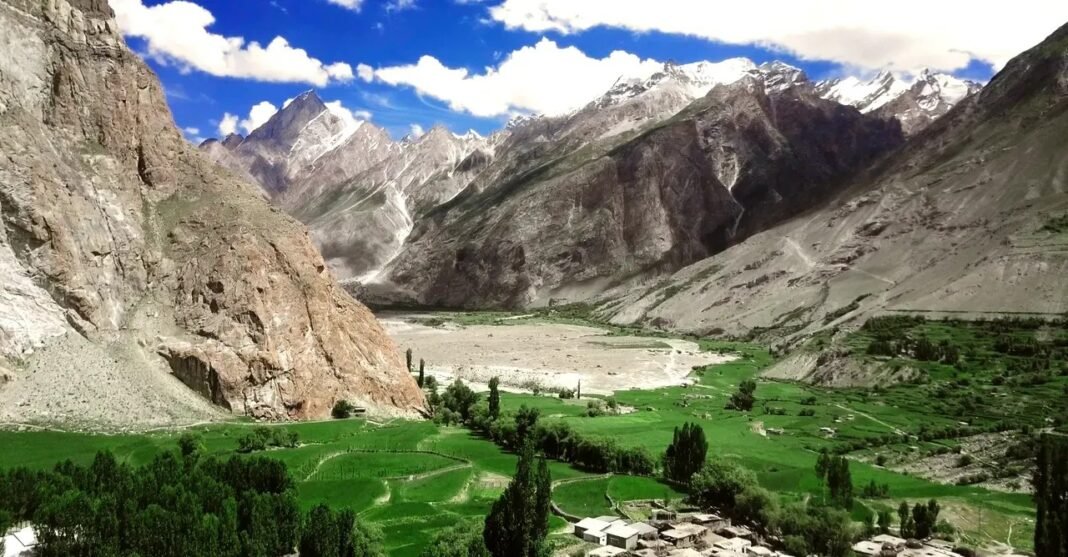
The village sits in one of the most dramatic settings on earth. Askole lies on the banks of the Braldu River in the Braldo Valley, surrounded by the Karakoram’s granite towers and icefalls. From the village you can see the lower reaches of the great glaciers, and within a day’s walk you are on the Baltoro Glacier itself, one of the longest non-polar glaciers in the world at 63 kilometers. The scale of the landscape is humbling: peaks that would be national landmarks anywhere else are just part of the backdrop here.
Askole is also the gateway to four of the world’s fourteen eight-thousanders: K2 (8,611m), Gasherbrum I (8,080m), Broad Peak (8,047m), and Gasherbrum II (8,035m), along with legendary mountains like Masherbrum (K1), the Trango Towers, and Muztagh Tower. Trekkers use Askole as the trailhead for the classic Baltoro-Concordia-K2 base camp route, one of the greatest treks on the planet, while the nearby Biafo Glacier leads toward the Hispar Pass and Snow Lake, connecting Baltistan to Hunza.
Even if you never set foot on a glacier, Askole rewards the journey. The jeep ride from Skardu through Shigar Valley and the Braldu Gorge is an adventure in itself, the Balti village culture is warm and distinctive, and the night skies are extraordinary. This Askole travel guide is written for trekkers planning the big expedition, but it also serves the growing number of adventure travelers who come simply to stand at the gateway of the Karakoram. For more northern adventures, see the Explore Pakistan section and the Hunza Valley guide.
History of Askole
Askole’s recorded history is thin, as befits a village at the end of the world, but its story is woven into the larger history of Baltistan. The people of Askole are Balti, descendants of Tibetan peoples from Ladakh, and their language, Balti, is a dialect of Tibetan. For centuries the village lived in near-total isolation, surviving on terraced farming of wheat, barley, and buckwheat, on apricot orchards, and on livestock, cut off from the outside world by the Braldu Gorge. The gorge track was so rough that, until the jeep road was built, the journey from Shigar to Askole took two days on foot.
Askole entered world history through mountaineering. As European and later Pakistani expeditions began probing the Karakoram in the 20th century, they needed a base, and Askole was the natural choice: the last inhabited place before the glaciers. Porters from Askole and neighboring villages carried loads for the great expeditions to K2 and the Gasherbrums, and the village developed a proud tradition of high-altitude porters. Many Askole men have walked the Baltoro route dozens of times, and the village is famous in mountaineering circles for producing some of the toughest porters in the Himalaya and Karakoram.
The Italian expedition’s first ascent of K2 in 1954, led by Ardito Desio with Achille Compagnoni and Lino Lacedelli reaching the summit, passed through Askole, as did the many expeditions that followed: the American attempts, the successful ascents of the Gasherbrums and Broad Peak, and the modern commercial expeditions. Each wave of climbers left its mark on the village, bringing work, income, and contact with the outside world. The Gilkey Memorial on the Baltoro, a cairn of plaques honoring climbers who died on K2 and nearby peaks, stands as a somber reminder of the mountain’s cost.
In recent decades, trekking has replaced pure mountaineering as Askole’s main connection to the world. The K2 base camp and Concordia trek has become one of the most famous trekking routes on earth, drawing hundreds of trekkers each summer. The jeep road, improved over the years, now brings visitors in six to seven hours from Skardu instead of two days on foot. The village remains small, a single street of stone houses with fields of wheat ready for harvest in late summer, but it now hosts expedition teams, trekking groups, and adventure travelers from across the globe, all of whom pass through on their way to the ice.
Top Things to Do in Askole
Begin the Baltoro-Concordia-K2 Base Camp Trek
This is the reason most people come to Askole. The classic trek runs from Askole to Jhola (3,150m), then Paiyu (3,420m) for acclimatization with views of the Trango Towers, on to Khoburtse (3,795m) where you step onto the Baltoro Glacier, then Urdukas (3,900m), Goro II (4,295m), and finally Concordia (4,690m), the great glacial junction. From Concordia it is a final push to K2 base camp at 5,150 meters, passing the Gilkey Memorial, with the south face of K2 towering above. The full trek takes two to three weeks and requires a licensed guide, porters, permits, and serious fitness. It is consistently ranked among the world’s greatest treks.
Walk to the Foot of the Biafo Glacier
For a shorter adventure, the trail from Askole to the snout of the Biafo Glacier makes an excellent day walk. The Biafo is the world’s third-longest glacier outside the polar regions, and its lower reaches are a jumble of ice, boulder, and meltwater streams. A bridge crosses the glacier’s outflow, and the campsite of Korofong (3,075m) lies just beyond. The trees and birdlife around the glacier’s foot are surprisingly rich, and the views back toward the valley are superb.
Experience Balti Village Life
Askole is a working Balti village, and spending a day here before your trek is time well spent. Walk the single street, watch the wheat harvest in late summer, see the apricot orchards, and observe the stone-and-timber houses built to survive brutal winters. The villagers are accustomed to trekkers and are friendly and helpful; many families host expedition teams and can arrange porters, mules, and supplies. Respect the local culture: dress modestly, ask before photographing people, and remember that this is a conservative Muslim community with Tibetan Buddhist roots visible in its language and customs.
Stargaze in the Clear Mountain Air
At 3,040 meters with almost no light pollution, Askole’s night sky is phenomenal. Trekkers camping in the village on their first night often describe the stars as the first great sight of the expedition. Bring a camera with manual settings if you want to photograph the Milky Way, and a warm jacket, because even summer nights are cold. The combination of the roaring Braldu River and a sky full of stars is an unforgettable introduction to the Karakoram.
Photograph the Karakoram Giants
You do not need to trek for two weeks to see great mountains. From Askole and its surroundings, the peaks of the Karakoram rise in every direction, and the play of light on rock and ice at dawn and dusk is spectacular. The Braldu Gorge on the drive in offers dramatic canyon photography, and the village itself, with its fields and stone houses against the peaks, is deeply photogenic. Serious photographers should allow extra days; the weather changes fast and patience is rewarded.
Famous Places In and Around Askole
- Concordia: The glacial junction at 4,690m where the Baltoro, Godwin-Austen, and Abruzzi glaciers meet, ringed by four eight-thousanders.
- K2 Base Camp: At 5,150m beneath the south face of K2 (8,611m), the goal of the great trek.
- Baltoro Glacier: 63 kilometers long, the fifth-longest non-polar glacier in the world, the highway of the trek.
- Biafo Glacier: The third-longest non-polar glacier, accessible on a day walk from Askole, leading toward the Hispar Pass and Snow Lake.
- Shigar: The valley town on the road from Skardu, famous for the restored Shigar Fort and its orchards.
- Skardu: The regional hub 173 kilometers away, with the Kharpocho Fort, Shangrila Lake, and Upper Kachura Lake.
How to Reach Askole
Askole is reached only by road from Skardu, and only in a 4×4 jeep. There is no airport, no bus service, and no alternative route. The drive is 173 kilometers and takes six to seven hours, passing through Shigar Valley and the dramatic Braldu Gorge. The road is rough, narrow in places, and crossed by streams; it is frequently described as one of the most exciting jeep rides in Pakistan. Landslides can block it after heavy rain or glacier melt, so build a buffer day into your schedule.
From Islamabad: Fly from Islamabad to Skardu (about 1 hour, weather permitting) or drive the Karakoram Highway route, a long two-day journey with an overnight halt, usually at Chilas. From Skardu, hire a 4×4 jeep for the six to seven hour drive to Askole. Most trekkers spend at least one night in Skardu to finalize permits, meet their guide and porters, and buy last supplies before heading to Askole.
From Lahore: Fly from Lahore to Islamabad and connect to Skardu, or fly to Skardu via Islamabad. The overland route from Lahore to Skardu via the Karakoram Highway is a multi-day expedition in itself. Plan your itinerary so that you reach Skardu at least a day before your planned departure to Askole.
From Karachi: Fly from Karachi to Islamabad and connect to Skardu; there are no direct flights to Skardu from Karachi. Allow extra days for flight delays, which are common on the Skardu route because of mountain weather. The road alternative from Karachi is extremely long and not recommended for a trekking schedule.
Nearest airport: Skardu International Airport, with flights from Islamabad (and seasonally from other cities). The airport is about 30 minutes from Skardu town. Note that Skardu flights are frequently delayed or cancelled by weather; experienced trekkers keep buffer days.
Road conditions by season: The Skardu-Askole jeep road is open roughly from June to September, the trekking season. Outside these months, snow and landslides close it. Even in season, check conditions before departing, travel only in daylight, and use an experienced local driver. Only 4×4 vehicles should attempt the Braldu Gorge section.
Route Details
- Islamabad to Skardu: Fly (about 1 hour) or drive the Karakoram Highway over two days with an overnight halt at Chilas.
- Skardu to Shigar: Drive east into Shigar Valley, about 1 to 1.5 hours on a decent road; last chance for proper shops and the Shigar Fort.
- Shigar to the Braldu Gorge: The road narrows and roughens as it enters the gorge; this is 4×4-only territory.
- Through the Braldu Gorge: Several hours of dramatic driving along the Braldu River, crossing streams and navigating narrow sections.
- Arrival in Askole: The village appears on the banks of the Braldu River at 3,040 meters; trekkers usually camp here the first night and meet their porters.
- Permits: Trekking permits, Central Karakoram National Park fees, and porter registration are processed in Skardu before departure; you cannot trek legally without them.
Where to Stay in Askole
There are no hotels in Askole. Accommodation here means camping: trekkers and expeditions bring their own tents, sleeping bags, and cooking equipment, usually organized by their trekking company. The village has flat camping areas near the river, and local families can sometimes arrange space and basic facilities. If you are on an organized trek, your operator handles everything, including a cook tent, dining tent, and sleeping tents.
Independent travelers should arrange their stay through a Skardu-based trekking company, which can provide tents, a cook, porters, and all logistics. Do not arrive in Askole expecting to find a guesthouse; the village has a few basic shops for last-minute supplies but no tourist accommodation. A warm sleeping bag rated well below freezing is essential even in summer, and a good sleeping pad makes a real difference on the stony ground.
For proper hotels, base yourself in Skardu or Shigar before and after the trek. Skardu has hotels across all budgets, from luxury resorts to budget guesthouses, and Shigar has the famous restored Shigar Fort hotel plus simpler options. Most trekkers spend their first and last nights of the expedition in Skardu, which is also where you will want a hot shower and a real bed after two weeks on the glacier.
Where to Eat: Local Foods of Askole
There are no restaurants in Askole. On an organized trek, your cook prepares all meals at camp: hearty Pakistani and trekking food such as dal, rice, pasta, noodles, soups, porridge, eggs, and plenty of tea. Expedition cooking at altitude is a skill, and experienced Balti cooks are masters of it. If you are traveling independently, you must bring all your own food or arrange a cook through your trekking company; there is nowhere to buy a meal in the village beyond a few tiny shops selling biscuits, tea, and basics.
The local Balti cuisine reflects the region’s Tibetan heritage. Staples include buckwheat dishes, barley preparations, apricot oil used in cooking, and hearty wheat breads. Dried apricots from the village orchards are a superb trekking snack, and you can sometimes buy them from local families. Butter tea (salted tea churned with butter) is the traditional drink of the high valleys and excellent for cold mornings.
In Skardu and Shigar, before and after the trek, you will find proper restaurants serving Pakistani, Chinese, and continental food, plus local Balti dishes. Stock up in Skardu on trekking snacks: nuts, dried fruit, chocolate, and energy bars. A trekking meal budget is usually included in organized packages; independent trekkers should plan generously, since everything beyond Skardu must be carried in.
Weather in Askole
Askole’s weather is high-altitude continental: short, cool summers and long, brutally cold winters. The trekking season runs from June to September, when daytime temperatures in the village range from about 10 to 20 degrees Celsius and nights hover around freezing. Higher on the glacier it is much colder, and weather can change in hours: sunshine, snow, and wind can all arrive in a single day. Winter in Askole is severe, with temperatures far below minus 20 degrees and the village cut off by snow.
| Season | Temperature Range | Conditions |
|---|---|---|
| Winter (Nov-Apr) | Well below -20°C | Deep snow, village largely cut off; no trekking; only the hardiest winter expeditions |
| Spring (May) | -5°C to 10°C | Snow melting, road opening; early season, unsettled weather; trekking starts in June |
| Summer (Jun-Aug) | 0°C to 20°C | Prime trekking season; warm days in the village, freezing nights; afternoon clouds common |
| Autumn (Sep-Oct) | -10°C to 15°C | Clear, stable weather early; beautiful light; road closes by late October |
Language and Culture of Askole
The people of Askole are Balti, and their language is Balti, a dialect of Tibetan that reflects the region’s historical ties to Ladakh. Urdu is widely understood because of the trekking industry, and many guides and porters speak functional English. The village is Muslim, and the culture blends Islamic practice with older Tibetan-influenced customs visible in the language, the architecture, and the food.
Life in Askole is shaped by the mountains and the trekking economy. Families farm terraced fields of wheat and barley in the short summer, tend apricot orchards, and keep livestock; many men work as high-altitude porters, a profession the village is famous for. The community is conservative and traditional. Visitors should dress modestly, greet people politely, ask before taking photographs, and respect prayer times and religious sites.
Porters are the backbone of every expedition, and treating them well is both a moral duty and good expedition practice. Agree on loads, wages, and stages clearly through your trekking company, and follow the established porter welfare guidelines. Tipping fairly at the end of a trek is customary and deeply appreciated. Learning a few Balti or Urdu phrases, and showing genuine interest in the village, earns warm responses from people who have hosted the world’s great climbers for generations.
Shopping in Askole
Shopping in Askole is limited to a few tiny village shops selling biscuits, tea, soft drinks, cigarettes, and basic trekking incidentals. There is nothing resembling a market, and certainly no handicraft shops or malls. Buy all your trekking supplies, from gas canisters to batteries to snacks, in Skardu, where the bazaar is well stocked for expeditions.
The one authentic local purchase is dried apricots from the village orchards, sometimes sold by families along the street. They are delicious and make perfect trail food. You may also find apricot oil, a local specialty. Beyond that, save your shopping for Skardu, where you can buy Balti handicrafts, woolen caps and shawls, gemstones, and expedition souvenirs. Do not expect to buy forgotten gear in Askole; if you forgot it in Skardu, you will do without.
Travel Tips for Askole
Packing Essentials
Pack for a serious high-altitude trek: broken-in trekking boots, layered clothing (base, insulation, shell), a sleeping bag rated well below freezing, a good sleeping pad, trekking poles, sunglasses and high-SPF sunscreen (glacier glare is intense), a headlamp, water purification, a first-aid kit with altitude medication (consult your doctor), and a satellite communicator if you have one. Everything must be bought or rented in Skardu or brought from home; Askole has no gear shops.
Safety Tips
The Baltoro region is genuinely remote, and safety depends on preparation. Acclimatize properly: the standard itinerary builds in rest days at Paiyu and Urdukas for a reason. Altitude sickness can be life-threatening; know the symptoms and descend if they worsen. Never trek without a licensed guide, registered porters, and proper permits. Weather changes fast on the glacier; carry rain and cold-weather gear even on sunny mornings. Keep to established camps, cross rivers only at bridges, and follow your guide’s instructions on the glacier, where hidden crevasses are a real danger.
Money & Connectivity
There are no ATMs beyond Skardu and no banks in Askole, so carry all the cash you will need for the entire trek: porter tips, extra supplies, and emergency funds. Mobile coverage ends well before Askole; there is effectively no signal in the village or on the trek. Satellite phones, carried by guides and expedition companies, are the only reliable communication. Inform family of your itinerary and expected return date before you leave Skardu.
Best Time to Visit Askole
Summer (June to August): The Trekking Season
This is the best and essentially the only time to visit Askole for trekking. The jeep road is open, the weather is as stable as the Karakoram gets, and the full Baltoro-Concordia route is accessible. July and August are the busiest months, with the most expeditions on the glacier. Book guides, porters, and jeeps well in advance.
Early Autumn (September): Clear and Quiet
September offers clear skies, crisp air, and fewer trekkers on the route. The light is spectacular for photography, and the weather is often more stable than in midsummer. It is an excellent choice for experienced trekkers, though nights are colder and the road can close with little warning later in the month.
Winter and Spring (October to May): Closed
Outside the summer season, Askole is effectively closed to trekkers. Heavy snow blocks the road, temperatures plunge far below freezing, and the glaciers are impassable for normal trekking. The village itself endures the winter in isolation, as it has for centuries. Plan your expedition strictly within the June-to-September window.
Final Thoughts
Askole is a place that sorts travelers from tourists. It offers no hotels, no restaurants, and no easy sights; what it offers is the gateway to the greatest mountain trekking on earth. To stand in this small Balti village, look up the Braldu Valley toward the white wall of the Karakoram, and know that K2 itself lies a two-week walk ahead, is to feel the pull that has drawn climbers and trekkers here for a century.
Come prepared, come respectfully, and come in season. Hire local guides and porters, treat them well, and leave no trace on the trail. Whether you walk all the way to K2 base camp or simply stand at the foot of the Biafo Glacier and turn back, Askole will give you a story you will tell for the rest of your life. It is the last village before the high Karakoram, and there is nothing else quite like it.
FAQs
Where is Askole located?
Askole is a village in the Braldo Valley of Shigar District, Gilgit-Baltistan, Pakistan, at about 3,040 meters (9,970 feet), on the banks of the Braldu River.
What is the best time to visit Askole?
June to September is the trekking season, when the jeep road from Skardu is open and the Baltoro route is accessible. July and August are peak months; September is quieter with clear skies.
How do I reach Askole?
Fly or drive to Skardu, then take a 4×4 jeep for the 173-kilometer, six to seven hour drive through Shigar Valley and the Braldu Gorge. There is no public transport; arrange the jeep through a Skardu trekking company.
Is Askole safe for tourists?
The village and trekking route are safe in the sense of personal security, but the environment is demanding: high altitude, glaciers, and extreme remoteness. Go with a licensed guide, proper permits, and full trekking preparation.
Is Askole suitable for families?
Askole itself is not a family holiday destination; it is a trekking trailhead with no hotels or restaurants. It suits fit, adventurous travelers and serious trekkers. Families can enjoy Shigar and Skardu instead.
Where can I stay in Askole?
There are no hotels; accommodation is camping only, organized through trekking companies. Stay in Skardu or Shigar hotels before and after the trek.
What food is available in Askole?
No restaurants exist in the village. Trekking companies provide all camp meals. Buy dried apricots from local families, and stock up on all food and snacks in Skardu.
Do I need a permit to trek from Askole?
Yes. Trekking permits, Central Karakoram National Park entry fees, and porter registration are required and are processed in Skardu before departure. You cannot trek the Baltoro route legally without them.