Quick Facts
- Location: On an island in the Indus River, between the twin cities of Sukkur and Rohri in Sukkur District, Sindh, Pakistan.
- Altitude: Low-lying river plain, roughly 60 to 70 metres above sea level.
- Famous For: Being a fortress built on a mid-river island, with its walls running along the water’s edge; centuries of control by Arab, Samma, Arghun, Mughal and British rulers.
- Nearest City: Sukkur, on the west bank of the Indus; Rohri, on the east bank.
- Accessibility: Best viewed from the Sukkur and Rohri riverbanks and from the historic bridges that cross the Indus beside the island. Sukkur is connected by road to Karachi, Lahore and Islamabad, and by domestic flights.
- Known Landmarks: The Lansdowne Bridge (1889) and the Ayub Arch Bridge, the Sukkur Barrage, Sadh Belo island temple, Rohri and the ruins of Aror.
- Best For: History lovers, heritage photographers, Indus River scenery, and travellers exploring upper Sindh.
Why Visit Bakhar Fort
There are few places in Pakistan where geography and history are so tightly bound as on Bakhar island. The fort here does not sit on a hill or guard a pass; it sits in the middle of one of the greatest rivers in Asia, the Indus, with water on every side. The fortification walls run along the outer edge of the island, touching the river around the whole perimeter, so from the banks of Sukkur or Rohri the ruins rise directly out of the current. It is a strange and striking sight: a whole island that is itself a fortress. This Bakhar Fort travel guide will help you plan a visit to one of Sindh’s most atmospheric historical places.
Bakhar’s importance was never about grandeur. It was about position. For over a thousand years, whoever held this rock in the river controlled the crossing of the Indus in upper Sindh, and that meant controlling trade, armies and tax revenue. Arab governors, Samma kings, Arghun rulers, Sher Shah Suri’s commanders, the Mughals under Akbar, and finally the British all had to account for Bakhar. Standing on the Sukkur riverfront and looking across at the island, you are looking at a fixed point in the military history of South Asia — a place that changed hands almost every time power in Sindh changed hands.
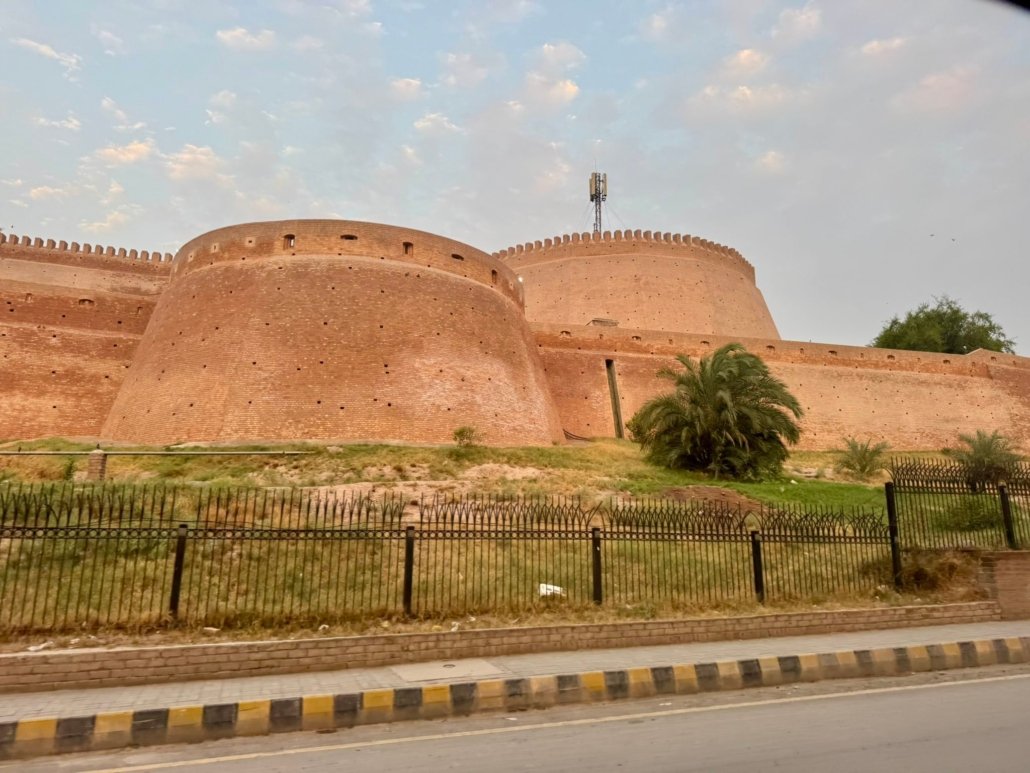
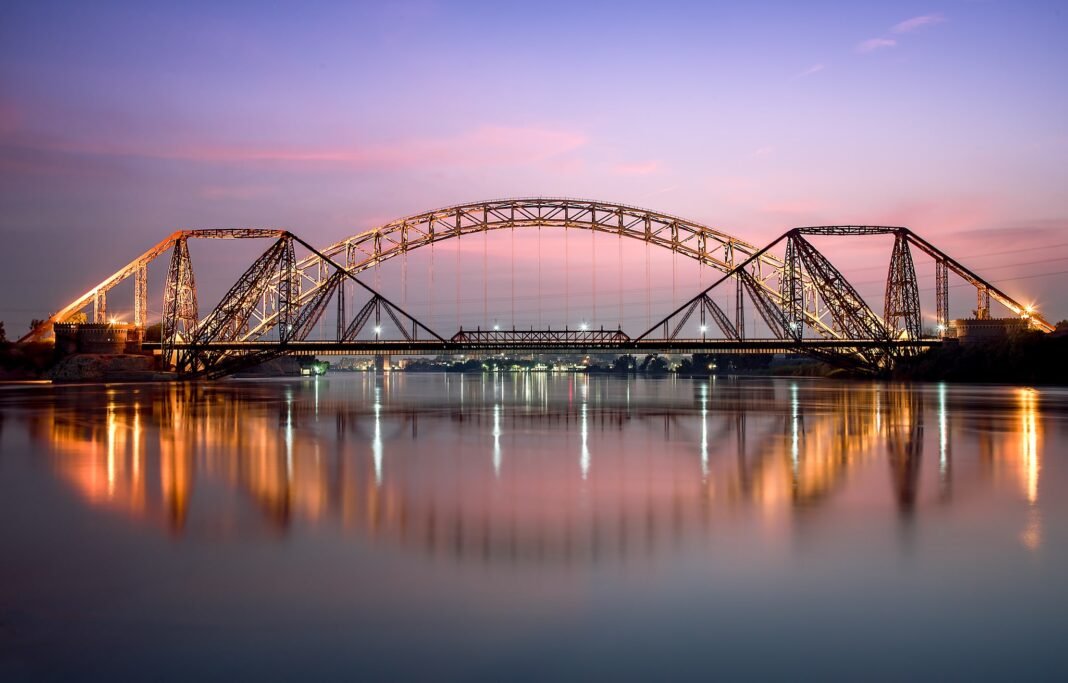
Today the fort is a ruin, and that is part of its appeal. The ground is littered with brick-bats, potsherds and heaps of earth, and broken bastions and semi-circular structures still stand at many places. There is no ticket counter, no restored facade, no crowds. What you get instead is an honest encounter with deep history, set in one of the most photogenic river landscapes in Pakistan — especially at sunset, when the Lansdowne Bridge glows over the water and the old walls of Bakhar catch the last light. Combine it with nearby Sadh Belo, the Sukkur Barrage and the old town of Rohri, and Bakhar makes a strong case for upper Sindh as a heritage destination in its own right.
History of Bakhar Fort
The origins of Bakhar are genuinely ancient, though the exact details are debated among historians. The Chach Nama, the early history of the Arab conquest of Sindh, mentions a fort called Baghrur on the opposite bank of the Indus from Aror, which Muhammad bin Qasim encountered during his campaigns in the early 8th century. The historian Dr. Nabi Bakhsh Baksh Baloch suggested that this Baghrur evolved into the name Bakhar, and that the fort stood on a mid-river island. The Tuhfat al-Kiram, a later Persian chronicle of Sindh, does not mention the town in the era of Raja Dahir, which shows how much of Bakhar’s earliest past remains uncertain.
Later historical texts push the fort’s story back into the Arab period in various ways. Some accounts date a construction or reconstruction of the fort to around 787 CE, during the reign of Caliph Harun al-Rashid, when it was reportedly renamed Farishtah. Others, drawing on the Tarikh-e-Lubb-e-Sindh, place a building phase around 944 to 945 CE. None of these claims rests on firm contemporary evidence, but together they confirm that Bakhar was already a recognised stronghold in the early centuries of Muslim rule in Sindh. The island’s strategic value was obvious to every power that came after.
In the 15th century, the Samma dynasty of Sindh strengthened the fort, and in 1522 the Arghuns substantially rebuilt it. The 16th century brought one of Bakhar’s most dramatic episodes: it was taken by the forces of Sher Shah Suri and renamed Sher Garh, during the years when the Mughal emperor Humayun was a fugitive in Sindh after his defeat. When Humayun’s fortunes returned, Bakhar came under the Mughals, and during Akbar’s reign it served as a regional headquarters, with Mughal governors posted here to control the Indus crossing.
The fort remained a working military site through the Kalhora and Talpur periods. After the British annexed Sindh in 1843 under Sir Charles Napier, Bakhar found an entirely new role in imperial history. In 1889 the British completed the Lansdowne Bridge across the Indus, and its two great spans meet on Bakhar island itself — the island fortress became the engineering pivot of one of the longest cantilever bridges ever built at the time. Today the island still sits at the centre of the Sukkur-Rohri crossing, with the later Ayub Arch Bridge and the great Sukkur Barrage nearby, making this stretch of the Indus a layered museum of river engineering from the Arab age to the present.
Top Things to Do in Bakhar Fort
Walk the Sukkur Riverfront and View the Island
The most rewarding way to experience Bakhar Fort is from the riverfront at Sukkur. From the western bank you get a full view of the island, with the ruined walls rising from the water and the spans of the Lansdowne Bridge framing the scene. Come at sunrise or sunset for the best light; the low sun turns the brick ruins golden and the river becomes a sheet of colour. Bring a camera with a good zoom, because the island itself is best appreciated as a whole landscape from this distance.
See the Lansdowne Bridge and Ayub Arch Bridge
The Lansdowne Bridge, completed in 1889, is one of the great engineering landmarks of British India, and its two cantilever spans meet directly on Bakhar island. Walking near the bridge at Rohri or Sukkur gives you both a marvel of 19th-century steelwork and the finest vantage point over the fort island. A little downstream, the Ayub Arch Bridge carries the railway across the Indus in a single graceful arch. Together with Bakhar, the bridges form a tight cluster of heritage sights you can cover in one riverside walk.
Take a Boat on the Indus
Local boats operate along the Indus near the Sukkur riverfront and around Lab-e-Mehran, and a boat ride gives you the closest moving view of Bakhar island. From the water you can trace the line of the ruined fortifications around the island’s edge and appreciate why this position was so hard to attack. Go in the cooler months, agree on the fare and the route before boarding, and take the ride in the late afternoon when the light is kind.
Explore the Ruins of Aror
A short drive east of Rohri lie the ruins of Aror (Alor), the ancient capital that was once Bakhar’s sister city across the river. Aror was the capital of the region when Alexander’s forces passed through in 326 BCE, and its remains — including old temples and fortification lines — put Bakhar’s story in a much wider frame. The two cities, Bakhar and Aror, watched each other across the Indus for centuries, and visiting both in one day is the best history lesson upper Sindh can offer.
Visit Sadh Belo Island
Just upstream from Bakhar sits another famous island, Sadh Belo, one of the most important Hindu pilgrimage centres in Pakistan. Its temples and shrines draw devotees from across the region. Seeing the two islands together — one a Muslim-era fortress, the other a living Hindu sacred site — tells you a great deal about how the Indus at Sukkur has been a shared and contested sacred landscape for a very long time.
Famous Places In and Around Bakhar Fort
- Sadh Belo: A major Hindu temple island on the Indus, close to Bakhar.
- Sukkur Barrage (Lloyd Barrage): Completed in 1932, one of the largest irrigation works of its age, a landmark of the Indus.
- Lansdowne Bridge (1889): The historic cantilever bridge whose spans meet on Bakhar island.
- Ayub Arch Bridge: The railway arch bridge crossing the Indus near Sukkur.
- Aror (Alor): Ruins of the ancient capital, a few kilometres east of Rohri.
- Lab-e-Mehran: The Sukkur riverside park, good for evening walks and boat rides.
- Rohri: The historic town on the east bank, with old shrines and the Satyan Jo Than area.
- Ghanta Ghar Sukkur: The city’s clock-tower bazaar area, useful for food and shopping.
How to Reach Bakhar Fort
Bakhar Fort sits on its island between Sukkur and Rohri, so reaching the area means reaching Sukkur. From there, the fort is viewed from the riverbanks, the bridges and the water; there is no public ferry to the island itself, and the best experiences are the viewpoints around it. If you are researching how to reach Bakhar Fort, plan for Sukkur as your base and allow half a day for the island, the bridges and the riverfront.
From Karachi: Sukkur is around 470 kilometres from Karachi via the N-5 national highway, a drive of roughly 6 to 7 hours depending on traffic. Daewoo and other bus services run between Karachi and Sukkur through the day and night. Sukkur also has an airport with domestic flights from Karachi and Islamabad, which cuts the journey to about an hour in the air.
From Lahore: The drive from Lahore to Sukkur is around 720 kilometres, mostly on motorways and the N-5, taking roughly 9 to 11 hours. Most travellers from Lahore break the journey or travel overnight by bus. There is no direct commercial flight to Sukkur from Lahore at most times, so Karachi or Islamabad connections, or the road journey, are the practical options.
From Islamabad: Sukkur is around 830 kilometres south of Islamabad, a full day’s drive of roughly 11 to 13 hours via the motorway network and N-5. The fastest option is to fly from Islamabad to Sukkur airport and drive the short distance into the city. Trains on the main Karachi–Peshawar line also stop at Sukkur and Rohri, which makes rail a comfortable alternative from Islamabad, Lahore and Karachi.
Route Details
Step 1: Arrive in Sukkur city by road, rail or air. Sukkur’s airport, bus terminals and railway station are all within a short drive of the riverfront.
Step 2: Head for the Indus riverfront at Sukkur (the Lab-e-Mehran area) for the classic view of Bakhar island, or cross toward Rohri for the view from the east bank and the best angle on the Lansdowne Bridge.
Step 3: Walk the bridge approaches and the riverbank paths for photographs, then arrange a local boat ride to see the island from the water.
Step 4: Continue to Aror’s ruins east of Rohri and Sadh Belo upstream to complete the heritage circuit of the Sukkur reach of the Indus.
Roads in the Sukkur area are generally good year-round, since this is flat desert plain. In summer the heat is the main challenge, not the roads. The N-5 is a busy truck route, so if you are driving yourself, start early, keep to daylight hours and carry water.
Where to Stay in Bakhar Fort
There is no accommodation on Bakhar island itself, so visitors stay in Sukkur or Rohri. Sukkur is a large city with a full range of options. Mid-range city hotels cluster around the main roads and near the railway station, offering air-conditioned rooms that are perfectly comfortable for a night or two. These are the most practical choice for most travellers: they are affordable, close to the riverfront, and used to receiving visitors.
For a step up, look for the better-known branded hotels on the main Sukkur roads, which offer more reliable service, in-house restaurants and secure parking — worth it if you are driving. Budget travellers will find simple guesthouses and lodges near the bus terminals and the old city; they are basic but functional, and the owners can usually arrange local transport. Rohri, across the river, has a smaller selection of simple hotels and is convenient if you want to be close to the bridge viewpoints and the Aror ruins.
If you are combining Bakhar with a wider Sindh tour, note that hotel quality in upper Sindh is modest compared to Lahore or Karachi. Book ahead in winter, when domestic tourism peaks, and confirm that air-conditioning and hot water are working before you commit — in summer, reliable cooling is not a luxury here, it is a necessity.
Where to Eat: Local Foods of Bakhar Fort
Sukkur and Rohri sit in the heart of Sindhi food country, and eating well here is easy and cheap. The signature dishes of the region start with sai bhaji, a slow-cooked mix of spinach, lentils and vegetables that is the soul food of Sindh, usually eaten with rice or bhugga chawal. Dal pakwan — crisp fried flatbread with spiced chana dal — is the classic Sindhi breakfast and is sold at stalls all over Sukkur in the morning. Khori khichri and seyal preparations (meat or vegetables cooked in a thick onion-tomato masala) are other local staples worth seeking out.
Because you are on the Indus, fish is a highlight. Palla, the hilsa-like fish of the Indus, is the most famous catch of the Sukkur reach and is eaten grilled or fried when in season. Freshwater fish from the river, served with lemon and green chillies at the dhabas near the riverfront, makes a fine evening meal. For snacks, the bazaars around Ghanta Ghar sell rabri, falooda and thick lassi, and the region’s date palms mean good fresh and dried dates are everywhere in winter.
A full meal at a local dhaba or mid-range restaurant is budget-friendly, typically costing a few hundred rupees per person. The food streets and bazaars near the Sukkur riverfront and in Rohri are the best places to eat like a local. As everywhere in Pakistan, drink bottled or filtered water, and go easy on street ice in summer.
Weather in Bakhar Fort
Sukkur has a hot desert climate, and Bakhar Fort weather follows it exactly: extremely hot summers, mild winters, and very little rain. Understanding the seasons matters more here than at almost any other heritage site in Pakistan, because the difference between a pleasant visit and a punishing one is simply the month you choose. The island and its viewpoints are entirely outdoors, so heat, sun and the occasional dust storm shape the whole experience.
| Season | Temperature Range | Conditions |
|---|---|---|
| Winter (Dec–Feb) | 8°C to 26°C | Mild, sunny days and cool nights; the most comfortable season for sightseeing. |
| Spring (Mar–Apr) | 17°C to 40°C | Rapidly warming; pleasant in March, hot by late April. |
| Summer (May–Jun) | 31°C to 45°C | Intensely hot and dry; outdoor sightseeing is difficult midday. |
| Monsoon (Jul–Sep) | 29°C to 42°C | Hot and humid with occasional rain; the Indus runs high and fast. |
| Autumn (Oct–Nov) | 21°C to 38°C | Cooling down; dry and increasingly pleasant, especially November. |
The practical rule is simple: visit between October and March. December and January are the sweet spot, with daytime temperatures in the low to mid twenties and almost no rain. Summer highs regularly cross 45°C, and the sun on the riverbank is relentless. If you must travel in summer, plan all outdoor time for early morning or late evening.
Language and Culture of Bakhar Fort
The language of Sukkur and Rohri is Sindhi, spoken by the great majority of the local population, with Urdu widely understood as the lingua franca. You will also hear Saraiki influences, since upper Sindh sits near the linguistic border with southern Punjab. English is understood in hotels and by educated guides, but a few words of Sindhi — even a greeting — are warmly received.
Culturally, this is classic Sindh: deeply hospitable, Sufi-influenced, and proud of a heritage that stretches back to the Indus Valley Civilisation. The region around Sukkur and Rohri is dotted with the shrines of saints, and the annual urs gatherings at nearby shrines are major events in local life. Visitors are treated as guests in the fullest sense; it is common to be offered tea by shopkeepers and strangers alike.
For visitors, the etiquette is straightforward. Dress modestly, especially around religious sites — Sadh Belo and the shrines of Rohri expect covered shoulders and, for women, a headscarf. Ask before photographing people. Friday afternoons are quiet in the bazaars, and during Ramadan the rhythm of the city changes, with most eating places closed in daylight hours. None of this is onerous; it is simply the respectful way to travel in Sindh, and locals will go out of their way to help a polite visitor.
Shopping in Bakhar Fort
Sukkur’s bazaars are the place to shop on a Bakhar Fort trip. The markets around Ghanta Ghar and the old city sell classic Sindhi handicrafts: ajrak (the block-printed shawl that is the cultural emblem of Sindh), embroidered rilli quilts and cushion covers, Sindhi topi caps, and lacquered woodwork. Ajrak in the deep indigo and crimson patterns of the region makes the best souvenir of upper Sindh, and buying from the old bazaars keeps the money with local artisans.
Food shopping is equally rewarding. Sukkur is known for its dates — fresh in season and dried year-round — and the dry-fruit sellers in the main bazaars stock almonds, pistachios and raisins at prices far below the big cities. Spices, henna and traditional sweets are other good buys. There are no major shopping malls clustered around the heritage zone; this is a traditional bazaar city, and that is precisely its charm. Bargaining is expected in the bazaars but not in fixed-price shops; a friendly, unhurried approach gets the best prices.
Travel Tips for Bakhar Fort
Packing Essentials
Sun protection is the single most important thing you will pack: a wide-brimmed hat or cap, sunglasses, sunscreen and a scarf or shawl for dust. Carry a refillable water bottle and keep it filled — dehydration creeps up fast on the riverbank in the warmer months. Comfortable walking shoes with grip matter, because the viewpoints around the bridges and riverfront involve uneven ground. A zoom lens or a phone with good zoom will transform your photographs of the island. In winter, bring a light jacket for cool evenings by the river.
Safety Tips
Sukkur and Rohri are busy working cities and generally safe for tourists who take normal precautions. Keep valuables out of sight, use hotel safes, and avoid isolated stretches of the riverbank after dark. If you take a boat on the Indus, wear the life jacket if one is provided, agree the fare in advance, and do not overload small boats. The island fort itself is a ruin with uneven masonry and no safety railings, so if you ever get close to it, watch your footing. As everywhere in Pakistan, keep your CNIC or passport with you.
Money & Connectivity
ATMs are plentiful in Sukkur city, and most mid-range hotels and larger restaurants accept cards, but the bazaars, dhabas and boatmen are cash-only — carry enough rupees for the day. Mobile signals from all major networks (Jazz, Telenor, Zong, Ufone) are strong across Sukkur and Rohri, and 4G data works well. You will have no trouble staying connected while you explore the riverfront and the island viewpoints.
Best Time to Visit Bakhar Fort
Winter (December to February) — The Best Season
This is the ideal window for a Bakhar Fort trip. Daytime temperatures sit between 20°C and 26°C, the skies are clear, the river light is beautiful, and you can comfortably spend hours on the riverfront, the bridges and the road to Aror. This is also when dates are in season and the bazaars are at their liveliest. Book hotels ahead, because this is peak domestic travel season in Sindh.
Spring (March to April) — Good, Then Hot
March is still pleasant, with warm days and cool mornings that suit sightseeing. By April the heat builds quickly toward 40°C, and midday outings become uncomfortable. If you travel in this shoulder season, plan your outdoor time for the early morning and late afternoon, and rest through the middle of the day.
Summer and Monsoon (May to September) — Avoid If Possible
Sukkur in summer is one of the hottest urban areas in Pakistan, with highs above 45°C, and the monsoon months add humidity without much relief. The Indus runs high and fast, which is dramatic to see but makes boat rides less pleasant. Only the most determined heritage travellers should attempt this season, and only with a dawn-and-dusk schedule.
Autumn (October to November) — The Second-Best Season
October is still warm but drying out, and November is genuinely pleasant — clear skies, comfortable temperatures and the river at a photogenic level. For travellers who want good weather without the peak-season crowds of deep winter, November is arguably the smartest month of all for this Bakhar Fort travel guide’s recommended trip.
Final Thoughts
Bakhar Fort will not impress you the way a restored palace does. There is no grand gate to walk through, no museum label to read, no souvenir shop. What it offers is rarer: a place where the whole landscape is the monument — an island that is a fortress, a river that is a highway of empires, and bridges that turned a medieval stronghold into a pivot of modern engineering. For travellers who like their history unvarnished and their scenery with a story, that is more than enough.
Pair it with the right neighbours and Bakhar becomes the anchor of a fine upper-Sindh circuit: Sadh Belo for living faith, the Lansdowne Bridge for Victorian engineering, the Sukkur Barrage for the modern Indus, and Aror for the deep ancient past. Come in winter, take your time on the riverfront, eat the local food, and let the Indus do what it has done for a thousand years — carry the whole history of Sindh past a single small island. For more ideas across the country, browse the Explore Pakistan section, and if mountains are calling too, our Malam Jabba travel guide covers one of the finest hill destinations in the north.
FAQs
Where is Bakhar Fort located?
Bakhar Fort is on an island in the Indus River between the cities of Sukkur and Rohri in Sukkur District, Sindh, Pakistan. It is best viewed from the Sukkur and Rohri riverbanks and from the historic bridges crossing the river beside it.
What is the best time to visit Bakhar Fort?
October to March is the best time, with December to February offering the most comfortable weather — mild sunny days around 20–26°C. Avoid May to September, when Sukkur’s heat regularly exceeds 40°C.
How do I reach Bakhar Fort from Karachi?
Sukkur is around 470 km from Karachi via the N-5 highway, about 6–7 hours by road, with regular bus services and domestic flights to Sukkur airport. From Sukkur city, the fort island is a short drive to the riverfront.
Can you go inside Bakhar Fort?
The fort is a ruin on a mid-river island with no public ferry service or ticketed entry. Visitors experience it from the Sukkur and Rohri riverbanks, the bridge viewpoints and boat rides on the Indus, which together give the full picture.
Is Bakhar Fort safe for families?
Yes. Viewing the fort from the riverfront and bridges is a relaxed family outing, and the Sukkur riverside areas are popular with local families in the evenings. Take normal precautions with children near the water and on boats.
Where should I stay near Bakhar Fort?
Stay in Sukkur city, which has mid-range hotels, branded options on the main roads and budget guesthouses. Rohri has simpler hotels. Sukkur is the better base for food, transport and onward travel.
What local food should I try near Bakhar Fort?
Try sai bhaji, dal pakwan for breakfast, khori khichri, and the Indus river fish — especially palla when in season. Finish with rabri, falooda or lassi from the Sukkur bazaars, and buy local dates.
What else can I see near Bakhar Fort?
Combine it with Sadh Belo island, the Lansdowne and Ayub bridges, the Sukkur Barrage, the ruins of Aror east of Rohri, and the Lab-e-Mehran riverside park — all within a short drive of each other.