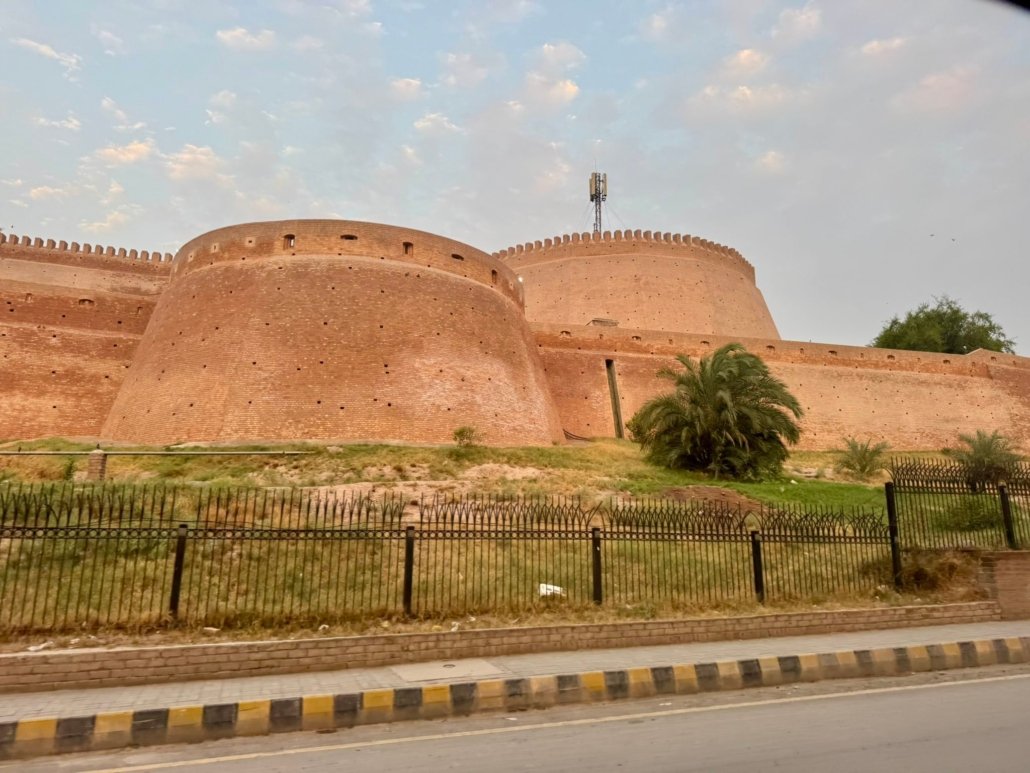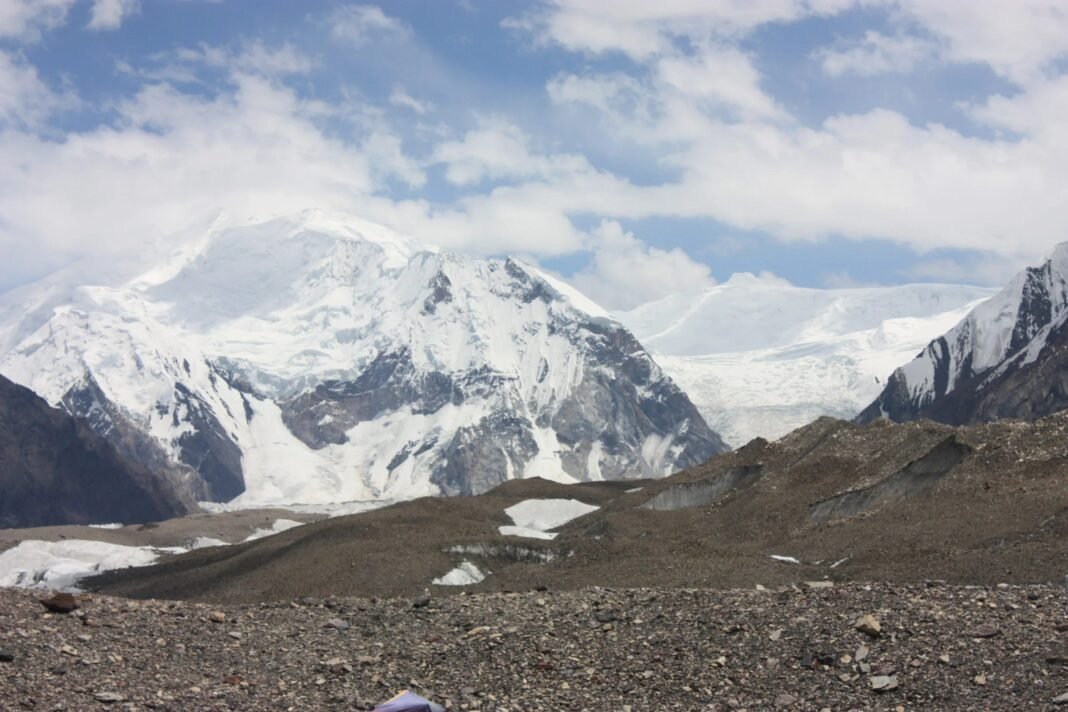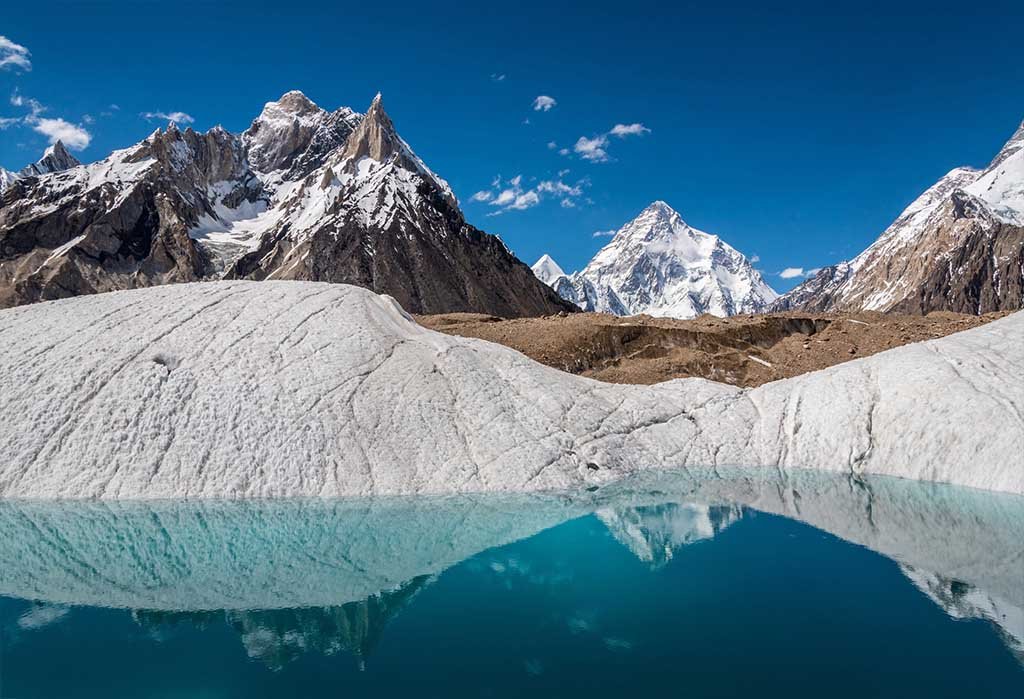
Few places on earth concentrate as much mountain grandeur into one valley as the Baltoro Glacier. Stretching 63 kilometres through the Karakoram range of Gilgit-Baltistan, this is one of the longest glaciers outside the polar regions, and it is the road to K2, the second highest mountain on the planet. Four of the world’s fourteen 8,000-metre peaks rise within 20 kilometres of its ice. This Baltoro Glacier travel guide covers everything you need: the glacier’s history, the trek to Concordia and K2 Base Camp, permits, the best time to go, and how to reach it from Skardu.
Quick Facts
- Location: Shigar District, Gilgit-Baltistan, Pakistan, in the Karakoram range
- Length: 63 km, among the longest glaciers outside the polar regions; area of about 1,500 square kilometres
- Altitude: The confluence of Concordia sits at around 4,600 metres; the trek reaches about 5,100 metres at K2 Base Camp
- Famous For: The trek to Concordia, the “Throne Room of the Mountain Gods”; the route to K2 Base Camp; four 8,000-metre peaks in one panorama
- Nearest City: Skardu, the gateway town of Baltistan
- Accessibility: Reached only on foot via the trek from Askole village; flights and road routes connect Islamabad to Skardu
- Known Landmarks: Concordia, K2 Base Camp, the Trango Towers, Uli Biaho, Muztagh Tower, Mitre Peak
- Best For: Experienced trekkers, mountaineers, mountain photographers, and serious adventure travellers
Why Visit Baltoro Glacier
The Baltoro Glacier offers the densest collection of great mountains on earth. Nowhere else can a trekker stand in one place and see K2 at 8,611 metres, Broad Peak at 8,047 metres, and the Gasherbrum massif, all within a short distance of one another. The confluence called Concordia, where the Baltoro meets the Godwin-Austen Glacier, has been described by generations of climbers as the throne room of the mountain gods, and the description is not an exaggeration. The ice spreads out in a vast amphitheatre ringed by rock walls and snow domes that seem to belong to another planet.
The journey itself is part of the reward. The trek begins in Askole, the last village of the Braldu Valley, and follows a trail used for over a century by the great expeditions of mountaineering history. You walk past the granite towers of the lower Baltoro, the Trango Towers, Uli Biaho, and the Cathedrals, sheer rock walls that draw the world’s best climbers. Higher up, the rock yields to ice giants: Masherbrum, the Muztagh Tower, Chogolisa, and finally K2 itself. Every day of the trek brings a new set of peaks into view.
The Baltoro is also Pakistan’s most important trekking destination by every measure. Nearly 70 per cent of the trekking and mountaineering permits issued in the country each year are for the Baltoro region. The infrastructure around the trek reflects this: licensed guides, experienced Balti porters, and well-established camps from Askole to Concordia. For a first serious expedition-style trek in the Karakoram, there is no better-known or better-supported route.
Finally, this is a trek into living history. The same glacier was the highway for the Duke of the Abruzzi’s 1909 expedition, for the Italian team that first climbed K2 in 1954, and for every great Karakoram expedition since. Walking the Baltoro is walking in the footsteps of the pioneers of Himalayan mountaineering, and that sense of continuity is something no other trek in Pakistan can match.
History of Baltoro Glacier
In the Balti language, the glacier’s name, “Baltoro gangs,” is said to mean “bone breaker,” a name that speaks to the harshness of this ice world long before modern trekkers arrived. For the Balti people of the Shigar and Braldu valleys, the glacier was a boundary and a landmark rather than a destination: a vast river of ice that fed the Braldo and Shigar rivers, and through them the Indus, on which the agriculture of the valleys depended. Porters from the villages of the Braldu Valley have carried loads on this route for generations, and the knowledge of safe paths across the crevassed ice was passed down within families.
The glacier entered the world’s imagination in the early 20th century, when European expeditions began mapping the Karakoram. The route up the Baltoro to Concordia became the main access for attempts on the highest peaks of the range. In 1909, Luigi Amedeo of Savoy, the Duke of the Abruzzi, led a major expedition to the Baltoro with the aim of climbing K2. The expedition did not reach the summit, but it identified the route along K2’s southeast spur, afterwards known as the Abruzzi Spur, and the expedition’s photographer, Vittorio Sella, took the first invaluable photographs of the glacier and its peaks, creating a visual record against which a century of change could later be measured.
The great prize, K2, fell in 1954, when the Italian expedition led by Ardito Desio put Achille Compagnoni and Lino Lacedelli on the summit on 31 July. Every subsequent landmark of Karakoram climbing, from the first ascents of the Gasherbrums and Broad Peak in the 1950s to the winter ascents of recent decades, began with the long walk up the Baltoro. For a long time the trek from Skardu to Concordia took the better part of three weeks; the completion of the road up the Braldu Valley to Thungol in 1992 and to Askole in 1993 shortened the approach dramatically, and today trekkers cover the 72 kilometres from Askole to Concordia in about eight days.
Science has also been at work on the ice. Observations between 2001 and 2011 recorded visible changes in the glacier, especially near Concordia, where the Baltoro meets the Godwin-Austen Glacier at about 4,600 metres. Research indicated that the glacier was not simply retreating but experiencing surges, shifting and flowing into neighbouring glaciers. Today the Baltoro remains one of the most studied glaciers of the Karakoram, both as a water tower for northern Pakistan and as a barometer of a changing climate.
Top Things to Do in Baltoro Glacier
Trek to Concordia
The classic Baltoro experience is the trek from Askole to Concordia, the great confluence where the Baltoro and Godwin-Austen glaciers meet. The walk takes around eight days one way and covers about 72 kilometres. Only two of the established camp sites, Goro II and Concordia, are actually on the glacier itself, and the travel is nontechnical by Karakoram standards. What makes the trek unforgettable is the procession of peaks: the granite towers of the lower Baltoro give way above Concordia to the snow giants, K2, Broad Peak, and the Gasherbrums, all visible from a single campsite.
Visit K2 Base Camp
From Concordia, most trekkers continue up the Godwin-Austen Glacier to K2 Base Camp, at around 5,100 metres, and on to the Gilkey Memorial, the stone cairn that honours climbers lost on the mountain. Standing beneath the great pyramid of K2, the second highest mountain on earth at 8,611 metres, is the emotional high point of the journey. The base camp area comes alive in the climbing season with expedition tents from around the world.
Photograph the Trango Towers and Granite Walls
The lower Baltoro is famous for its granite towers: the Trango Towers, Uli Biaho, and the Cathedrals, some of the biggest rock walls on the planet. These sheer faces rise thousands of metres directly from the glacier and draw elite rock climbers from every continent. For photographers, the camps at Paiyu and Urdukas offer the classic views, especially at sunrise and sunset when the towers catch the light.
Walk the Glacier Moraines
The Baltoro is a debris-covered glacier, and much of the walking is on its rocky moraine surface, weaving between ice pinnacles, meltwater streams, and small glacial lakes. The moving ice has carved striations into the surrounding rocks and formed depressions that hold turquoise lakes. Take time to notice this strange landscape: it is a world of grey rock and white ice that shifts a little every season.
Cross the Gondogoro La (Experienced Trekkers Only)
For fit and experienced trekkers, the circuit can be extended over the Gondogoro La, a high pass of over 5,500 metres that connects the upper Baltoro with the Hushe Valley. The crossing involves fixed ropes and early-morning starts on snow, and it is usually done with an experienced outfitter. The reward is a completely different panorama and a spectacular descent into the green Hushe Valley.
Famous Places In and Around Baltoro Glacier
- Concordia: The great confluence of the Baltoro and Godwin-Austen glaciers, the centrepiece of the trek.
- K2 (8,611 m): The world’s second highest mountain, the ultimate sight of the journey.
- Broad Peak (8,047 m): The world’s 12th highest peak, rising above the upper glacier.
- Gasherbrum I (8,080 m) and Gasherbrum II (8,035 m): Two more 8,000-metre giants visible from Concordia.
- Trango Towers: The famous granite towers of the lower Baltoro, among the biggest rock walls on earth.
- Uli Biaho (6,417 m): A striking granite tower above the lower glacier.
- Masherbrum/K1 (7,821 m): The great peak whose Yermandendu Glacier feeds the Baltoro.
- Muztagh Tower (7,273 m): The elegant spire photographed by Vittorio Sella in 1909.
- Mitre Peak (6,010 m): A shapely pyramid near Concordia.
- Chogolisa (7,665 m): Source of the Vigne Glacier, visible from the upper Baltoro.
- Askole: The last village of the Braldu Valley and the start of the trek.
- Skardu: The gateway town of Baltistan, with its bazaars, forts, and lakes.
How to Reach Baltoro Glacier
The glacier itself is reached only on foot, but the journey starts in Skardu, the main town of Baltistan and the gateway to the Karakoram. From Skardu, jeeps cover the rough road to Askole, the last settlement before the glacier, and the trek begins there. A trekking permit is required, since the Baltoro lies in a restricted zone, and the trek must be done with a licensed guide and a registered tour operator. There is no public transport to Askole.
From Islamabad: The most common route is the flight from Islamabad to Skardu, which takes about an hour but is subject to weather and can be cancelled in bad conditions. By road, Islamabad to Skardu is roughly 630 km via the Karakoram Highway and the Jaglot-Skardu road, a drive of 10 to 12 hours or more, usually broken with a night stop. From Skardu, the jeep road to Askole is about 120 km and takes a full day over rough mountain track.
From Lahore: Travel to Islamabad first, about 375 km on the M-2 motorway, roughly 4 to 5 hours, and then continue to Skardu by air or road as above. Some travellers fly from Lahore to Islamabad and connect to the Skardu flight.
From Karachi: The practical route is a flight from Karachi to Islamabad, then the onward flight or road journey to Skardu. Karachi to Skardu by road is a very long multi-day journey and is rarely attempted for this trek.
Nearest airport: Skardu International Airport, with scheduled flights from Islamabad. Transport options: flights, private cars and tour vans on the KKH and Jaglot-Skardu road, and 4×4 jeeps from Skardu to Askole. The jeep road to Askole is rough and can be affected by landslides, especially early in the season.
Route Details
The standard itinerary runs like this. Fly or drive from Islamabad to Skardu and spend a day or two arranging supplies and acclimatising. Drive by jeep from Skardu up the Braldu Valley to Askole, the trailhead. The classic trek stages are Askole to Jhola, Jhola to Paiyu (with its views of Paiyu Peak), Paiyu to Urdukas, Urdukas to Goro I, Goro I to Goro II (on the glacier), and Goro II to Concordia. From Concordia, continue to K2 Base Camp and back, then retrace the route to Askole. The full round trip, including rest and contingency days, typically takes 14 to 18 days. The restricted-zone trekking permit, costing around US$50, and the licensed guide are arranged through a registered tour operator before the trek.
Where to Stay in Baltoro Glacier
There are no hotels on the glacier itself: accommodation on the trek is entirely in expedition tents at established camps. The main camps are Jhola, Paiyu, Urdukas, Goro I, Goro II, and Concordia, all with flat tent sites near water. Trekkers bring full camping equipment, either their own or supplied by their tour operator, along with a cook and kitchen tent. Askole, the trailhead village, also has basic camping arrangements for the nights before and after the trek.
Most visitors spend their nights before and after the trek in Skardu, where the options are far more comfortable. Skardu has a good range of mid-range hotels and guesthouses in and around the town, many with views of the Indus and the surrounding peaks. Two well-known properties in the wider gateway area are the Serena Shigar Fort, a restored 17th-century fort in Shigar Valley run as a heritage hotel, and the Shangrila Resort at Lower Kachura Lake, famous for its lakeside setting. Book accommodation in Skardu in advance during the June to September trekking season, when demand is highest.
Where to Eat: Local Foods of Baltoro Glacier
On the trek itself, meals are prepared by expedition cooks, usually a mix of Pakistani dishes and simple trekking food: lentils, rice, chapattis, eggs, and soups. Fresh supplies come up from Skardu, so menus are hearty rather than refined, and trekkers with dietary needs should brief their operator in advance.
In Skardu and the valleys, the cuisine is Balti, shaped by the region’s Tibetan heritage and its harsh climate. The signature dishes include prapu (also spelled parappu), hand-made wheat noodles served with a rich sauce of crushed walnuts and apricot oil; mamtu, steamed dumplings filled with minced meat; zaan, a warming porridge of flour cooked in butter; and hoilo garma, a nourishing dish of boiled greens with flatbread. Dried apricots, known locally as pharing, along with almonds and walnuts, are the classic trail snacks of Baltistan, and the local apricot oil is used in almost everything. To drink, try namkeen chai, the salty pink tea of the mountains, or tumoro, a caffeine-free herbal tea brewed from a mountain herb. Meals in Skardu’s restaurants are generally budget-friendly by Pakistani standards.
Weather in Baltoro Glacier
The Baltoro is a high-altitude environment where weather changes fast and temperatures fall sharply with height. The trekking season, June to September, is the only realistic window: the days at the lower camps are warm, but nights at Concordia and above are always below freezing, and snow can fall at any time. Outside these months the glacier is snowbound and the approach roads are closed. The table below gives approximate conditions at trekking altitudes.
| Season | Temperature Range | Conditions |
|---|---|---|
| Winter (Dec-Feb) | -25°C to -5°C | Extreme cold, deep snow, glacier impassable; no trekking |
| Spring (Mar-May) | -10°C to 10°C | Heavy snow at altitude; approach roads may still be blocked; not a trekking season |
| Summer (Jun-Sep) | -5°C to 20°C | Best conditions; warm days at lower camps, freezing nights at Concordia; occasional snow and cloud |
| Autumn (Oct-Nov) | -15°C to 5°C | Rapidly cooling; early snow closes the route by late October |
Language and Culture of Baltoro Glacier
The valleys around the Baltoro are home to the Balti people, an ethnic group of Tibetan origin who speak Balti, a language related to Tibetan, alongside Urdu. Most travellers will manage with Urdu and basic English in Skardu, but on the trail the porters and guides speak Balti among themselves, and learning a few greetings is always appreciated.
The Baltis are Muslim, with Shia, Noorbakhsh Sufi, and Sunni communities, and the culture places a high value on hospitality to guests. Visitors should dress modestly, especially in villages, ask before photographing people, and show respect for religious practices. The porters of the Braldu Valley are the backbone of every Baltoro expedition, and their knowledge of the glacier, passed down through generations, is one of the great intangible treasures of the region. Treat porters fairly, follow your guide’s advice on the ice, and leave camps cleaner than you found them.
Shopping in Baltoro Glacier
There is no shopping on the trek, so Skardu’s bazaars are the place to buy supplies and souvenirs. Baltistan’s most famous products come from its orchards: dried apricots (pharing), apricot oil, almonds, and walnuts, all excellent quality and far cheaper than in the cities. The bazaar also sells pashmina and woollen shawls, traditional Balti caps, hand-woven carpets and rugs, wood carvings, and gemstones from the region’s mines. Buy dried fruit and nuts before leaving Skardu: they are the perfect high-energy food for the trail.
Travel Tips for Baltoro Glacier
Packing Essentials
Pack for serious mountain conditions: a four-season sleeping bag, insulated jacket, waterproof shell, warm layers, sturdy broken-in trekking boots, gaiters, sunglasses and high-SPF sunscreen (the glare off the ice is intense), a headlamp, trekking poles, and a good daypack. Bring a water purification method, personal medicines, and blister treatment. Most heavy group gear, tents, and food are carried by the expedition, but confirm exactly what your operator provides.
Safety Tips
The Baltoro trek is demanding and remote: the nearest real medical help is days away. Acclimatise properly, drink plenty of water, and never wander off the marked route on the glacier, where hidden crevasses are a real danger. Always walk roped or with your guide on the ice. Weather can close in quickly, so build contingency days into your schedule. Travel insurance that covers helicopter evacuation at high altitude is strongly recommended, and the trek should only be attempted with a licensed guide and registered operator.
Money & Connectivity
Carry all the cash you will need in Pakistani rupees before leaving Skardu: there are no ATMs and no shops beyond Askole, and porters and staff are paid in cash. Mobile signals are patchy on the trek; the SCO network has the best coverage in Gilgit-Baltistan, but expect to be offline for most of the expedition. Inform family of your itinerary and expected return date, and consider a satellite communicator for emergencies.
Best Time to Visit Baltoro Glacier
Summer (June to September)
This is the trekking season and the only time to visit. June brings long days and the first stable weather, though snow can linger on the upper glacier. July and August are the peak months: the warmest temperatures, the clearest views of K2 and the 8,000-metre peaks, and the full bustle of the climbing season at base camp. September is quieter, with crisp air and golden light, but colder nights and a higher chance of early snow.
Winter (December to February)
The glacier is in deep winter: extreme cold, heavy snow, and no trekking infrastructure. Only highly specialised winter expeditions attempt the region, and casual travel is not possible.
Spring (March to May)
The valleys bloom with apricot and cherry blossom in April and May, which is a wonderful time to visit Skardu itself, but the Baltoro trek is not yet open: the approach roads and the glacier remain snowbound.
Autumn (October to November)
October can offer clear skies and autumn colours in the valleys, but the trekking season ends as temperatures plunge and snow closes the high camps. By November the route is shut for winter.
Final Thoughts
The Baltoro Glacier is not a casual sightseeing trip; it is a genuine expedition into the heart of the Karakoram, and it rewards the effort many times over. To stand at Concordia, with K2, Broad Peak, and the Gasherbrums rising around you, is one of the great experiences of mountain travel anywhere in the world. The trek demands fitness, preparation, and respect for the altitude, but the infrastructure of guides, porters, and camps makes it achievable for any determined trekker.
Go with a registered operator, give yourself enough days, and take the journey slowly. The Baltoro has been the highway of Karakoram exploration for over a century, from the Duke of the Abruzzi’s expedition to the first ascent of K2, and walking it connects you to that remarkable history. For more ideas on exploring Pakistan’s mountains, see our Explore Pakistan section, our Hunza Valley guide, and our Malam Jabba guide.
FAQs
Where is the Baltoro Glacier located?
The Baltoro Glacier is in Shigar District, Gilgit-Baltistan, Pakistan, in the Karakoram range. It is reached by trekking from Askole village, with Skardu as the gateway town.
How long is the Baltoro Glacier trek?
The glacier itself is 63 km long. The classic trek from Askole to Concordia covers about 72 km one way and takes around 8 days; the full round trip with K2 Base Camp typically takes 14 to 18 days.
What is the best time to visit the Baltoro Glacier?
June to September is the trekking season. July and August offer the most stable weather, while June and September are quieter with slightly more variable conditions.
How do I reach the Baltoro Glacier from Islamabad?
Fly or drive from Islamabad to Skardu (about an hour by air, 10 to 12 hours by road), then take a jeep from Skardu to Askole, about 120 km of rough road, where the trek begins.
Do I need a permit to trek the Baltoro Glacier?
Yes. The Baltoro is a restricted zone and requires a trekking permit, costing around US$50, plus a licensed guide, arranged through a registered tour operator.
Is the Baltoro Glacier trek safe for beginners?
It is a demanding, high-altitude trek best suited to fit and experienced trekkers. It is nontechnical but remote, with real objective hazards on the glacier, so proper preparation and a good operator are essential.
Can families visit the Baltoro Glacier?
The full trek is not suitable for young children or casual tourists, but families can enjoy Skardu and the lower valleys, and fit teenagers with trekking experience sometimes join the lower stages.
What should I eat and where can I stay on the trek?
Accommodation is in expedition tents at established camps, with meals cooked by expedition staff. Before and after the trek, Skardu offers hotels and guesthouses, and the local Balti cuisine, especially noodle dishes like prapu and dried apricots, is worth trying.