Quick Facts
- Location: Alongside the Grand Trunk Road in Lahore, Punjab — east of the Walled City, across the road from the University of Engineering and Technology.
- Built: Around 1641 CE, in the Mughal era during the reign of Shah Jahan.
- Famous For: Its unsolved identity — three competing traditions argue over who lies buried here — and its evocative, crumbling Mughal architecture with scattered tilework.
- Nearest City: It is inside Lahore itself, minutes from the Walled City’s eastern edge.
- Accessibility: Easily reached by car, rickshaw, or ride-hailing from anywhere in Lahore; best combined with a Walled City heritage day.
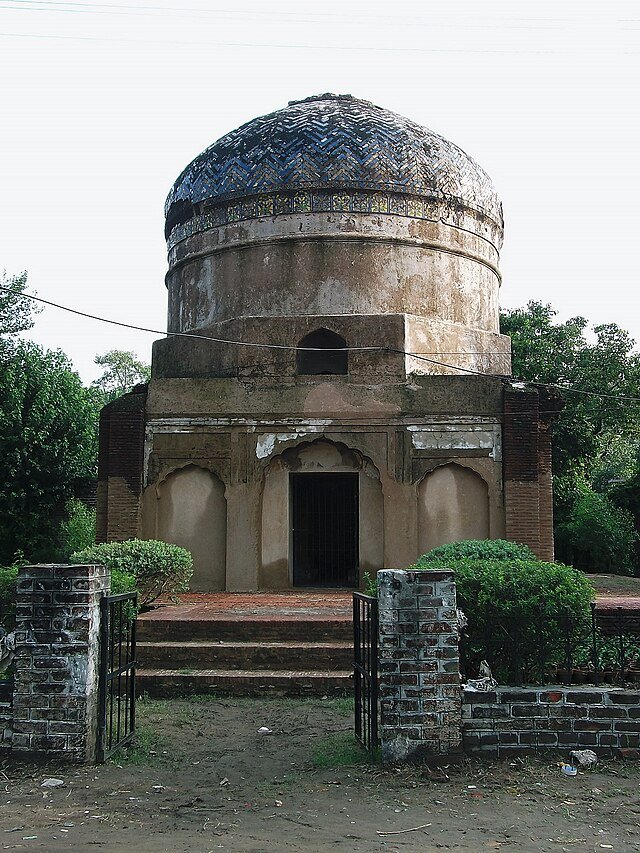
- Known Landmarks: The domed tomb chamber with its colored tile remnants, ruined arches, and the brick-outlined graves inside.
- Best For: Heritage hunters, Mughal history buffs, photographers of atmospheric ruins, and travelers who love a good historical mystery.
Why Visit Budhu ka Awa Monument
Lahore does not hide its history — it stacks it in plain sight. Along the Grand Trunk Road, in the middle of one of the busiest corridors in Pakistan, stands a small domed tomb that almost everyone drives past and almost no one stops to see. That is exactly why you should. Budhu ka Awa — “Buddhu’s kiln” — is one of Lahore’s most intriguing forgotten monuments: a 17th-century tomb wrapped in not one but three origin stories, none of them fully proven, all of them fascinating.
Here is the mystery in brief. One tradition says the tomb belongs to Buddhu, son of Suddhu — a local brick-maker who supplied bricks for Shah Jahan’s royal buildings in Lahore and grew rich on the Mughal building boom. Another, backed by historians such as Syad Muhammad Latif, holds that the tomb was actually built for the wife of Khan-e-Dauran Bahadur Nusrat Jang, a noble (amir) of the Mughal court, who was himself buried here after his death in 1643. A third tradition attributes it to Sheikh Abdul Haq Majzub, a disciple of the great Sufi saint Hazrat Mian Mir, with the kiln-owner Buddhu as the repentant devotee who built the shrine. Some Sikhs, meanwhile, regard the structure as a gurdwara associated with Buddhu. Four centuries later, the rough brick outlines of graves inside the chamber still will not tell us whose they are.
That uncertainty is the monument’s magic. Lahore’s grand Mughal sites — the Fort, the Badshahi Mosque, the Shalimar Gardens — tell you exactly who built them and why. Budhu ka Awa tells you nothing for certain, and in that silence your imagination does the work. The scattered colored tiles, the ruined arches, the dome rising over the GT Road traffic: it is a poem of a building, and it rewards the traveler who slows down.
This is a perfect stop for heritage lovers already exploring Lahore, for photographers chasing atmospheric Mughal ruins without the crowds, and for anyone compiling the city’s lesser-known Mughal trail. It takes less than an hour, costs nothing, and gives you one of the best dinner-party stories in Pakistani heritage: the tomb of the brick-maker — or the nobleman’s wife — or the saint.
History of Budhu ka Awa Monument
Budhu ka Awa (also written Buddhu’s Tomb, Buddhu kā Muqbara) dates to around 1641 CE, squarely in the reign of the Mughal emperor Shah Jahan — the great builder of the Taj Mahal and, closer to home, of much of Mughal Lahore. Like other Mughal funerary monuments, it originally stood in the middle of a grand garden, in keeping with the dynasty’s garden-tomb tradition. That garden has long since vanished beneath the modern city.
The most colorful tradition names the tomb for Buddhu, son of Suddhu — a Lahore brick-maker whose kilns (awa) supplied bricks for several royal buildings during Shah Jahan’s construction spree in the city. The story captures a real historical truth: the Mughal building boom made fortunes for the artisans and suppliers behind it, and a rich brick-maker commissioning his own domed tomb is entirely plausible. The name “Buddhu’s kiln” stuck to the monument itself.
The scholarly counter-argument comes from historians such as Syad Muhammad Latif, who suggested the tomb was actually built for the wife of Khan-e-Dauran Bahadur Nusrat Jang, an amir of the Mughal royal court. The amir himself died in 1643 and, by this account, was buried in the same tomb. A third tradition, preserved in local devotional accounts, attributes the tomb to Sheikh Abdul Haq Majzub — a disciple of the revered Sufi saint Hazrat Mian Mir (also called Bala Pir Sarkar) — telling how the kiln-owner Buddhu, after a clash with the saint, repented, became his devotee, and raised the tomb over the saint’s grave. Some Sikhs regard the site as a gurdwara built by Buddhu.
The historical record offers one more verified episode: the site was used by Prince Sher Singh as his army’s headquarters during his invasion of Lahore, placing the monument at the center of 19th-century Sikh-era military history. Since then, time and neglect have done their damage. Large portions of the structure have collapsed through repeated calamities, the original graves inside were destroyed and are now marked only by rough brick outlines, and the tomb’s original tile embellishments have largely succumbed to the elements or lie buried under later layers of plaster. The monument is not currently protected under heritage legislation, and conservationists have long called for its restoration. What survives — the dome, the arches, the scattered tiles — is all the more precious for its fragility.
Top Things to Do in Budhu ka Awa Monument
Study the Tomb Chamber and Its Tilework
Step inside the square chamber and look up: the dome, the arches, and the scattered colored tiles are the monument’s surviving glories. The tile fragments — blues and greens typical of Mughal decoration — are all that remains of what was once a richly embellished surface. Take your time; the chamber is small and the details repay close looking.
Read the Graves That Won’t Name Themselves
Inside, rough brick outlines mark where the original graves stood before they were destroyed. Stand there and run through the three traditions — the brick-maker, the nobleman’s wife, the saint — and decide which story you believe. Few heritage sites in Pakistan invite this kind of personal verdict.
Photograph the Ruined Arches
The ruined arches framing the tomb, with the dome rising behind them, make for moody, beautiful photographs — especially in the soft light of early morning or late afternoon. The contrast of the 17th-century brickwork against the modern GT Road is a study in Lahore’s layered time.
Walk the Grand Trunk Road Frontage
The tomb sits right on one of history’s great highways — the Grand Trunk Road that has carried armies, emperors, and traders for centuries. Standing at the monument’s gate, you are standing on a road that Sher Shah Suri formalized and the Mughals, Sikhs, and British all marched along.
Combine It with Lahore’s Mughal Trail
Budhu ka Awa works best as one stop in a full heritage day. Pair it with the heavyweight sites nearby and you will see both faces of Mughal Lahore in a single outing: the imperial monuments and the forgotten ones.
Famous Places In and Around Budhu ka Awa Monument
- Lahore Fort & Badshahi Mosque — the twin giants of Mughal Lahore, a short drive west into the Walled City.
- Shalimar Gardens — Shah Jahan’s paradise garden, on the same GT Road axis.
- Minar-e-Pakistan & Greater Iqbal Park — the national monument in its landscaped park.
- Tomb of Dai Anga (Gulabi Bagh) — another lesser-known Mughal tomb, for those building a full “forgotten Lahore” itinerary.
- Anarkali Bazaar — one of South Asia’s oldest markets, perfect for an evening stroll after sightseeing.
- Fort Road Food Street — dinner with a view of the Badshahi Mosque, the classic end to a Lahore heritage day.
How to Reach Budhu ka Awa Monument
The monument’s greatest practical virtue is that it sits inside Lahore, on the Grand Trunk Road east of the Walled City, directly across from the University of Engineering and Technology. Any rickshaw, taxi, or ride-hailing driver in Lahore can find it — ask for “Buddhu ka Awa” or “Buddhu’s Tomb” near UET on GT Road.
From Islamabad: Take the M-2 motorway south to Lahore — about 375 kilometers, roughly four to five hours. From the motorway terminus, cross the city to GT Road (30–45 minutes depending on traffic).
From Lahore (within the city): From the Walled City or Mall Road area it is a 15–25 minute drive east along GT Road. Metrobus and local transport serve the GT Road corridor, but a ride-hailing car is the most comfortable option for a heritage stop.
From Karachi: Fly to Lahore (about two hours) — Allama Iqbal International Airport connects to the city by road in 30–45 minutes. The road journey from Karachi is roughly 1,200 kilometers and best done by air.
Nearest airport: Allama Iqbal International Airport, Lahore, with frequent domestic flights from Islamabad, Karachi, and other cities.
Road conditions and transport: You are on city roads the entire way — paved, busy, and best navigated outside rush hours (8–10 AM and 5–8 PM). For a full day covering Budhu ka Awa plus the Fort, Badshahi Mosque, and Shalimar Gardens, hiring a car with a driver for the day is the most relaxed option; expect heavy but manageable traffic between sites.
Route Details
Half-day “forgotten and famous” Lahore heritage route: (1) start at Budhu ka Awa on GT Road in the morning light — 45 minutes at the tomb; (2) drive west into the Walled City for the Lahore Fort and Badshahi Mosque (2–3 hours); (3) lunch at Fort Road Food Street; (4) afternoon at Shalimar Gardens back along the GT Road axis; (5) evening wander through Anarkali Bazaar. The whole circuit stays within a few kilometers and shows you imperial Lahore and hidden Lahore in one day.
Where to Stay in Budhu ka Awa Monument
Since the monument is inside Lahore, you have the entire city’s accommodation to choose from. Luxury travelers can pick from the five-star hotels along Mall Road and the Canal area, with pools, fine dining, and full services. Mid-range hotels and business guesthouses cluster around Gulberg, Model Town, and the DHA commercial areas, offering comfortable rooms at moderate prices. Budget travelers will find plenty of simple hotels and hostels near the Railway Station and in the older city — basic but well-located for heritage sightseeing. For atmosphere, consider a heritage-style guesthouse in the old city; for convenience, stay in Gulberg, which sits roughly midway between the airport, the Walled City, and GT Road. Book ahead during wedding season (winter) and public holidays, when Lahore’s hotels fill fast.
Where to Eat: Local Foods of Budhu ka Awa Monument
You are in Lahore — the food capital of Pakistan — so eat accordingly. Near the monument, the GT Road corridor has dhabas and restaurants serving Lahori staples at budget-friendly prices. For the full experience, head to Fort Road Food Street by the Badshahi Mosque for the classic lineup: chicken chargha, mutton karahi, seekh kebabs, and fresh naan, eaten with the illuminated mosque as your backdrop. Lakshmi Chowk is famous for its late-night desi food scene — paye (trotter stew), nihari, and haleem served till the small hours. Do not leave Lahore without a tall glass of lassi (sweet or salted) and, in season, fresh sugarcane juice. A hearty dhaba meal costs very little; a Food Street dinner for two with kebabs and karahi sits in the mid-range. Hygiene-conscious travelers should stick to busy places with high turnover — in Lahore, a crowd is the best health certificate.
Weather in Budhu ka Awa Monument
Lahore has a classic Punjab-plains climate: short, foggy winters and long, hot summers, with the monsoon breaking the heat in July and August. The monument is an outdoor site with little shade, so plan your visit for the cooler hours of the day in the warmer months.
| Season | Temperature Range | Conditions |
|---|---|---|
| Winter (Dec–Feb) | 5–18°C | Cool, often foggy mornings; pleasant afternoons — the best sightseeing season |
| Spring (Mar–Apr) | 20–32°C | Warm and fresh; short but lovely |
| Summer (May–Jun) | 35–45°C | Intensely hot; visit at dawn or dusk, carry water |
| Monsoon (Jul–Aug) | 30–38°C | Humid with heavy downpours; dramatic skies, slippery ground |
| Autumn (Sep–Nov) | 25–35°C | Cooling down; clear and comfortable by November |
Language and Culture of Budhu ka Awa Monument
Lahore speaks Punjabi in its homes and bazaars and Urdu in its offices and schools; English is widely understood in hotels, restaurants, and among guides. Lahoris are famously warm — expect strangers to offer directions, tea, and opinions about which food street is best. When visiting the tomb and any religious sites on your itinerary, dress modestly, speak quietly inside chambers, and remove shoes where custom requires. At Sufi shrines, covering your head is respectful. Photography is generally welcome at the monument, but always ask before photographing people. Bargaining is part of bazaar culture; a smile and good humor go further than hard haggling.
Shopping in Budhu ka Awa Monument
Pair your monument visit with Lahore’s legendary shopping. Anarkali — one of the oldest markets in South Asia — sells everything from traditional khussa shoes and embroidered fabrics to spices and street snacks. Liberty Market is the go-to for ready-made clothes, shoes, and fashion, while Ichhra Bazaar is beloved for affordable traditional wear and bridal shopping. For handicrafts, look for camel-skin lamps, blue Multani pottery (sold widely in Lahore), and phulkari embroidery. If you prefer air-conditioned comfort, Lahore’s modern malls — including large ones in the Johar Town and DHA areas — carry local and international brands. Souvenir hunters should pick up khussas, a shawl, or a box of Lahori sweets.
Travel Tips for Budhu ka Awa Monument
Packing Essentials
Sun protection (cap, sunglasses, sunscreen) for the exposed site, comfortable walking shoes for combining it with the Walled City, a water bottle, and a camera — the tile details and arches deserve one. In winter, bring a warm layer for foggy mornings; in summer, visit early.
Safety Tips
The monument sits on a busy road — watch traffic when crossing GT Road, and keep belongings secure in crowded bazaars. Visit during daylight hours; the site is not a late-evening destination. Lahore is generally welcoming to tourists, and the Walled City heritage areas see heavy footfall.
Money & Connectivity
ATMs are everywhere in Lahore; carry some cash for rickshaws, bazaars, and small eateries. All mobile networks have excellent coverage across the city, and 4G is reliable. Ride-hailing apps work well and are the easiest way to move between heritage sites.
Best Time to Visit Budhu ka Awa Monument
Winter (November–February) — The Best Season
Cool, often sunny afternoons make this the ideal time for heritage sightseeing. Combine the tomb with the full Walled City circuit in complete comfort — just allow for foggy mornings in December and January.
Spring (March–April) — Short and Sweet
Pleasant temperatures and clear skies. A lovely time for photography, with soft light and the city’s gardens at their best.
Summer & Monsoon (May–August) — Visit Early
Lahore’s heat is formidable. See the monument at dawn, retreat to air-conditioned museums and restaurants by midday, and return to outdoor sites in the evening.
Autumn (September–October) — Warming Down
Temperatures ease and the skies clear. A good shoulder season for heritage trips, with fewer crowds than winter.
Final Thoughts
Budhu ka Awa will never draw the crowds of the Badshahi Mosque, and that is precisely its gift. In a city that celebrates its emperors in marble and red sandstone, this small crumbling tomb honors the forgotten — a brick-maker, a nobleman’s wife, a saint, depending on which story you believe — and asks you to decide for yourself.
Stop here on your way along the Grand Trunk Road. Spend an hour with the tiles and the arches and the unmarked graves. Then drive on to the great monuments, and notice how the mystery of the small tomb stays with you longer than the certainty of the big ones. That is the strange power of Budhu ka Awa — Lahore’s most honest monument, because it refuses to tell you who it is.
FAQs
Where is Budhu ka Awa Monument located?
On the Grand Trunk Road in Lahore, east of the Walled City, directly across from the University of Engineering and Technology (UET).
Who is buried in Budhu ka Awa?
Nobody knows for certain. Three traditions name Buddhu the brick-maker (son of Suddhu), the wife of the Mughal noble Khan-e-Dauran Bahadur Nusrat Jang (d. 1643), or the Sufi Sheikh Abdul Haq Majzub. The original graves were destroyed and only brick outlines remain.
How old is Budhu ka Awa?
It was built around 1641 CE, during the reign of the Mughal emperor Shah Jahan.
How do I reach Budhu ka Awa from Islamabad or Karachi?
From Islamabad, take the M-2 motorway to Lahore (4–5 hours), then drive east along GT Road. From Karachi, fly to Allama Iqbal International Airport (about 2 hours) and drive into the city.
Is there an entry fee?
The monument is an open, unstaffed heritage site with no formal ticketing — one of the pleasures of visiting Lahore’s lesser-known monuments.
Is it safe to visit?
Yes, during daylight hours. It sits on a busy main road; take normal city precautions with traffic and belongings.
Can families visit?
Yes — it is a quick, easy stop suitable for all ages, best combined with Lahore’s bigger heritage sites in a family day trip.
What else should I see nearby?
The Lahore Fort, Badshahi Mosque, Shalimar Gardens, and Minar-e-Pakistan are all a short drive away. Find more ideas in our Explore Pakistan collection, including our Islamabad guide if you are combining cities.