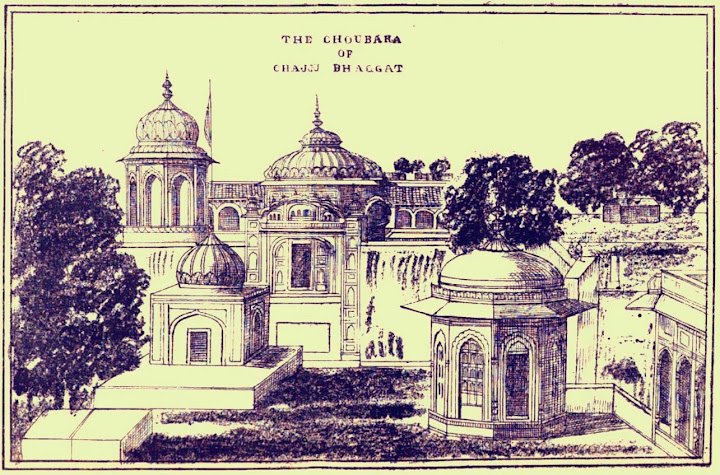
Inside the grounds of Mayo Hospital in Lahore, hidden among the wards and walkways of one of Pakistan’s oldest medical institutions, stands a small domed shrine with one of the most beloved stories in Punjabi culture. This is Chajju da Chaubara, the 17th-century shrine of Chajju Bhagat, the jeweller-saint of Lahore whose name lives on in the famous Punjabi saying: the joy of Chajju’s chaubara surpasses even Balkh and Bukhara. Mughal emperors’ contemporaries knew him, Maharaja Ranjit Singh visited him every Monday, wandering fakirs found food and shelter at his door, and his legend has outlived empires. If you want to see the Lahore that exists beneath the monuments, the city of saints, sayings, and living memory, start here. This Chajju da Chaubara travel guide covers the real history, what remains to see, how to reach it, and when to visit.
Quick Facts
- Location: Anarkali area, within the Mayo Hospital complex (Shams Shahabuddin Convalescent Home), near Lohari Gate, Lahore
- Famous For: The shrine and samadh of Chajju Bhagat, the 17th-century jeweller-saint of Lahore
- Nearest City: Lahore itself; the shrine is in the historic city centre
- Accessibility: On foot within the hospital grounds; ask at the hospital for directions to the shrine
- Known Landmarks: The domed chaubara, the marble samadh, Mughal and Sikh architectural details
- Best For: Heritage lovers, spiritual travellers, photographers of old Lahore, and anyone tracing the city’s Sufi and Bhagat traditions
Why Visit Chajju da Chaubara
Some places you visit for what you can see; Chajju da Chaubara you visit for what you can feel. What survives today is modest: a small domed chaubara, an upper-roomed shrine, set within the busy grounds of Mayo Hospital. But stand before it and you are standing where one of Lahore’s most loved saints lived, meditated, and fed the poor four centuries ago. The saying that made him immortal, that the bliss of Chajju’s chaubara outweighs the fabled cities of Balkh and Bukhara, is still quoted across Punjab. To visit is to touch a living thread of the city’s spiritual memory.
The story is irresistible. Chajju Ram Bhatia was a rich gold merchant of Lahore during the reigns of Jahangir and Shah Jahan who gave it all up for the spiritual life. He turned his home into a refuge where sacred fires burned, devotional singing filled the air, and any traveller could find food for the hungry, clothing for the poor, and a few coins for the road. Maharaja Ranjit Singh himself came every Monday, built chambers and gardens for the pilgrims, and funded the shrine from the royal court. Few heritage sites in Lahore connect the Mughal, Sikh, and British eras in a single human story the way this one does.
Practically, the chaubara is a perfect addition to a heritage day in old Lahore. It sits minutes from Anarkali Bazaar, the Lahore Fort, and Badshahi Mosque, and it costs nothing to see. Come with a guide or a good history, because the stones here speak softly: without the story, it is a small old building; with the story, it is one of the most moving stops in the city. Heritage travellers, spiritual seekers, and anyone who loves the hidden layers of Lahore should not miss it.
History of Chajju da Chaubara
Chajju Bhagat was born Chhajju Ram Bhatia, a resident of Lahore and by caste a Bhatia, who worked as a sarraf, a dealer in money and gold, during the reigns of the Mughal emperors Jahangir and Shah Jahan in the 17th century. He kept a two-storey house on what is now Anarkali Road: the ground floor held his jewellery shop, the upper floor housed his family, and on the rooftop he built a chaubara, an elevated room, that would become famous across the city.
According to the tradition recorded by Syed Muhammad Latif, Chajju was fond of the company of fakirs, and one day a simple remark changed his life. Walking through a lane, he overheard a street cleaner calling out to pedestrians to move aside lest they step into the refuse, and the words struck him as a parable: worldly attachments and devotion to God could not share the same path. He handed his business to his sons and devoted the rest of his life to meditation and prayer, becoming known as Chajju Bhagat. His chaubara became a gathering place for saints and wandering fakirs: sacred fires were kept burning, bhajans and kirtans were sung, Sufi mystics performed sama, and Chajju spent much of his earnings feeding the holy men, helping devotees, and supporting the needy.
His death was as mysterious as his life was remarkable. Tradition holds that when his last moments approached, he entered his meditation cell in the chaubara and was never seen again; accounts place his passing in the 17th century. Afterward, a marble samadh was raised over the site, managed by the Dadupanthis. The monument as it developed took shape during the Bhangi period of Sikh rule, when Bawa Pritam Das of Pakpattan, serving as mahant in Lahore, constructed a mandir and dharamshala (pilgrim lodging) at Chajju’s dwelling, and the place came to be known as Chajju da Chaubara.
The shrine’s golden age came under Maharaja Ranjit Singh, who held the place in great respect. He visited every Monday, made large offerings, built spacious chambers and rooms for the accommodation of sadhus, added a sarovar (tank), gardens, and dharamshalas for pilgrims, and assigned rent-free land for the shrine’s upkeep. Each Monday and Tuesday, crowds of men and women assembled and musicians sang sacred songs. After the British annexed Punjab, the complex fell into poor condition, a decline noted by Rudyard Kipling himself. Today only the chaubara survives of a once-extensive complex; the site is protected under the Punjab Special Premises (Preservation) Ordinance of 1985, and the surviving structure shows both Mughal and Sikh architectural influences, from its cusped arches and star motifs to its octagonal dome.
Top Things to Do in Chajju da Chaubara
See the Domed Chaubara
The heart of the visit is the chaubara itself: a small, dome-topped upper room, the elevated chamber where Chajju lived, meditated, and received the fakirs. Look for the architectural details recorded in heritage surveys: the square interior room, the cusped arches above the windows painted with eight-sided star motifs in red, and the dome set on an octagonal base. It is a humble building, but every arch carries four centuries of devotion.
Visit the Marble Samadh
Beside the chaubara stands the marble samadh raised after Chajju’s mysterious passing, long managed by the Dadupanthis. The samadh is the devotional focus of the site: visitors still come to pay their respects, and the atmosphere, incense, quiet prayer, flowers, is a world away from the hospital bustle outside. Be respectful: this is a living place of reverence, not a ruin.
Trace the Mughal and Sikh Layers
Architecture lovers should read the building like a document. The Mughal-era bones of Chajju’s original dwelling, the Sikh-period additions of Ranjit Singh’s chambers and gardens, and the later decay and repair all show in the fabric. The blend of Mughal and Sikh influences in a single small shrine makes it a miniature lesson in Lahore’s layered history.
Learn the Legend of Balkh and Bukhara
Ask any Lahori elder about the proverb: “Jo sukh Chajju de chaubare, oh Balkh na Bukhara”, the joy found at Chajju’s chaubara is greater than the fabled riches of Balkh and Bukhara. The saying captures what the shrine meant to generations: that spiritual contentment outweighs worldly splendour. Knowing the proverb transforms the visit from sightseeing into pilgrimage.
Find the Associated Sites
Chajju’s legend left more than one mark on Lahore. Tradition records another chaubara associated with him in Dhal Mohalla, marking the spot where he is said to have miraculously brought the waters of the Ganges for an old woman to bathe in during Vaisakhi, and the temple of Malka Hans is said to have been built by his devotees. A heritage walk connecting these sites with a knowledgeable guide is the deepest way to experience the Chajju story.
Famous Places In and Around Chajju da Chaubara
- Anarkali Bazaar — One of South Asia’s oldest markets, steps away, for food and shopping.
- Lahore Fort and Badshahi Mosque — The Mughal masterpieces of the Walled City, a short taxi ride away.
- Minar-e-Pakistan — The national monument in Greater Iqbal Park.
- Wazir Khan Mosque — The jewel-box Mughal mosque inside Delhi Gate.
- Lahore Museum — On The Mall, with Gandhara art and Mughal treasures.
- Cathedral Church of the Resurrection — Lahore’s great Gothic cathedral, also on The Mall, pairs beautifully with the chaubara for a two-faith heritage day.
- Fort Road Food Street — Rooftop dining with Badshahi Mosque views for the evening.
How to Reach Chajju da Chaubara
The chaubara stands within the Mayo Hospital complex in the Anarkali area of Lahore, near Lohari Gate, one of the old city gates. Because it is inside a working hospital, the simplest approach is to take a taxi or ride-hailing app to Mayo Hospital on Anarkali Road, then ask at the hospital for directions to the shrine within the grounds (the Shams Shahabuddin Convalescent Home area). Hospital staff know it; visitors are generally allowed to see the shrine, but be prepared for security questions and keep your visit quiet and respectful of patients.
From Islamabad: Lahore is about 375 kilometres via the M-2 motorway (4-5 hours), or by frequent bus and train services. From Lahore’s terminals, Mayo Hospital/Anarkali is 20-30 minutes by taxi.
From Karachi: Fly to Lahore (about 2 hours); the hospital is 30-45 minutes from Allama Iqbal International Airport depending on traffic.
Nearest airport: Allama Iqbal International Airport, Lahore.
Local transport: Ride-hailing apps, auto-rickshaws, and Qingqi rickshaws all serve Anarkali. The area is congested, so allow extra time, and consider combining the visit with Anarkali Bazaar on foot.
Route Details
Step 1: Make your way to Anarkali Road and Mayo Hospital, near Lohari Gate in old Lahore.
Step 2: Enter the hospital complex and ask staff for the Chajju da Chaubara shrine (in the Shams Shahabuddin Convalescent Home section).
Step 3: Visit the domed chaubara and the marble samadh quietly, keeping clear of wards and patient areas.
Step 4: Combine with Anarkali Bazaar, the Walled City, or the Mall Road churches and museums for a full heritage day.
Where to Stay in Chajju da Chaubara
The shrine is in central Lahore, so the city’s full range of accommodation is minutes away. Luxury travellers choose the established five-star hotels of Gulberg and the Cantonment, about 20-30 minutes from Anarkali depending on traffic. Mid-range hotels line The Mall and cluster in Gulberg, and there are pleasant boutique guesthouses in DHA and Model Town. Budget travellers will find economical hotels near the railway station and in the old city itself, basic but well located for heritage sightseeing. Staying near Fort Road or inside the old city puts the Walled City’s monuments within walking distance. Book ahead in the November-to-February tourist season.
Where to Eat: Local Foods of Chajju da Chaubara
You are in the middle of one of the world’s great food neighbourhoods, so plan your meals as carefully as your sightseeing. Anarkali Bazaar’s street vendors are famous for dahi bhallay, and the surrounding streets serve the full Lahori canon: nihari, paya, haleem, chargha, and halwa puri breakfasts, finished with a tall lassi. For the classic evening, head to Fort Road Food Street near Badshahi Mosque, where rooftop restaurants serve desi barbecue and karahi with the illuminated mosque as your backdrop. Around the hospital and Anarkali there are also simple dhabas serving daal, sabzi, and roti at budget-friendly prices. Eat where the locals queue: that is the entire review system you need in Lahore.
Weather in Chajju da Chaubara
Lahore’s climate shapes the visit: the shrine is outdoors within the hospital grounds, so winter and spring are the comfortable seasons and summer demands an early or late schedule. The monsoon brings dramatic skies but also downpours that can flood old-city streets.
| Season | Temperature Range | Conditions |
|---|---|---|
| Winter (Dec-Feb) | 5-20 C | Cool and pleasant; foggy mornings; best for walking the old city |
| Spring (Mar-Apr) | 20-35 C | Warm and lovely; ideal heritage-walk weather |
| Summer (May-Jun) | 35-45 C | Intensely hot; visit early morning or late afternoon |
| Monsoon (Jul-Aug) | 30-38 C | Humid with heavy showers; streets can waterlog |
| Autumn (Sep-Nov) | 20-35 C | Cooling down; October-November excellent for sightseeing |
Language and Culture of Chajju da Chaubara
The languages of the shrine and its neighbourhood are Punjabi and Urdu, the living tongues of old Lahore, and the proverb that made Chajju famous is itself in Punjabi. You will get by easily with Urdu, and many Lahoris speak English. Culturally, remember the layers: this is a Hindu-Bhagat shrine of the Mughal era, expanded by a Sikh maharaja, standing today in a Muslim-majority city where it is still visited with reverence. That layering is the point, and it deserves respect. Dress modestly, remove your shoes if others do at the samadh, keep your voice low, ask before photographing worshippers, and do not treat the shrine as a photo backdrop. A small donation for upkeep is customary and appreciated.
Shopping in Chajju da Chaubara
Anarkali Bazaar is at your doorstep and is one of the oldest surviving markets in South Asia, selling textiles, jewellery, spices, and street food from late morning to late evening. It is the natural place to shop after visiting the shrine. Hall Road, nearby, is Lahore’s electronics market. For handicrafts, look for blue Multani pottery, camel-skin lamps, embroidered khussas, and phulkari textiles; for fabrics at bargain prices, Ichhra Bazaar is the local favourite. Bargain good-naturedly in the bazaars and expect fixed prices in malls.
Local Events and Festivals
The shrine’s living tradition centres on weekly devotional gatherings rather than a single annual festival. Visitors and devotees still come to the chaubara every Tuesday and Thursday to pay their respects, continuing a rhythm of weekly assembly that goes back to the Monday and Tuesday crowds of Ranjit Singh’s era, when musicians sang sacred songs for the assembled pilgrims. If you want to experience the shrine at its most alive, time your visit for one of these days, arrive respectfully, and observe quietly. The wider Punjabi festival of Vaisakhi in April also echoes through the Chajju legend: tradition holds that at the Dhal Mohalla chaubara, Chajju miraculously brought Ganges water for an old woman to bathe in during Vaisakhi, a story still told in the old city.
Travel Tips for Chajju da Chaubara
Packing Essentials
Modest clothing covering shoulders and knees, comfortable walking shoes for the old city’s uneven streets, sun protection in the warmer months, and a scarf. Carry small change for donations, and keep your phone on silent inside the shrine precinct.
Safety Tips
The hospital complex is secure, and Anarkali is busy and well-travelled. The main cautions are the congested traffic around the hospital gates and the crowds of the bazaar: cross roads carefully and keep valuables secure. Identify yourself politely at hospital security, state that you wish to see the historic shrine, and follow staff directions. Avoid visiting very late in the evening.
Money & Connectivity
ATMs and banks are plentiful around Anarkali and The Mall, and mobile signals from all major networks are strong. Carry cash for the bazaars, rickshaws, and dhabas; cards are accepted at larger restaurants and hotels. Free Wi-Fi is common in cafes and hotels.
Best Time to Visit Chajju da Chaubara
Winter (November-February): The Best Season
Cool, clear days make this the ideal season for exploring the shrine and the old city on foot. The low winter light is beautiful on the old brickwork, and the bazaars are at their liveliest. Tuesday and Thursday visits in this season are particularly pleasant.
Spring (March-April): Lovely and Lively
Warm days and a festive mood, with Vaisakhi in April giving extra resonance to the Chajju legends. Mornings are the best time to visit before the afternoon warmth builds.
Summer (May-June): Visit Early or Late
Lahore’s fierce summer means planning around the heat: see the shrine early in the morning or toward evening, and spend the midday hours in the air-conditioned Lahore Museum or a bazaar’s covered lanes.
Monsoon (July-August): Flexible Plans
Heavy showers can disrupt an old-city walking day, so keep plans flexible and carry an umbrella. The rain-washed shrine and bazaars have their own moody charm if you do not mind getting damp.
Final Thoughts
Chajju da Chaubara is small, half-hidden, and easy to miss, and that is exactly why it matters. In a city of grand forts and mosques, this little domed room keeps the memory of a man who decided that feeding strangers mattered more than counting gold, and whose name became a proverb for the happiness that no empire can buy. The joy of Chajju’s chaubara, greater than Balkh and Bukhara: four centuries later, standing in a hospital courtyard in Anarkali, you can still feel what the saying means.
Pair it with the Walled City, Anarkali’s food and bazaars, and Lahore’s great Gothic cathedral for a heritage day with real soul. For more, browse our Explore Pakistan collection, plan a mountain escape with our Hunza Valley guide, or start in the capital with places to visit in Islamabad. Lahore’s deepest stories are the quiet ones. This is the quietest of them all.
FAQs
Where is Chajju da Chaubara located?
It stands within the Mayo Hospital complex in the Anarkali area of Lahore, near Lohari Gate, in the section known as the Shams Shahabuddin Convalescent Home.
Who was Chajju Bhagat?
Chhajju Ram Bhatia was a 17th-century gold merchant of Lahore, a contemporary of Jahangir and Shah Jahan, who gave up commerce for the spiritual life. His rooftop chaubara became a refuge for fakirs and the poor, and after his mysterious passing a marble samadh was raised at the site.
What is the best time to visit Chajju da Chaubara?
November to February offers the most comfortable weather. Devotees gather at the shrine every Tuesday and Thursday, making those the liveliest days to visit.
How do I reach the shrine from Islamabad or Karachi?
From Islamabad, take the M-2 motorway (about 375 km, 4-5 hours) or bus/train to Lahore, then a 20-30 minute taxi to Mayo Hospital/Anarkali. From Karachi, fly to Lahore (about 2 hours) and drive 30-45 minutes from the airport.
Can visitors enter the shrine inside the hospital?
Yes, visitors are generally allowed to see the shrine. Go to Mayo Hospital on Anarkali Road, ask staff for directions to Chajju da Chaubara, be prepared for security questions, and keep your visit quiet and respectful of patients.
Is Chajju da Chaubara suitable for families?
Yes. It is a short, easy visit on flat ground. Combine it with Anarkali Bazaar and the Walled City for a family heritage day, keeping children close in the busy bazaar streets.
What food should I try nearby?
Anarkali’s dahi bhallay, Lahori nihari, paya, haleem, halwa puri, and lassi, or an evening at Fort Road Food Street with views of Badshahi Mosque.
What does “Jo sukh Chajju de chaubare, oh Balkh na Bukhara” mean?
It is the famous Punjabi proverb about the shrine: the spiritual joy found at Chajju’s chaubara surpasses even the fabled wealth and splendour of Balkh and Bukhara, the legendary cities of Central Asia.