Every great city has a place where its soul lives. In Lahore, that place is Data Darbar — the shrine of Hazrat Ali Hajveri, known to millions as Data Ganj Bakhsh, “the giver of treasures.” For nearly a thousand years, pilgrims have come to this spot near Bhati Gate: Mughal emperors and Sufi saints, poets and prime ministers, and today millions of ordinary Pakistanis seeking blessings, peace, or simply a moment of stillness. It is the largest Sufi shrine in South Asia, and no visit to Lahore is complete without it. This Data Darbar travel guide will help you experience it fully and respectfully.
Quick Facts
- Location: Data Darbar Road, near Bhati Gate, old (Walled) City of Lahore, Punjab, Pakistan
- Famous For: The shrine of the 11th-century Sufi saint Ali Hajveri (Data Ganj Bakhsh); the largest Sufi shrine in South Asia; the annual Urs festival
- Nearest City: Lahore itself — the shrine is in the heart of the old city
- Accessibility: About 20-30 minutes from Allama Iqbal International Airport; easy by taxi, ride-hailing, or Metrobus/Orange Line to the old city
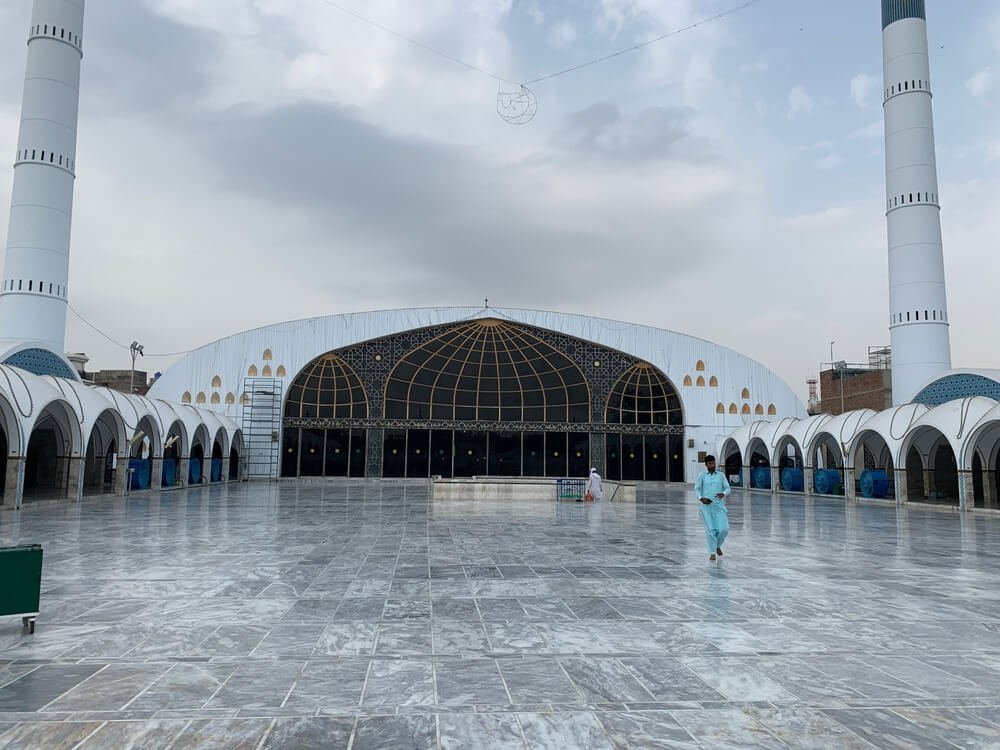
- Known Landmarks: The main mausoleum with its white marble and green dome, the historic mosque, the great courtyards, and the shrine library and museum
- Best For: Spiritual seekers, heritage lovers, photographers, families, and anyone wanting to feel the living culture of Lahore
Why Visit Data Darbar
Visit Data Darbar because it is the spiritual heart of Pakistan’s cultural capital. This is not a monument you admire from behind a rope — it is a living, breathing center of devotion where thousands of people pray, sing qawwali, share free meals, and find comfort every single day. The scale alone is humbling: the complex covers nearly 20 acres, and during the annual Urs, up to a million visitors pass through its gates. Standing in the courtyard as the evening qawwali begins, with the white marble glowing under the lights, you understand why Lahore is called the city of saints.
Data Darbar is also perfect for travelers who want to understand Sufism — the mystical, music-filled, deeply human tradition of Islam that shaped South Asia’s culture. The saint buried here, Ali Hajveri, wrote Kashf al-Mahjub, the earliest treatise on Sufism in the Persian language, nearly a thousand years ago. His famous saying, honored in verse by Khwaja Moinuddin Chishti of Ajmer himself, made this shrine the first stop for Sufi saints arriving in the subcontinent. To visit is to stand at the fountainhead of a tradition of tolerance, music, and devotion.
And then there is the Lahore around it. The shrine sits at the edge of the Walled City, minutes from Bhati Gate, Gawalmandi’s food street, and some of the greatest Mughal monuments on earth. A day built around Data Darbar — morning prayers at the shrine, the Badshahi Mosque and Lahore Fort by afternoon, food street by night — is one of the finest single days of sightseeing in Pakistan. See our Badshahi Mosque travel guide to plan the rest of that day, and browse our Explore Pakistan collection for more.
History of Data Darbar
The story begins with a scholar from Ghazna. Abu al-Hasan Ali ibn Uthman al-Hujwiri was born around 1009 in the Ghaznavid Empire (in present-day Afghanistan), traveled widely across Persia, Iraq, and Syria seeking knowledge from the great Sufis of his age, and eventually settled in Lahore — then a frontier outpost of the Ghaznavid realm. Here he taught, preached, and in the last years of his life composed Kashf al-Mahjub (“The Unveiling of the Hidden”), the earliest formal treatise on Sufism in Persian and one of the most important books in Islamic mysticism. He died in Lahore around 1072, in the Islamic month of Safar, and was buried beside the mosque he had built on what was then the outskirts of the city.
What started as a simple grave grew into a great shrine. The Ghaznavid sultan Ibrahim is traditionally credited with building over the saint’s grave in the late 11th century. As the belief spread across the Muslim world that the spiritual power of great saints lingered at their burial places, a larger shrine rose during the Mughal period, and the complex was expanded again in the 19th century with the rebuilding of the mosque. The shrine was nationalized in 1960 and is managed today by the Punjab Auqaf Department.
Through the centuries, Data Darbar has been the beating heart of Lahore’s spiritual life. Khwaja Moinuddin Chishti, the great saint of Ajmer, is said to have paid his respects here on arriving in the subcontinent, honoring Data Sahib in the famous Persian couplet calling him the guide of both the imperfect and the perfect. Since 1965, the shrine has hosted the annual Mehfil-e-Sama, a celebrated qawwali gathering. And every year, the Urs — the saint’s death anniversary, observed from the 18th to the 20th of Safar — draws millions: the 983rd Urs was celebrated in August 2026 with three days of prayers, qawwali, and free meals, and a public holiday in Lahore.
Top Things to Do in Data Darbar
Pay Your Respects at the Mausoleum
The heart of the complex is the tomb chamber of Data Ganj Bakhsh, draped in green cloth and surrounded by devotees in prayer. Enter quietly, cover your head, and take a moment of reflection — whether you come as a pilgrim or a traveler, the atmosphere of devotion here is deeply moving. The main halls are separate for men and women.
Attend the Qawwali (Mehfil-e-Sama)
Sufi devotional music is the soul of Data Darbar. Qawwali gatherings are held regularly, and the annual Mehfil-e-Sama festival — running since 1965 — is a highlight of Lahore’s cultural calendar. The call-and-response singing, the harmonium and tabla, the crowd swaying in devotion: it is an experience that stays with you long after you leave.
Share in the Langar
The shrine serves free meals (langar) to thousands of visitors daily, and round-the-clock during the Urs. Sitting on the floor and eating alongside pilgrims from every walk of life is one of the most genuine experiences in Lahore — humble, generous, and unforgettable.
Visit the Mosque, Library, and Museum
The complex includes a historic mosque, a library, and a museum preserving manuscripts and artifacts related to the saint and the shrine’s history. They add depth to the visit and are often quieter than the main courtyard.
See the Shrine by Night
On special occasions — and during the Urs — Data Darbar is decorated with lights and the white marble glows against the night sky. Evening is also when the crowds are most devotional and the qawwali most soulful. Arrive before sunset to watch the transformation.
Walk Data Darbar Road and the Old City Gates
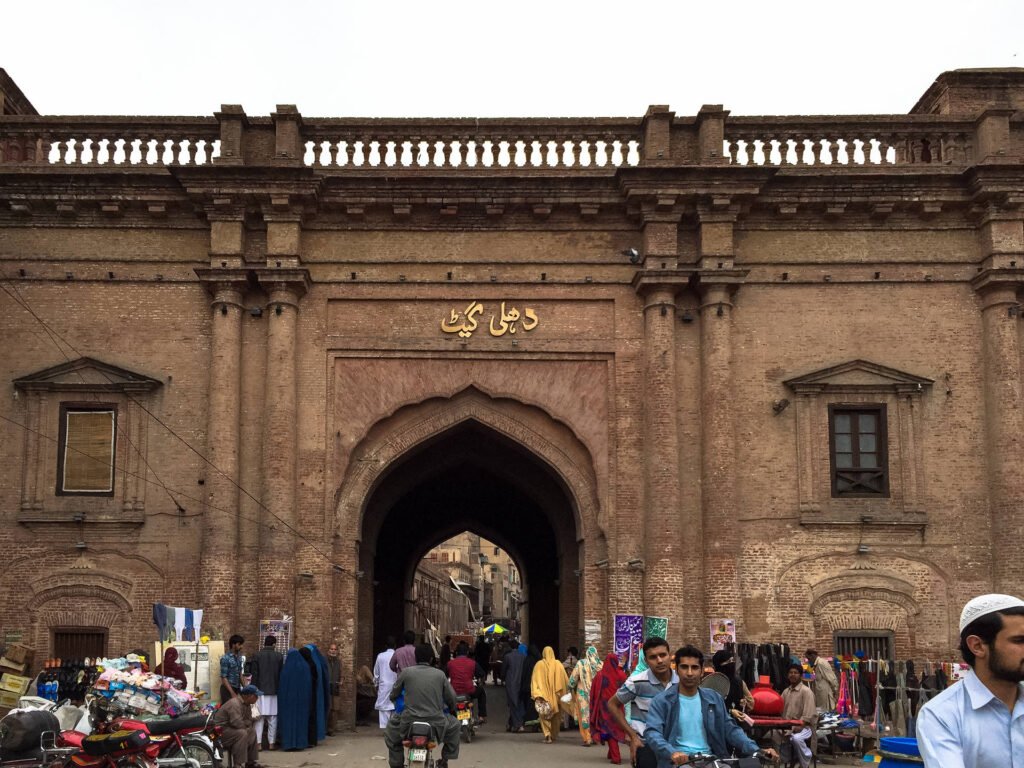
Step outside the complex and you are on Data Darbar Road, at the threshold of the Walled City. Walk toward Bhati Gate, explore the surrounding bazaars, and feel the old Lahore that has grown up around the shrine for nine centuries.
Famous Places In and Around Data Darbar
- Badshahi Mosque — The great Mughal mosque, a 10-minute drive from the shrine.
- Lahore Fort — The UNESCO-listed fort complex adjoining the mosque.
- Wazir Khan Mosque — The 17th-century tile-covered masterpiece inside Delhi Gate.
- Fort Road Food Street — Rooftop dining with views of the Badshahi Mosque.
- Minar-e-Pakistan — The national monument in Iqbal Park, nearby.
- Anarkali Bazaar — One of South Asia’s oldest markets, perfect for an evening wander.
- Gawalmandi Food Street — Lahore’s legendary street-food quarter, close to the shrine.
How to Reach Data Darbar
Data Darbar sits on Data Darbar Road near Bhati Gate, at the edge of Lahore’s Walled City — central, famous, and known to every taxi driver in the city.
From Islamabad: About 375 km via the M-2 motorway, roughly 4 to 4.5 hours by car. Daewoo and other luxury bus services run constantly between the two cities.
From Lahore Airport: Allama Iqbal International Airport is 20-30 minutes from the shrine by taxi or ride-hailing service, depending on traffic.
From Karachi: Fly to Lahore (about 1.5 hours) — the fastest option — or take the train (roughly 18-20 hours) or a long-distance bus. Within Lahore, ride-hailing cars and auto-rickshaws reach the shrine easily; the Orange Line metro and Metrobus serve the old city area, with a short walk or rickshaw ride for the last stretch.
Nearest airport: Allama Iqbal International Airport, Lahore.
Road conditions by season: The motorways and city roads are good year-round. During the Urs, roads around the shrine are closed or diverted with special traffic plans — check the City Traffic Police announcements and use the designated parking stands.
Transport options: Taxis, ride-hailing services (Careem, InDrive, Uber), auto-rickshaws, and the metro lines. For the old city generally, a rickshaw is often faster than a car through the narrow streets.
Route Details
From the M-2, take the Thokar Niaz Beg or Babu Sabu exit into Lahore → Canal Road or Multan Road toward the city center → Lower Mall Road → Data Darbar Road (signposted). During the Urs, follow the official diversion routes via Azadi Chowk or MAO College and park at the designated stands.
Where to Stay in Data Darbar
The shrine is a day-visit site in the middle of Lahore, so you have the full range of the city’s accommodation to choose from. The complex itself includes residential quarters and community halls used by pilgrims.
Luxury hotels: Lahore’s five-star hotels cluster around Mall Road, Gulberg, and the cantonment — full-service bases with restaurants, pools, and easy transport to the old city.
Mid-range hotels: Good-value options line Mall Road, Jail Road, and Gulberg, typically 20-30 minutes from the shrine. This is the sweet spot for most travelers.
Budget guesthouses: Found around the railway station, Anarkali, and the old city itself — basic, inexpensive, and closest to the shrine and food streets.
Stay near Mall Road or Gulberg for comfort and dining options, or in the old city for atmosphere and walking distance to the shrine.
Where to Eat: Local Foods of Data Darbar
You are in Lahore, the food capital of Pakistan, and the streets around Data Darbar are among its most delicious. Start with the shrine’s own langar — the free communal meal served daily to all visitors, simple lentils, rice, and bread eaten shoulder to shoulder with pilgrims. Then head to Gawalmandi and the Fort Road Food Street for the full Lahori spread: nihari (slow-cooked beef stew), halwa puri breakfast, seekh kebabs, channay, thick lassi in clay cups, and kulfi falooda for dessert.
A dhaba breakfast near the shrine is very budget-friendly; a full dinner at the food street with kebabs and lassi costs a moderate amount — still far less than a restaurant meal in Gulberg. Eat where the crowds are, drink bottled water, and pace yourself: Lahori hospitality will keep putting food in front of you.
Weather in Data Darbar
Lahore has hot summers, a monsoon season, and short, pleasant winters. The shrine is open 24 hours, but the most comfortable visiting months are November to March.
| Season | Temperature Range | Conditions |
|---|---|---|
| Winter (Dec-Feb) | Around 7°C to 20°C | Pleasant days, cool nights; fog possible in December and January |
| Spring (Mar-Apr) | Around 18°C to 32°C | Warm and lovely — excellent for sightseeing |
| Summer (May-Jun) | Around 30°C to 45°C | Very hot; visit the shrine early morning or after sunset |
| Monsoon/Autumn (Jul-Nov) | Around 25°C to 38°C | Humid monsoon rains July-September; pleasant again by October-November |
Language and Culture of Data Darbar
The language of the shrine is Punjabi and Urdu — qawwali is sung in both, plus Persian verses from the Sufi tradition. Urdu works everywhere for visitors.
Data Darbar welcomes everyone, but it is a sacred space with clear etiquette. Dress modestly — cover arms and legs, and women should carry a scarf to cover their heads. Remove your shoes before entering the shrine area. Do not smoke inside the complex, keep conversations quiet, never walk in front of someone praying, and show reverence at the tomb itself. Photography may be restricted in certain areas — look for signage or ask a volunteer before raising your camera.
The culture of the shrine is Sufi culture: music, poetry, generosity, and the leveling of rich and poor in the langar line. The famous Persian couplet honoring Data Sahib — calling him the perfect guide for the imperfect and the guide for the perfect — captures the spirit: all are welcome, all are equal here.
Shopping in Data Darbar
The bazaars around the shrine and Bhati Gate sell religious and everyday goods: tasbih (prayer beads), embroidered chadars offered at the tomb, attar (perfume oils), caps, and books on Sufism and the saint’s life. For wider shopping, Anarkali Bazaar — one of South Asia’s oldest markets — is minutes away, with cloth, jewelry, and street food; Shah Alam Market and Urdu Bazaar (for books) are also close. Prices are local and negotiable; bargain politely. There is no need for a mall — though Fortress Square and Packages Mall are a short drive away if you want one.
Local Events and Festivals
Urs of Data Ganj Bakhsh (18th-20th Safar, Islamic calendar): The shrine’s great annual festival, marking the saint’s death anniversary. The three-day Urs features qawwali, Quran recitation, religious conferences, round-the-clock langar, and milk sabeels, drawing up to a million devotees. The 983rd Urs was held in August 2026, with Lahore observing a local public holiday. Dates shift each year with the Islamic calendar — check before planning.
Mehfil-e-Sama (qawwali festival): The celebrated qawwali gathering hosted at the shrine since 1965, a landmark of Lahore’s Sufi musical culture.
Death anniversary commemoration (21 November): In 2016, the Government of Pakistan declared 21 November a public holiday for the commemoration of the commencement of Ali Hajveri’s three-day death anniversary.
Travel Tips for Data Darbar
Packing Essentials
Modest clothing, a headscarf, comfortable slip-on shoes (you will remove them often), sun protection, hand sanitizer, and a small bag — leave valuables at your hotel, as the shrine gets crowded and pickpockets operate in busy areas.
Safety Tips
Security at the shrine is tight, with walkthrough gates, CCTV, and heavy deployment during the Urs — cooperate patiently. Visit in the morning for the calmest experience. During the Urs, expect enormous crowds: fix a meeting point with your group, keep children close, and follow the official traffic and entry routes.
Money & Connectivity
There is no entry fee. ATMs are available on Mall Road and in the surrounding commercial areas — carry cash for the bazaars and food streets. Mobile signals are strong across Lahore on all networks.
Best Time to Visit Data Darbar
November to March — The Best Season
Cool, pleasant weather makes this the ideal window for the shrine, the Walled City, and all of Lahore’s sightseeing. Mornings at the shrine are serene.
Urs Season (dates vary, 18th-20th Safar) — The Festival Season
For the full spiritual spectacle — qawwali nights, a million pilgrims, the shrine lit up — come for the Urs. Book hotels early, expect crowds and road diversions, and note it often falls in the hot months.
April to June — Hot but Doable
Visit early in the morning or after sunset; combine with indoor sightseeing (the museum, library) at midday.
July to September — Monsoon
Humid with sudden downpours. The shrine is open around the clock, so time your visit between rains.
Final Thoughts
Data Darbar is more than a shrine — it is nine centuries of Lahore’s soul in one place. Emperors built over it, saints honored it, poets sang of it, and millions of ordinary people still find their peace within its walls every week. Whether you come as a pilgrim, a history lover, or simply a curious traveler, the shrine has a way of slowing you down and reminding you what these old cities are really about: not monuments, but meaning.
Come in the cool months, stay for the qawwali, eat in the langar line, and walk out through Bhati Gate into the Walled City with a fuller heart than you arrived with. Pair your visit with the Badshahi Mosque and Lahore Fort for the perfect Lahore day. For more journeys into the country’s heritage and landscapes, explore our Explore Pakistan collection — and if the mountains call next, our Hunza Valley guide awaits.
FAQs
Where is Data Darbar located?
Data Darbar is on Data Darbar Road near Bhati Gate, at the edge of Lahore’s Walled City, Punjab — about 20-30 minutes from Allama Iqbal International Airport.
What is the best time to visit Data Darbar?
November to March offers the most pleasant weather. For the festival experience, visit during the annual Urs (18th-20th Safar in the Islamic calendar), though it often falls in hot months.
How do I reach Data Darbar?
From Islamabad it is about 375 km via the M-2 motorway (4-4.5 hours). Within Lahore, take a taxi, ride-hailing car, or rickshaw to Data Darbar Road near Bhati Gate.
Is there an entry fee for Data Darbar?
No. The shrine is open to the public free of charge, 24 hours a day, seven days a week.
What should I wear to Data Darbar?
Dress modestly: cover your arms and legs, and women should carry a scarf to cover their heads. Remove your shoes before entering the shrine area.
Is Data Darbar safe for tourists and families?
Yes. Security is tight with screening and CCTV. It is very family-friendly — children are welcome, and the langar meal is a memorable experience for all ages.
Where can I stay near Data Darbar?
Lahore offers everything from luxury hotels on Mall Road and in Gulberg to budget guesthouses near the railway station and old city. Stay near Mall Road for comfort or in the old city for atmosphere.
What food should I try near Data Darbar?
The shrine’s free langar, plus Gawalmandi and Fort Road Food Street nearby: nihari, halwa puri, seekh kebabs, lassi, and kulfi falooda.
Who was Data Ganj Bakhsh?
Hazrat Ali Hajveri (c. 1009-1072), a Sufi saint and scholar from Ghazna who settled in Lahore and wrote Kashf al-Mahjub, the earliest treatise on Sufism in Persian. “Data Ganj Bakhsh” means “the giver of treasures.”